
Starter Smells Like Nail Polish or Acetone? Read This
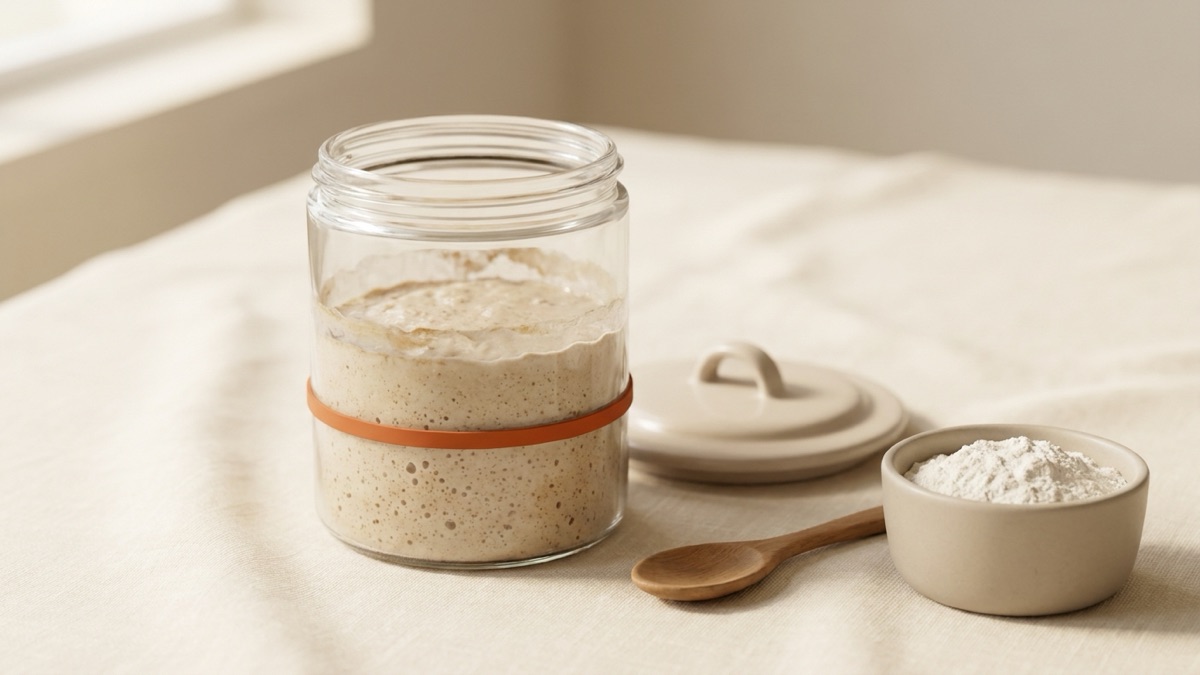
You open the jar expecting something yeasty and get a noseful of nail polish remover instead. It is sharp enough to make you pull back, and the next thought is whether the whole thing has gone off. It has not. Your starter is telling you it is hungry.
Quick answer
A sourdough starter that smells like acetone or nail polish remover has run through its food. It is a hunger sign, not a spoilage sign. Discard down to a small amount, feed it, and the smell fades as it rises. If it keeps coming back, feed sooner or give it more flour at each feed.
The read
An acetone smell means the starter rose, ran out of food and has been waiting. It will still raise bread, but for the best rise, feed it and use it at the next peak. Fuzzy mold of any color, or pink, orange or red streaks, is a different thing: that is Start fresh, and you discard the whole jar.
Key takeaways
- An acetone or nail polish smell means a hungry starter. It needs a feed, not the trash.
- Boozy, beery and vinegary smells are close relatives: all sharp, all normal, all signs of a starter past its peak.
- If the smell returns before each feed, the feeds are too small or too far apart. Change the ratio or the timing, one at a time.
- Warm kitchens make it happen faster. A bigger feed or a cooler spot slows the starter down.
- A rotten, putrid smell is not the same thing. That, fuzzy mold, or pink or orange streaks means the whole starter is discarded, never scraped.
Why does my sourdough starter smell like acetone?
After a feed, the yeast and bacteria in your starter eat the fresh flour and make gas, which lifts the starter up the jar. A starter at its peak smells pleasant: yeasty and mildly sour.
Then the food runs low. The starter sinks, leaves a streaky line on the glass, and the smell turns sharper: more sour, boozy, or like nail polish remover.
So the sourdough starter acetone smell is a timing sign. It tells you the peak came and went some time ago. It often shows up with a thin layer of liquid on top, called hooch, which is the same hunger in a form you can see. Hooch on sourdough starter covers that side of it.
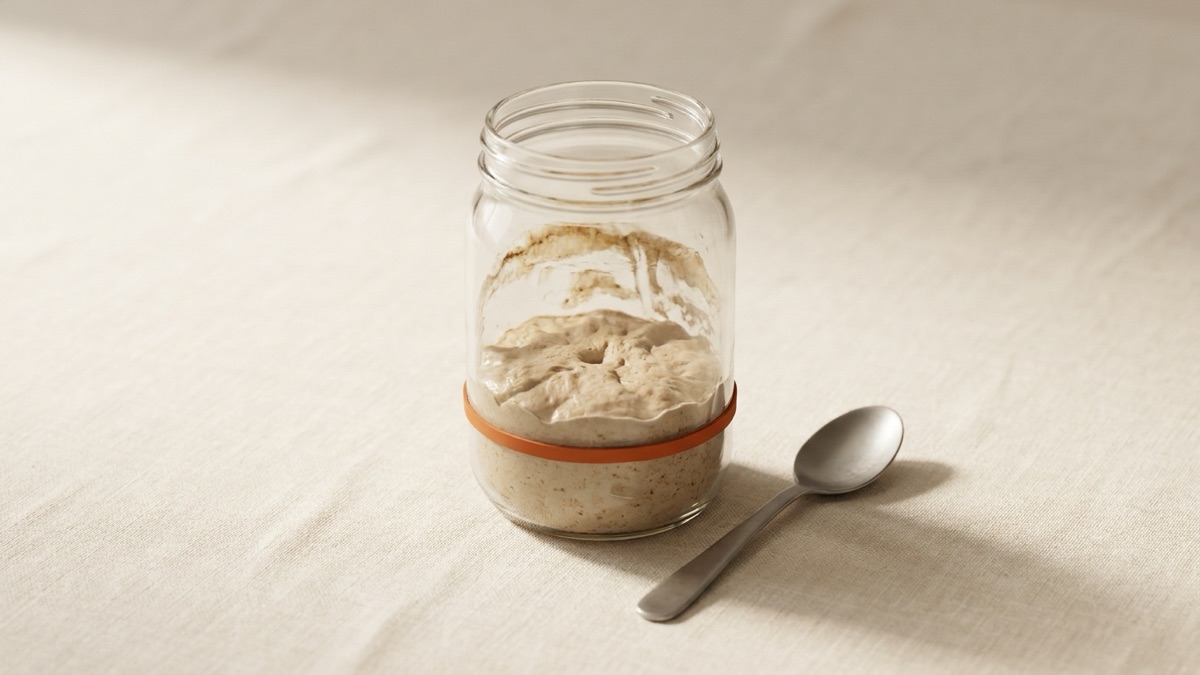
Sourdough starter smells like nail polish remover: is it ruined?
No. A starter that smells like nail polish remover is hungry, not dead and not spoiled.
What matters is telling a sharp smell from a bad one. Sour, yeasty, boozy, vinegary and nail polish are all sharp, and all normal. A rotten, putrid or truly foul smell is something else, and so is anything you can see: fuzzy spots, or pink, orange or red color.
| What you smell | What it usually means | What to do |
|---|---|---|
| Yeasty, mildly sour | At or near its peak | Use it if it has doubled |
| Beery or boozy, like alcohol | Past its peak, getting hungry | Feed |
| Nail polish remover or acetone | Hungry, has run through its food | Feed; feed sooner or bigger next time |
| Sharp vinegar | Sat well past its peak, or lives in the fridge | Regular feeds at room temperature |
| Rotten, putrid, truly foul | Spoiled | Start fresh: discard the whole starter |
Heads up
Before you feed, look at the surface and at the glass where the starter touches it. Fuzzy mold of any color, or pink, orange or red streaks, patches or tinted liquid, means the whole starter is discarded. Do not scrape the spot and keep the rest. Wash the jar in hot, soapy water and start again.
How to get rid of the acetone smell
One feed usually takes the edge off. A steady routine keeps it away.
Feed it now
Discard down to the 20 to 50 g you keep, then feed by weight. Keeping only a small amount matters here: a big lump of old, sour starter swamps the fresh flour. Put a rubber band at the level right after feeding so you can watch the rise.
If the smell comes back, change one thing
A smell that returns before every feed means the starter is finishing its food early. Pick one of these and leave the rest alone:
- Feed a bigger ratio. Move from 1:1:1 to 1:2:2, or to 1:5:5 in a warm room. More flour for the same amount of starter means it peaks later and stays fed longer.
- Feed sooner. If the jar peaks and falls overnight, move the feed later in the evening, or feed twice a day.
- Cool it down. A cooler spot in the kitchen, or cooler water at the feed, slows the starter so the food lasts.
As a rough guide at about 75F (24C), a 1:1:1 feed peaks in about 4 to 6 hours, 1:2:2 in about 6 to 8, 1:5:5 in about 8 to 12, and 1:10:10 in 12 hours or more. A warm kitchen speeds every one of them up. Feeding ratios explained goes deeper on picking one.
Try it
Put the grams you keep, your ratio and how warm your room is into the starter feeding calculator. It gives you the flour and water to add and the window when the jar should peak, so the next feed lands before the smell does.
New sourdough starter acetone smell
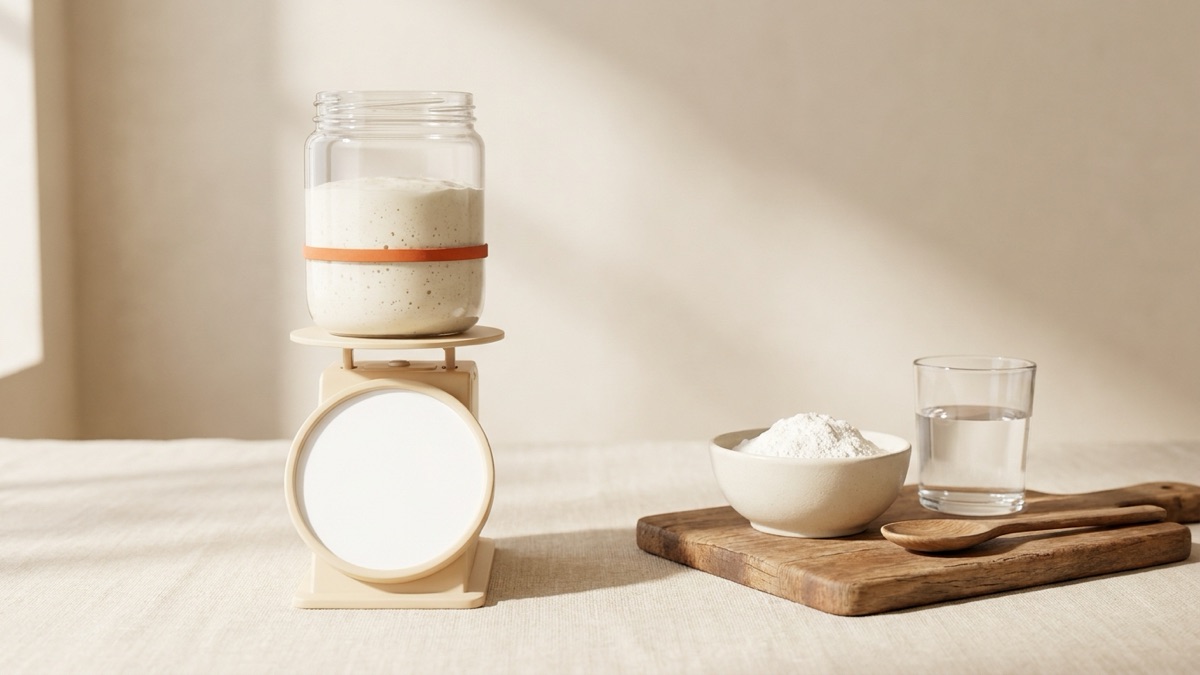
A new starter can smell like acetone too, and for the same reason. The usual once-a-day feed is a small meal, and in a warm kitchen a young starter can get through it long before the next one.
It does not mean the starter has failed. A new starter usually takes 7 to 14 days to become reliable, sometimes longer in a cool kitchen, and days 3 to 7 often go quiet after an early burst of bubbles. Keep feeding at the same times each day, and discard before each feed.
If the sharp smell shows up every day by feeding time, feed twice a day for a few days and see whether it eases. If the jar is also slow to climb, sourdough starter not rising works through the causes in order.
Sourdough starter smells like alcohol
A boozy or beery smell is the same hunger. Yeast makes alcohol as it works, and once the flour runs low that alcohol is what you notice. Often a gray or brown layer of liquid collects on top at the same time.
Treat it the same way. Pour the liquid off or stir it in, discard, and feed. If your starter smells like alcohol within a few hours of every feed, it is strong and fast: move to a bigger ratio.
Good to know
A starter kept in the fridge often smells sharp, boozy or like nail polish when you take it out, with dark liquid on top. Cold slows it down but does not stop it. Pour off or stir in the liquid and give it one or two feeds at room temperature. The first feed may not double, which is normal. Keeping a starter in the fridge has the weekly routine.
Can you bake with a starter that smells like acetone?
Not at its best. A starter that smells like acetone is well past its peak, and sourness builds the longer it sits there. For the best rise, feed it first and use it at the next peak.
You will know it is back when it at least doubles from the band, the top is domed or just starting to flatten, bubbles of many sizes show through the side of the jar, and the smell is yeasty and mildly sour again. That is Ready to bake. A neglected starter may need a few days of regular feeds to get there.
What to do today
- Look before you sniff again: check the surface and the glass for anything fuzzy, pink, orange or red. If you see any, go to the next section.
- Pour off or stir in any liquid on top.
- Discard down to 20 to 50 g and feed by weight.
- Put a rubber band at the level, and note when it peaks and what it smells like then.
- If the acetone smell is back before the next feed, change one thing: a bigger ratio, an earlier feed or a cooler spot.
When to start again
An acetone smell on its own only needs a feed. A few signs mean the starter is spoiled, and then there is one answer. Discard the whole starter, never scrape it, if you see or smell:
- Fuzzy mold of any color: white, green, blue, gray or black fuzz on the starter or on the jar where it touches the starter.
- Pink, orange or red streaks, patches or tinted liquid anywhere in the jar.
- A rotten, putrid or truly foul smell, very different from sour, yeasty, boozy or nail polish.
- A slimy, stringy texture or a slick film that does not stir back in.
Wash the jar in hot, soapy water, rinse it well and begin again with fresh flour and water. When in doubt, throw it out: a new starter costs a little flour and a week or two. Sourdough starter mold covers what to look for.
These look or smell alarming but are normal, and only need a feed:
- An acetone or nail polish smell. The starter is hungry, so feed it, and feed a little more often.
- Hooch: gray, brown or dark liquid on top. Pour it off or stir it in, then feed.
- A dry skin on top from a jar that was not covered. Remove it and feed from the soft starter underneath, as long as nothing is fuzzy.
- A quiet day for a young starter. Days 3 to 7 often go still before it wakes up for good.
- Dark liquid after a week in the fridge. Pour it off or stir it in, then give it one or two feeds at room temperature.
The Loaf Scout app is built to read one photo of the jar from the side: the rise against the band, the activity and whether it is ready. A photo cannot smell, so your nose still counts. Every other worry with a jar is in the starter problems section.
Nail polish in the jar is a hungry starter asking for its next meal. Feed it, mark it, and let the smell tell you when the timing is right.
The pictures in this guide are AI-generated illustrations, not photos of real bakes; real loaves and starters vary, so trust the signs described in the text over any picture. Loaf Scout guides are general baking guidance, written from the sources named below, and every kitchen, flour and oven is a little different. Loaf Scout gives an AI read of one photo; your own eyes, nose and the poke test still count. A starter with fuzzy mold of any color, pink or orange streaks, or a rotten smell is thrown out and started again, whatever any page says.
Questions people ask
Why does my sourdough starter smell like acetone?
An acetone smell means the starter is hungry and has run through its food. Feed it, and if the smell keeps coming back, feed a little more often or give it more flour at each feed.
Is a starter that smells like nail polish remover ruined?
No. A nail polish remover smell is a hunger sign, not a spoilage sign, and a feed or two usually clears it. Fuzzy mold, pink or orange streaks, or a rotten smell are different: then the whole starter is discarded.
Why does my new sourdough starter smell like acetone?
A new starter fed once a day can run out of food long before the next feed, especially in a warm kitchen, and that hunger shows up as a sharp, solvent-like smell. Keep feeding on schedule; most new starters need 7 to 14 days to settle.
Why does my sourdough starter smell like alcohol?
Yeast makes alcohol as it works through the flour, so a boozy or beery smell means the starter is getting hungry. It often comes with a layer of liquid on top called hooch. Pour it off or stir it in, then feed.
How do I get rid of the acetone smell in my starter?
Discard down to 20 to 50 g and feed by weight. If the smell returns before the next feed, feed sooner, move to a bigger ratio such as 1:2:2 or 1:5:5, or keep the jar somewhere a little cooler.
Sources
- The Perfect Loaf: 21 common sourdough starter problems with solutions: www.theperfectloaf.com/21-common-sourdough-starter-problems-with-solutions/
- The Perfect Loaf: Frequently asked sourdough starter questions: www.theperfectloaf.com/frequently-asked-sourdough-starter-questions/
- King Arthur Baking: Do you think you killed your sourdough starter?: www.kingarthurbaking.com/blog/2021/09/02/did-i-kill-my-sourdough-starter
- King Arthur Baking: Sourdough starter troubleshooting: www.kingarthurbaking.com/blog/2018/03/09/sourdough-starter-troubleshooting-2
- Colorado State University Extension: Sourdough starter best practices: extension.colostate.edu/resource/sourdough-starter-best-practices/
Read next
Starter problems
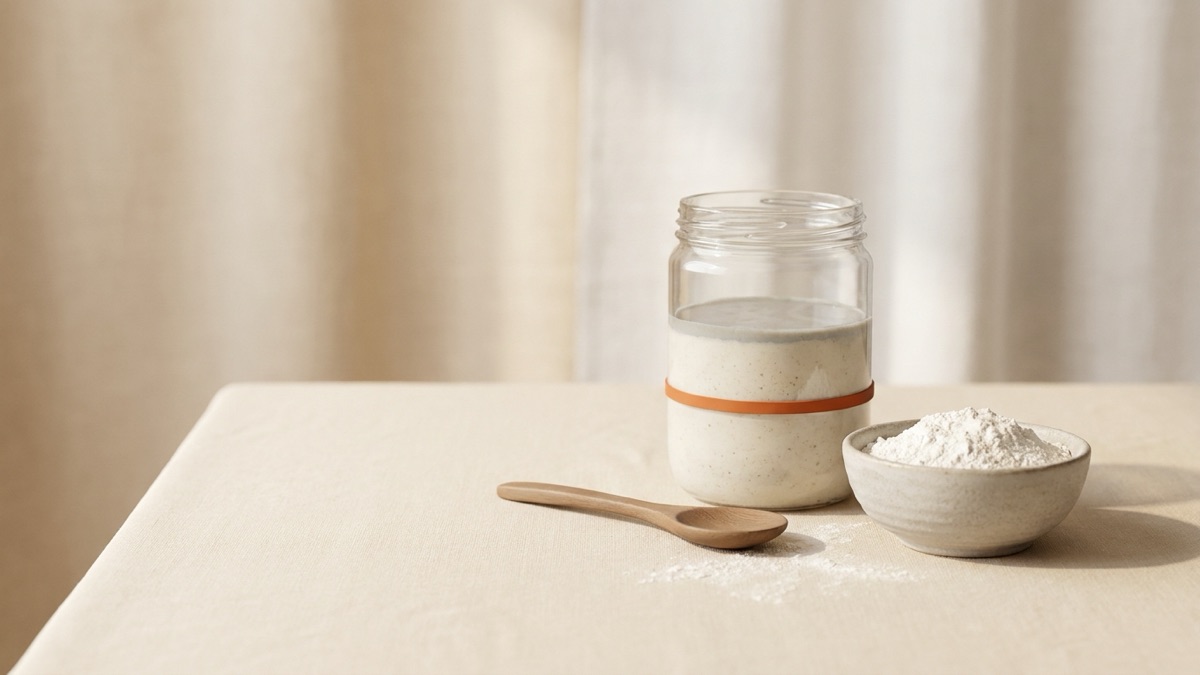
Sourdough Starter Not Rising: Every Cause and Fix
Starter problems
Hooch on Sourdough Starter: What the Liquid Means
Starter problems
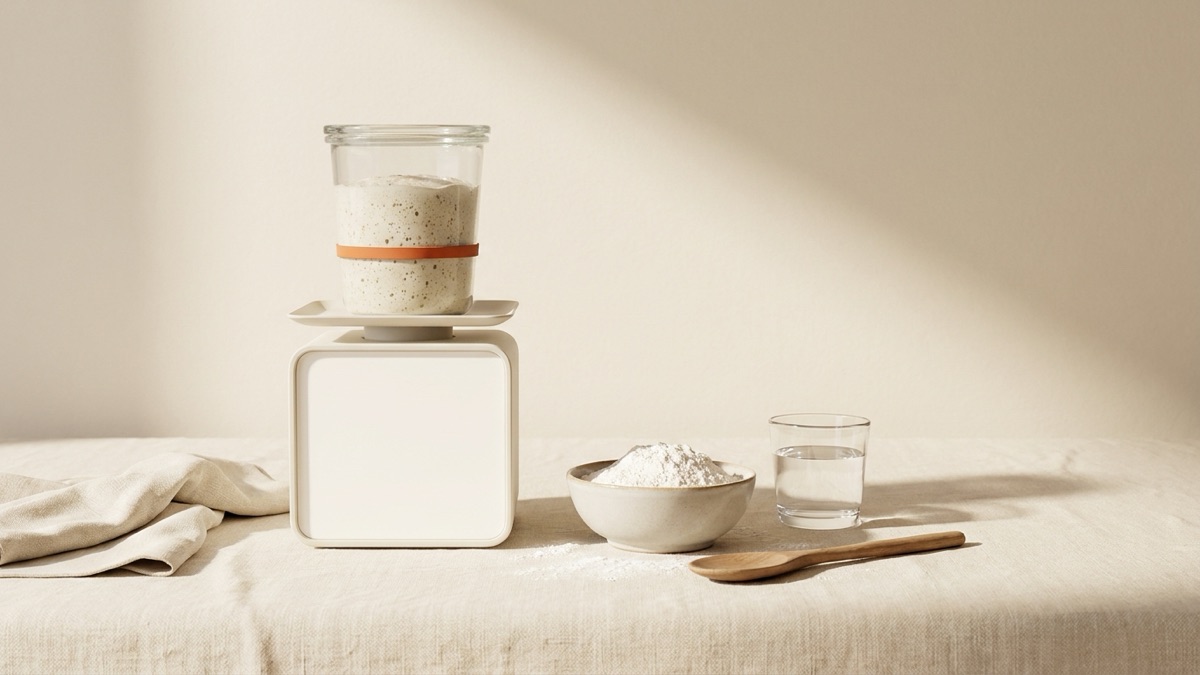
Sourdough Starter Mold: What It Looks Like, What to Do
Shaping, scoring and baking
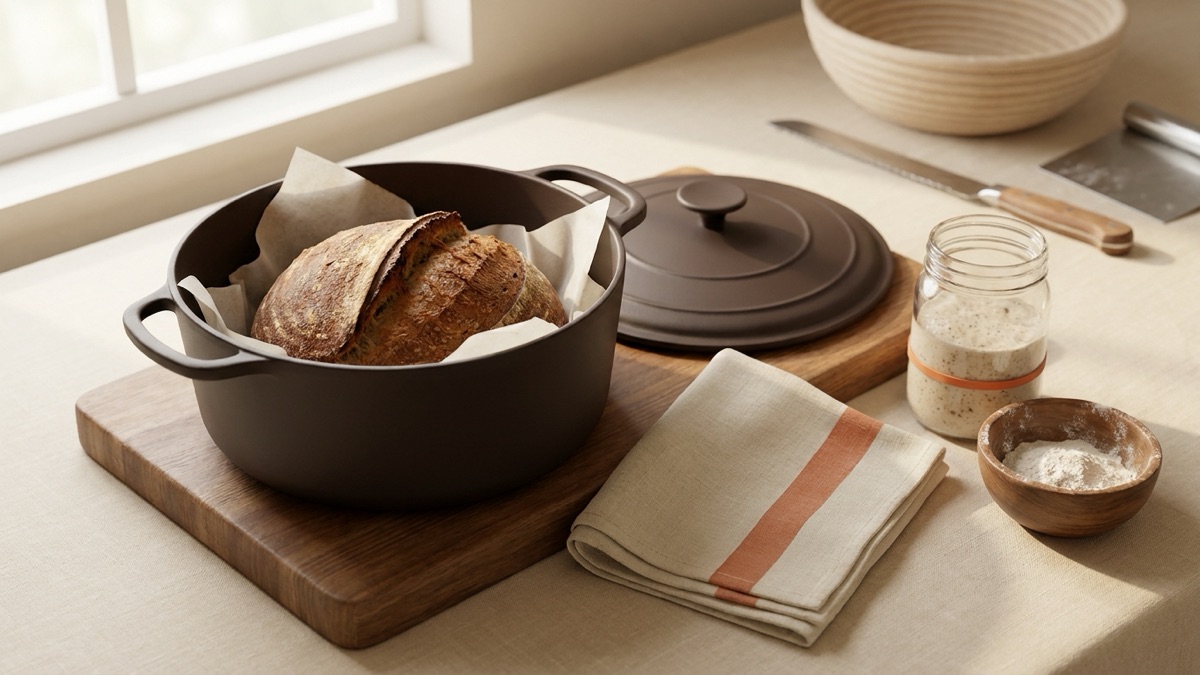
Baking Sourdough in a Dutch Oven: Heat, Lid and Timing
Bulk and proofing
The Sourdough Poke Test, and When Not to Trust It