
Loaf Scout guides
What the loaf is telling you, and the one thing to change.
Every guide reads a sign (a dense bottom, a flat jar, a sour smell) the way a baker would, says what it usually means, and ends with the next move. Written from named sources, in plain words.
Bulk and proofing
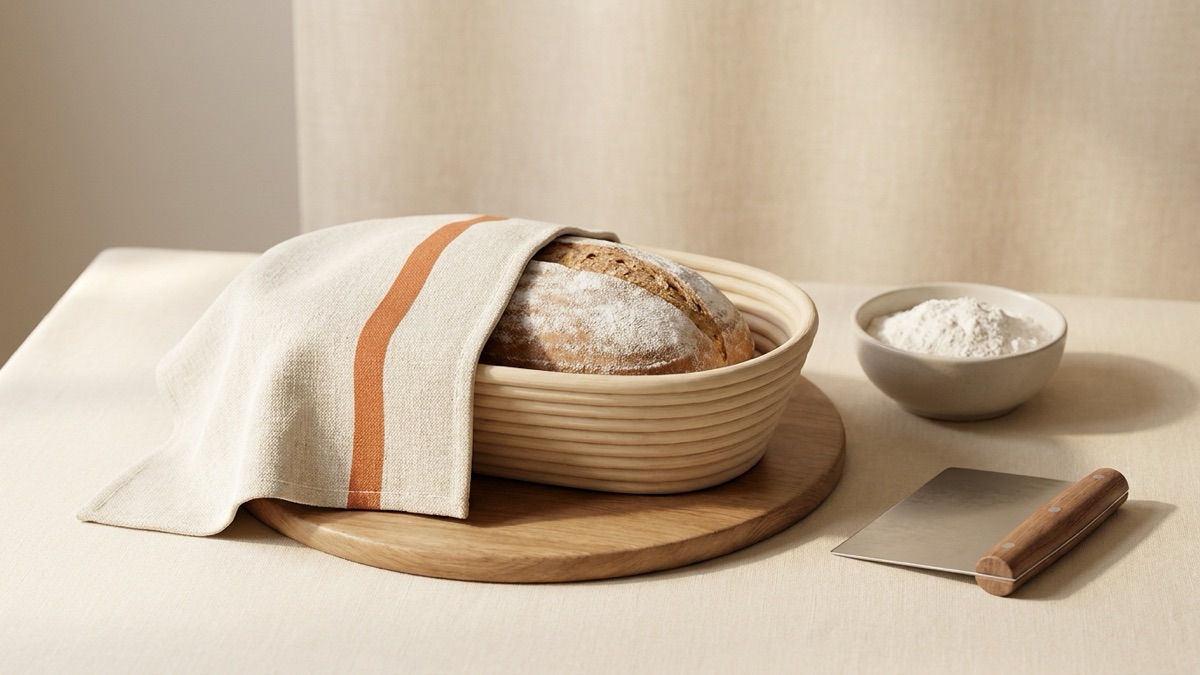
How Long to Proof Sourdough After Shaping
How long to proof sourdough after shaping: 1 to 4 hours on the counter or 8 to 16 in the fridge, with a proofing time chart and the signs that it is done.

Shaping, scoring and baking
Baking Sourdough in a Dutch Oven: Heat, Lid and Timing
How to bake sourdough in a dutch oven: the preheat, lid on or off, oven temperature, bake time and pot size, plus the one change for a pale top or dark base.
Hydration and flour
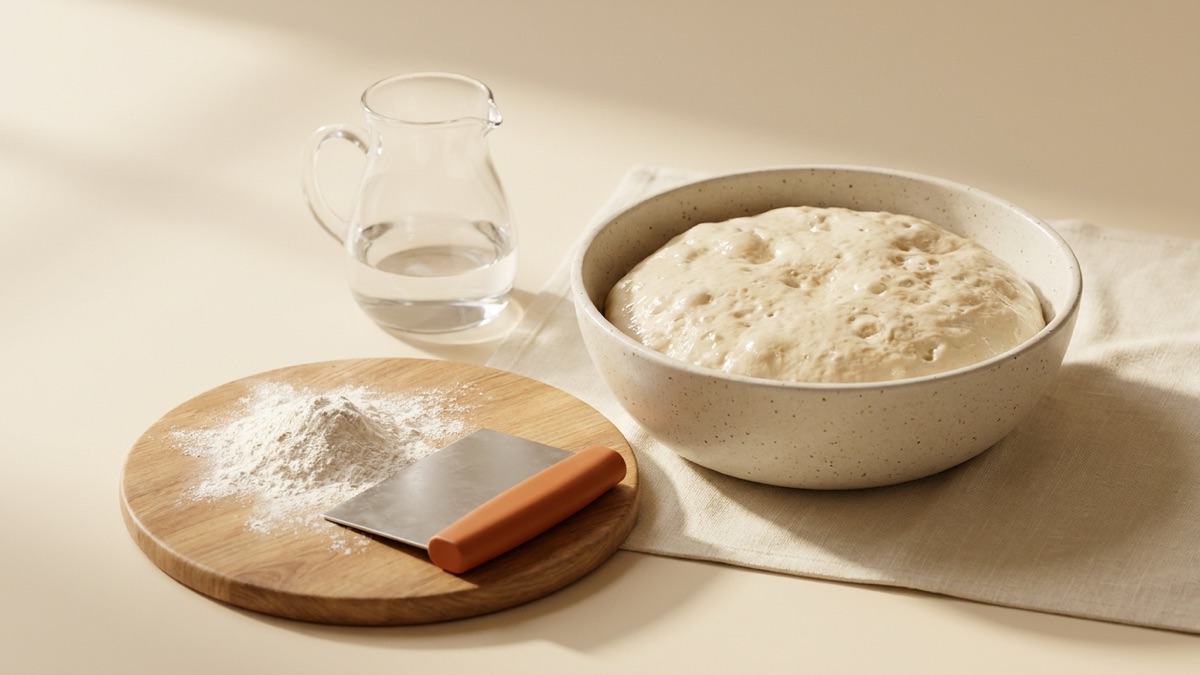
High Hydration Sourdough: When It Helps and When It Hurts
High hydration sourdough can bake up open and tender or flat and sticky. What 80 percent really means, when more water helps, and how to shape a wet dough.
Starter problems
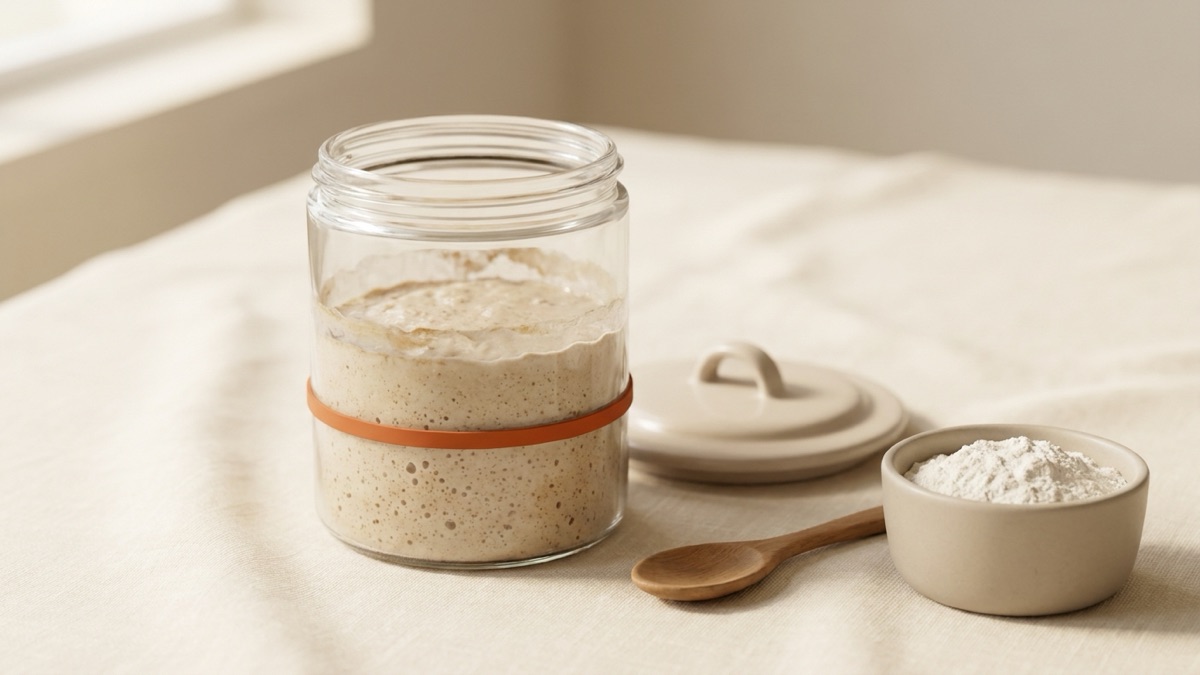
Starter Smells Like Nail Polish or Acetone? Read This
A sourdough starter that smells like acetone or nail polish remover is hungry, not spoiled. Why it happens, how to feed it out, and the signs that mean discard.
Reading the crumb
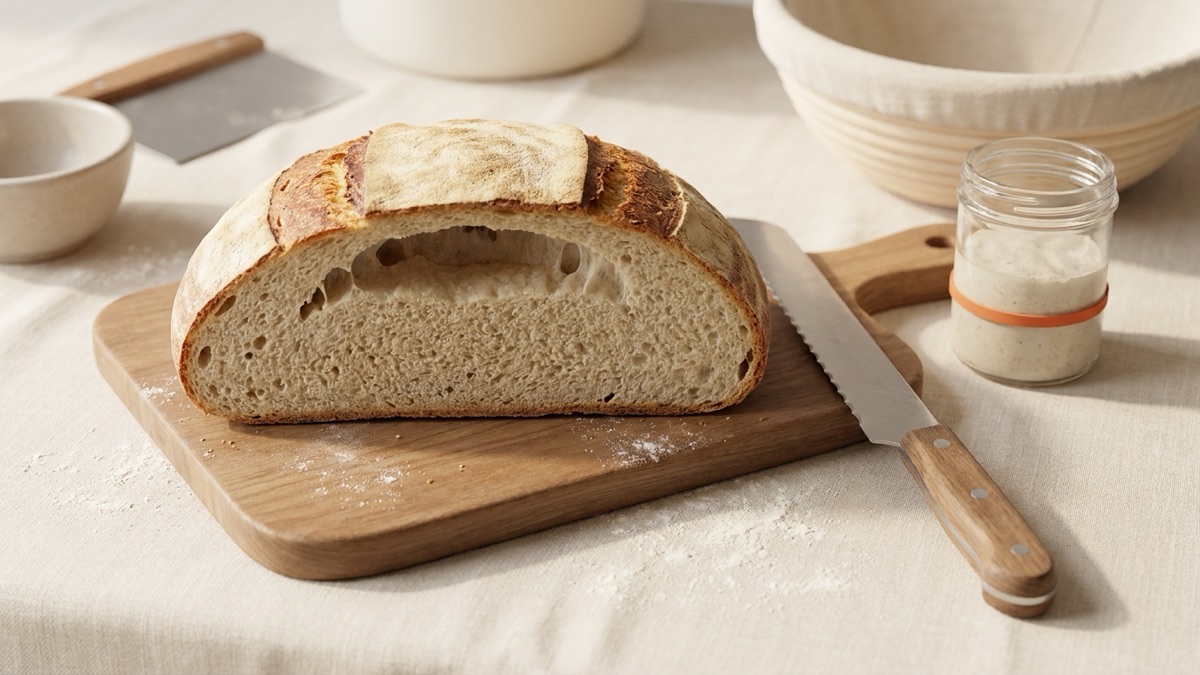
Fool's Crumb: The Gap Under the Crust
Fool's crumb is a wide gap under the top crust of sourdough with dense crumb below. What causes it, how to tell it from an open crumb, and the one fix.
Starter care
Sourdough Starter Feeding Ratios: 1:1:1 to 1:10:10
Sourdough starter feeding ratios explained: a chart of 1:1:1, 1:2:2, 1:5:5 and 1:10:10 with grams and peak times, and how to pick one for a 12 hour peak.
Shaping, scoring and baking
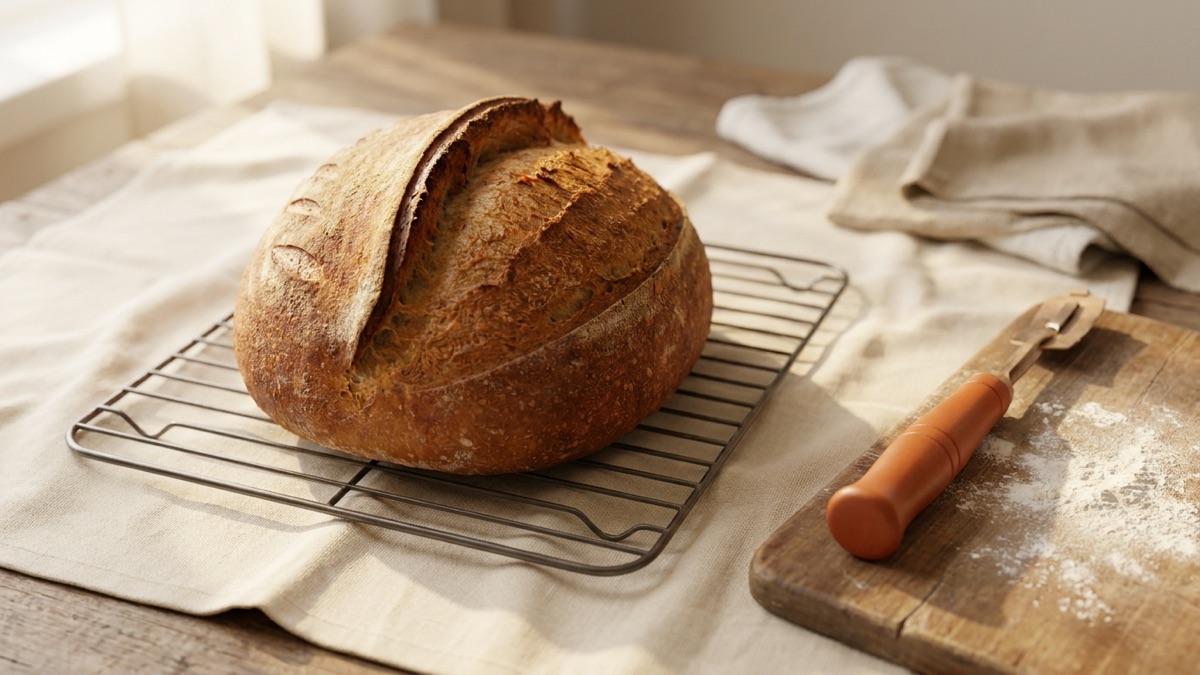
How to Get an Ear on Sourdough
What a sourdough ear is, why yours is not opening or lifting, and the four things that make one: shaping tension, the right proof, an angled score and steam.
Schedules and seasons
Sourdough in Winter: Keeping a Cold Kitchen Moving
How to keep sourdough moving in a cold kitchen: a warmer starter, warm water at the mix, a warm spot for bulk, and proofing that fits the slower winter pace.
Bulk and proofing
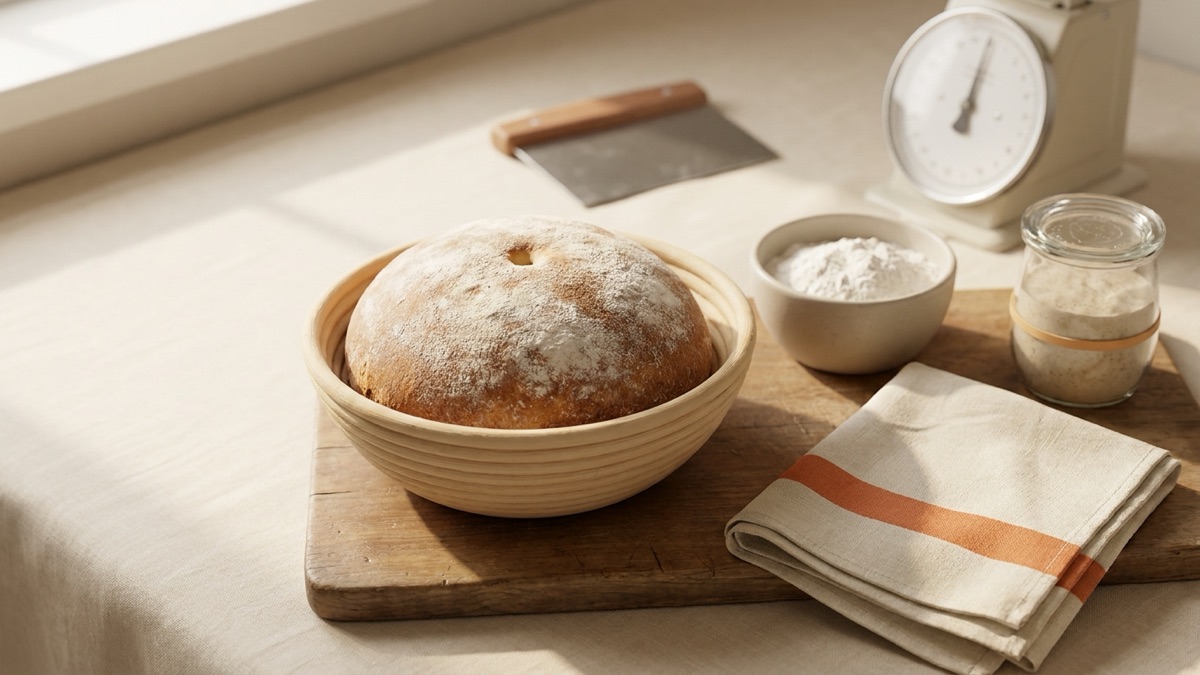
The Sourdough Poke Test, and When Not to Trust It
How to do the sourdough poke test on shaped dough, what each dent means, why it misleads during bulk and after a cold proof, and what to check instead.
Starter problems
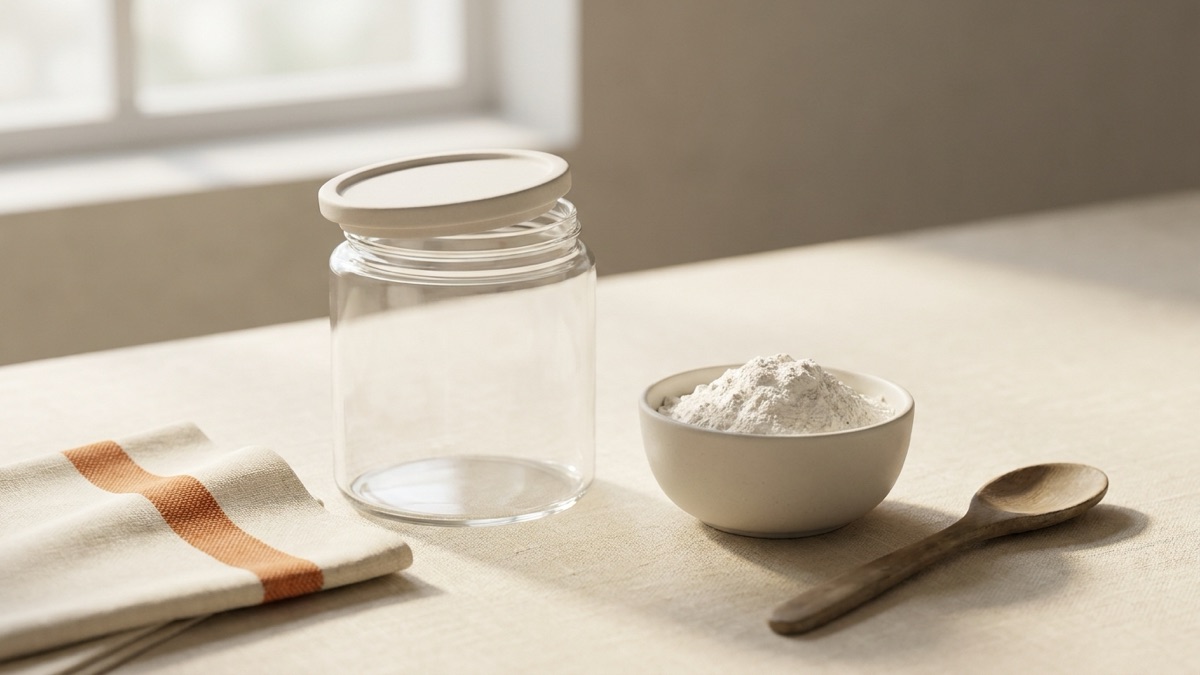
Sourdough Starter Mold: What It Looks Like, What to Do
What mold on a sourdough starter looks like, on top or on the jar, how to tell it from hooch or a dry skin, and why the whole starter goes, never scraped.
Reading the crumb
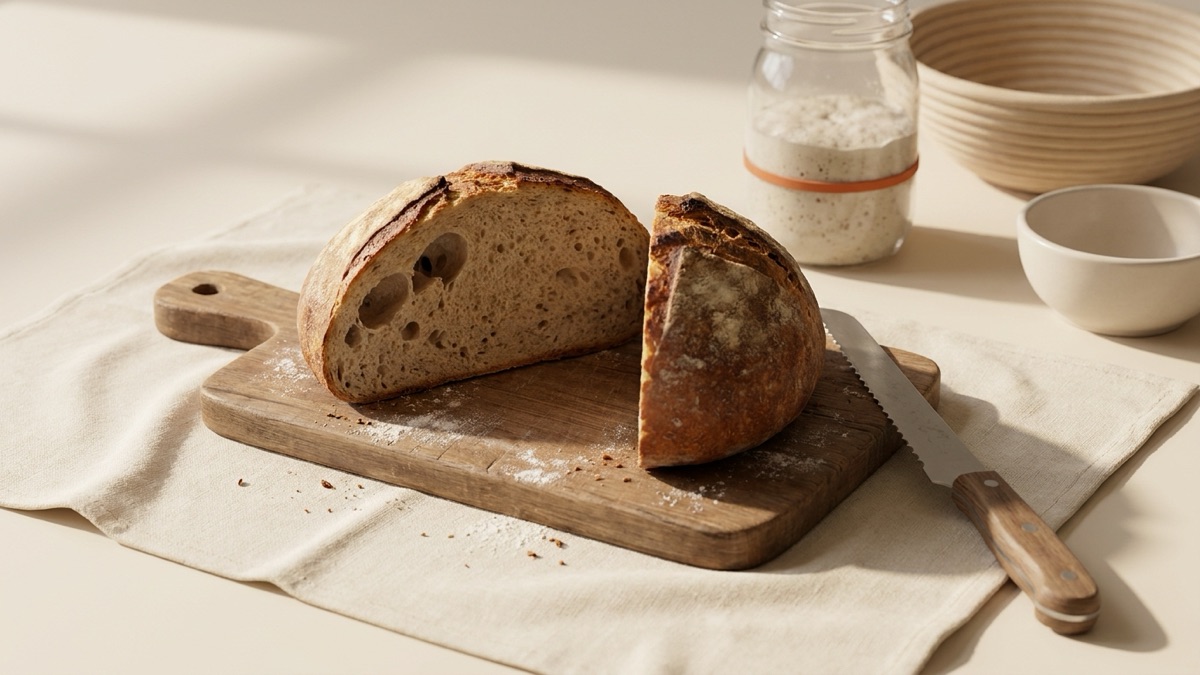
Big Holes in Sourdough: Good Sign or Fault?
Big holes in sourdough can be a win or a warning. How to read the crumb around them, what holes at the top mean, and the one change to make next bake.
Starter care
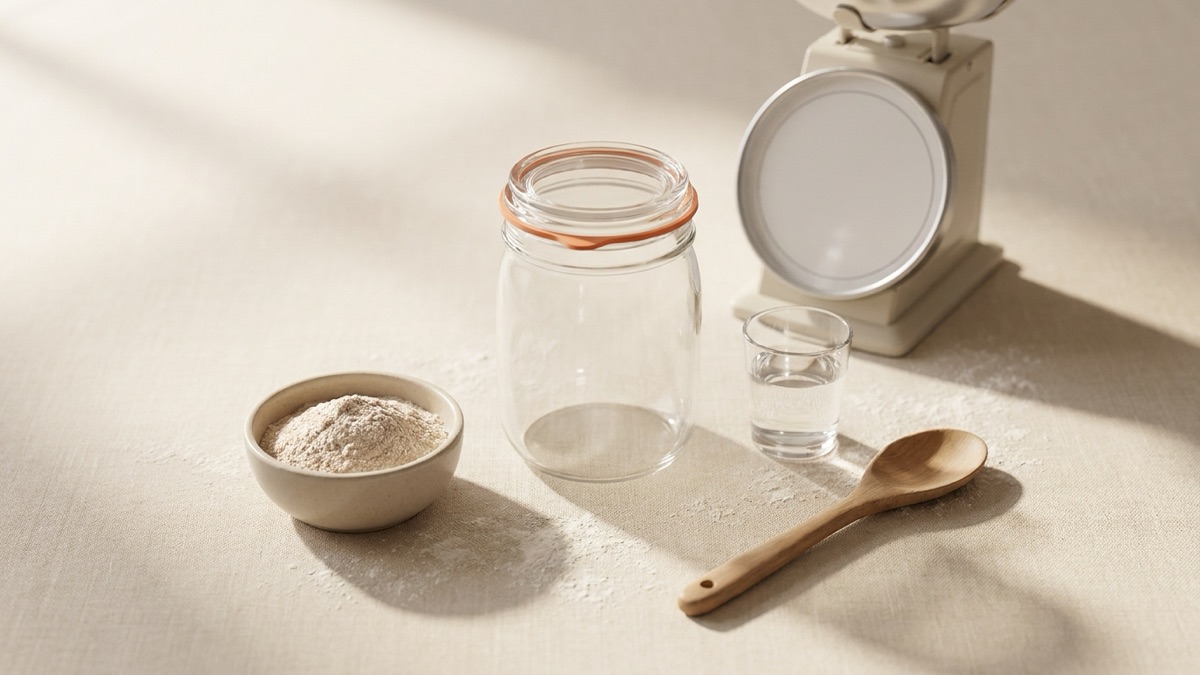
How to Make a Sourdough Starter: What Each Day Looks Like
How to make a sourdough starter from scratch with flour, water and a jar: the day by day routine, what day 3 and day 5 look like, and how to know it is ready.
Loaf troubleshooting
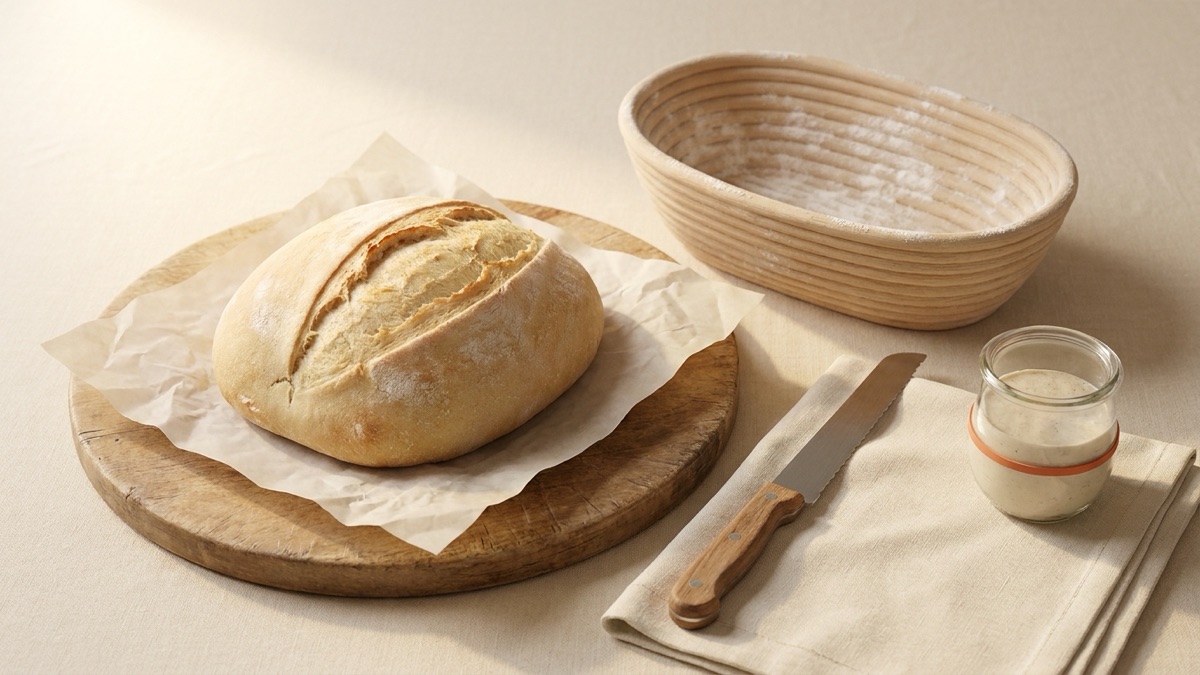
Why Is My Sourdough Flat? Spreading Loaves, Explained
A flat sourdough is usually overproofed, loosely shaped or too wet for the flour. How to tell which from the loaf, and the one change to make next bake.
Starter problems
Hooch on Sourdough Starter: What the Liquid Means
The gray, brown or black liquid on your sourdough starter is hooch, a sign of hunger, not spoilage. What each color means, pour or stir, and how to stop it.
Starter care
Sourdough Starter: A Plain Guide to Keeping One
What a sourdough starter is and how to keep one going: the jar, the right consistency, counter or fridge, how to feed it, and the signs that mean start again.

Schedules and seasons
The Cold Proof: An Overnight Sourdough Schedule
How a sourdough cold proof works: 8 to 16 hours in the fridge for more flavor and clean scoring, baked straight from cold, with a simple overnight schedule.
Starter care
How to Tell When Your Starter Is Ready to Bake
How to tell if your sourdough starter is ready: the band, the dome, the bubbles and the smell, why the float test is only a hint, and what to do past peak.
Loaf troubleshooting
Why Is My Sourdough Dense and Gummy?
A dense, gummy sourdough is usually cut warm, underbaked or underfermented. How to tell which one you have, and the one change to make next bake.
Hydration and flour
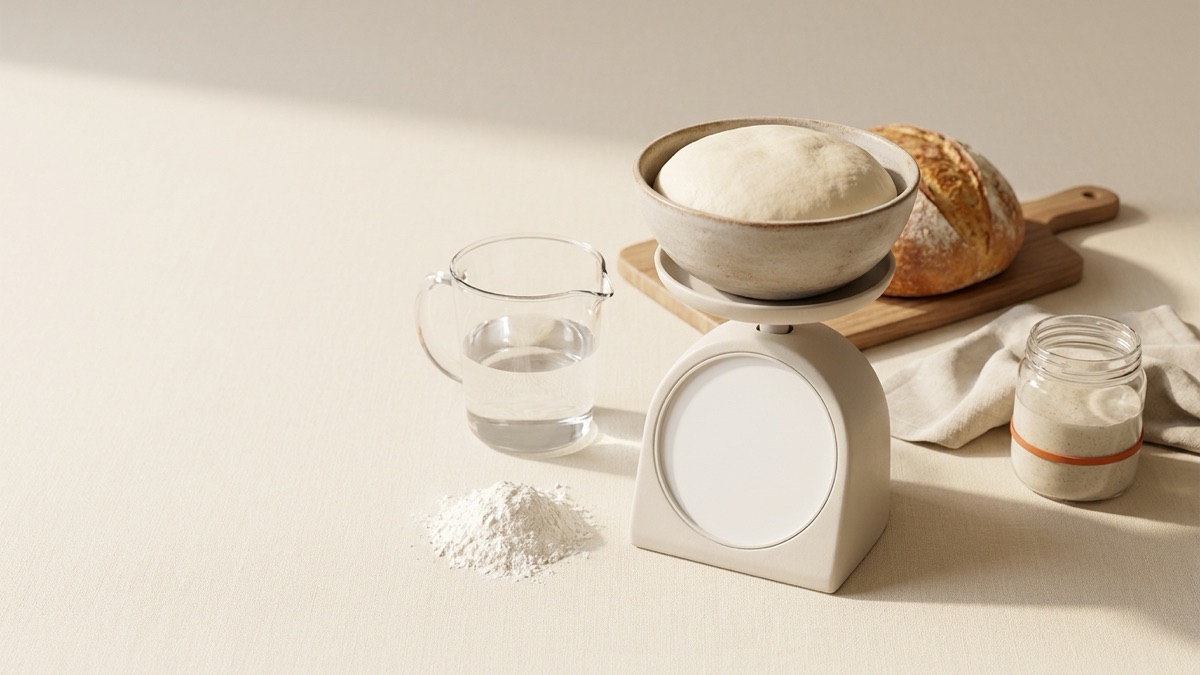
Sourdough Hydration Explained: What the Numbers Mean
What sourdough hydration means, how to count it with the starter, what 65, 75 and 85 percent feel like, and the best number for your first loaves.
Bulk and proofing
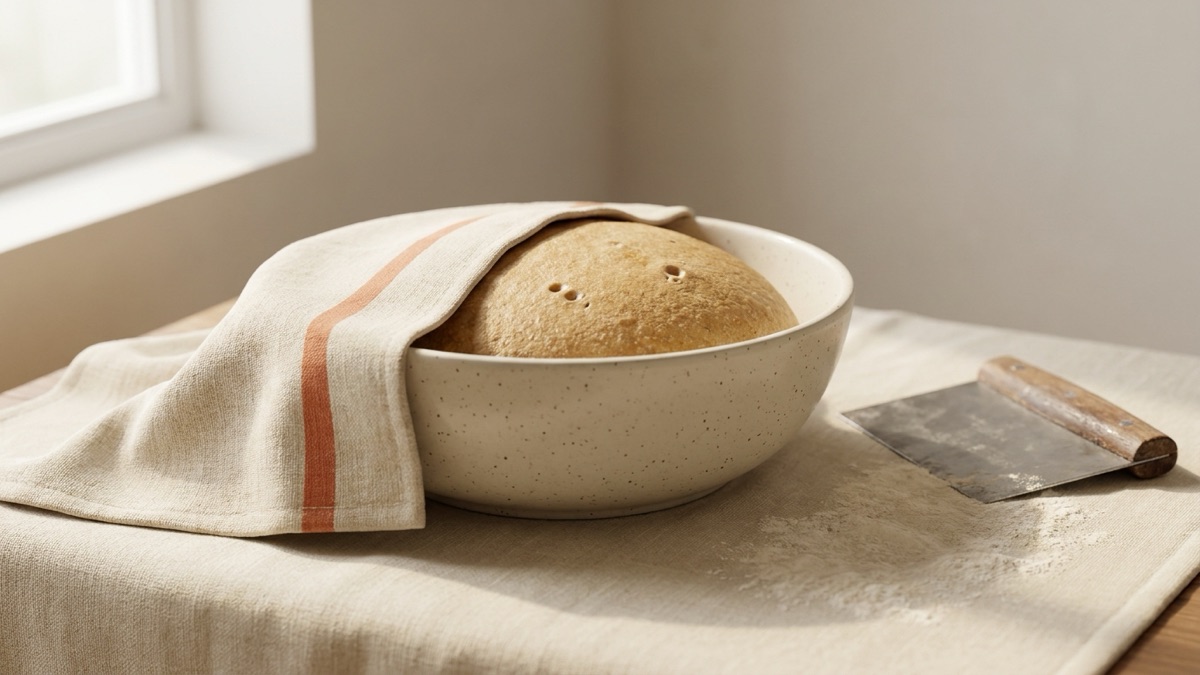
How Long to Bulk Ferment Sourdough
How long sourdough bulk fermentation takes from 68F to 78F, the signs it is done (rise, dome, bubbles, jiggle), where folds fit, and what to change next bake.
Starter problems
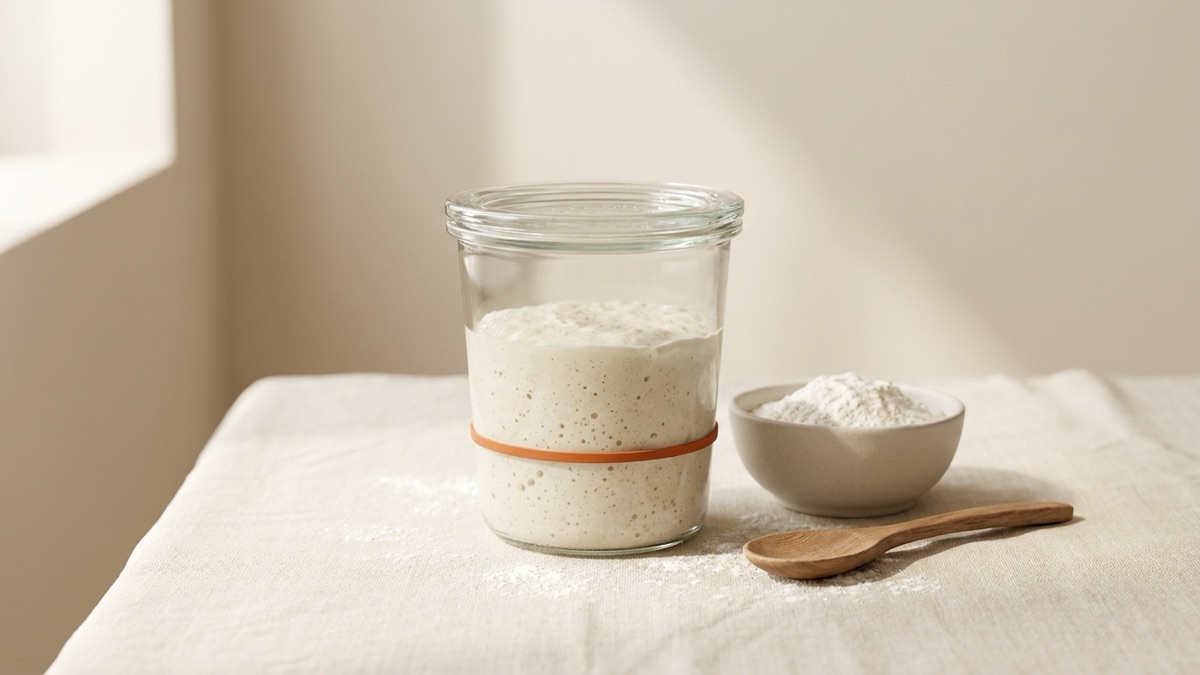
Sourdough Starter Not Rising: Every Cause and Fix
Why a sourdough starter will not rise, double or bubble, in the order worth checking: age, warmth, the feed, flour and the fridge, plus when to start over.
Bulk and proofing
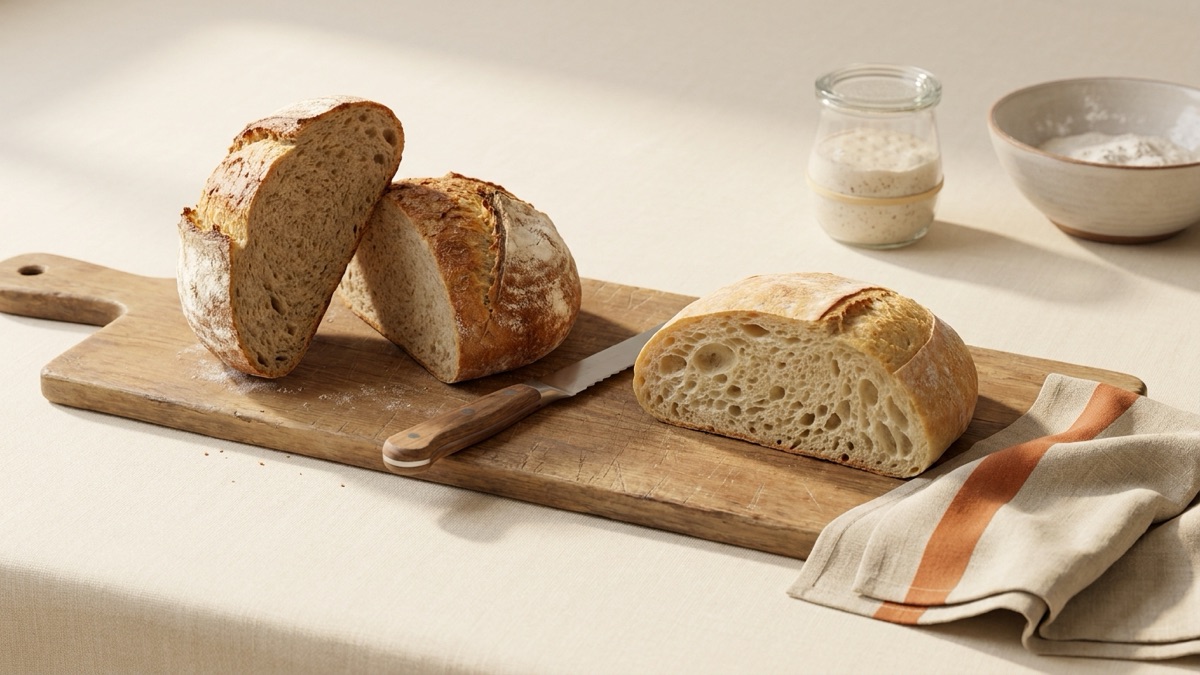
Underproofed vs Overproofed Sourdough: How to Tell
Underproofed vs overproofed sourdough: the signs in the crumb, the crust and the dough, why both can show big holes, and the one change to make next bake.
Reading the crumb
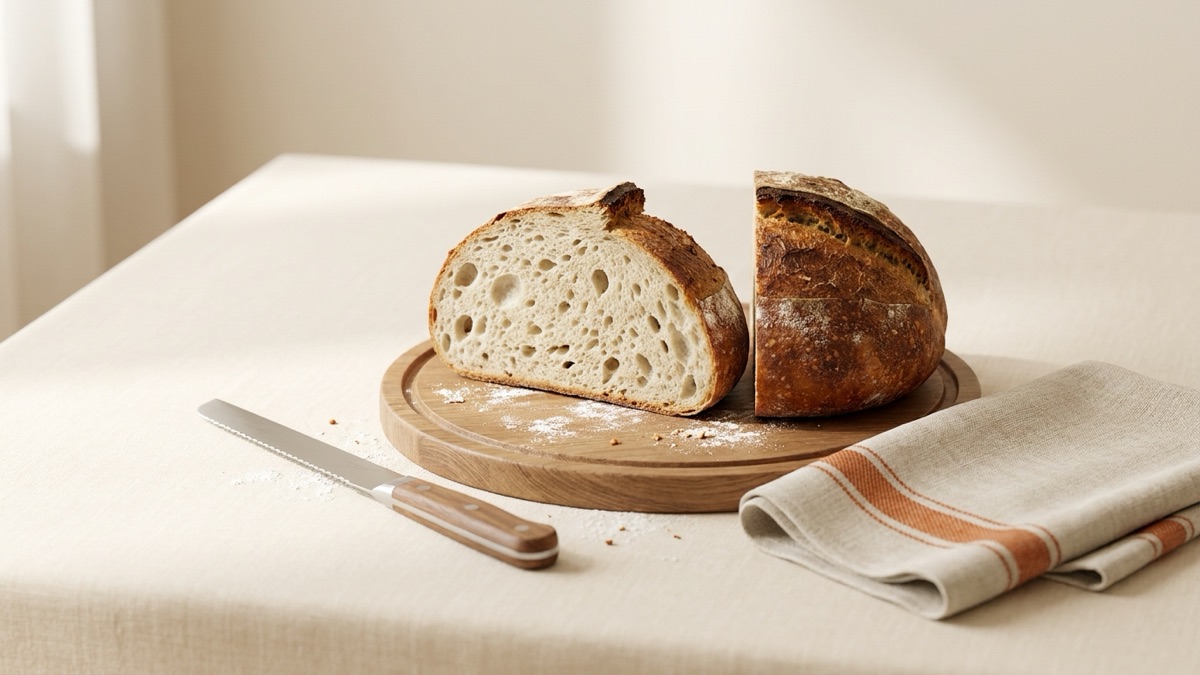
The Sourdough Crumb: Read It Like a Baker
How to read a sourdough crumb: what a good crumb looks like, a chart of holes, tunnels, fool's crumb and dense bottoms, and the one change to make next bake.