
Why Is My Sourdough Flat? Spreading Loaves, Explained
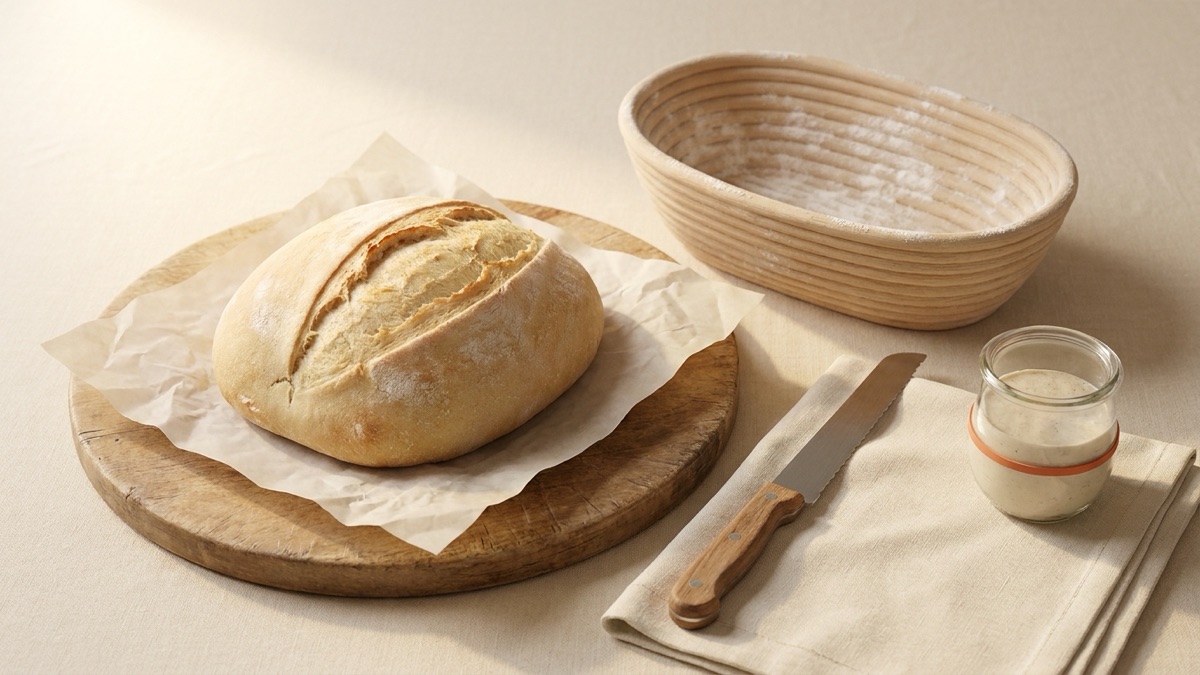
The dough looked fine in the basket, then it slid onto the parchment and kept going, and the loaf came out of the pot like a wide, low disc. A flat sourdough almost always comes from one of three places: timing, shaping or water.
Quick answer
A flat sourdough is most often overproofed: the gluten was worn out and could not hold its shape, so it spread out instead of up. Loose shaping and a dough too wet for your flour do the same. Shorten the final proof by 30 to 60 minutes first, then look at shaping tension and water.
The read
A loaf that spread sideways, baked a little pale and has a fairly even, thin-walled crumb was a little overproofed. End bulk when the dough has grown 50 to 75 percent rather than doubled, or shorten the final proof by about 30 minutes, and leave everything else the same. If the next loaf is tall but bursts open with tight crumb at the base, you went past the sweet spot the other way.
Key takeaways
- Spreading out instead of up usually means the dough went past its peak: shorten the proof or end bulk sooner.
- Flat and also tight and heavy is the other edge: too little gas, so bulk longer.
- Loose shaping leaves the dough nothing to hold it up. Build tension and seal the seam.
- If a dough is slack and sticky from the start, lower the water by 2 to 3 percent.
- Change one lever at a time.
Why is my sourdough flat?
A loaf rises in the oven because a strong, gassy dough meets the heat and lifts before the crust sets. It needs enough gas and enough strength to hold it, and a flat loaf is short on one of them.
Most of the time it is strength, worn down by time. The longer a dough ferments, the more the gluten tires, until it can no longer hold the shape and slumps sideways. The other common causes are a shape with no tension and a dough wetter than the flour can handle.
Read the loaf before you change anything
Match what you see to a cause, then move the one lever in the last column.
| What you see | Likely cause | Lever | The one change |
|---|---|---|---|
| Flat and pale, slack and bubbly when turned out, lacy crumb with thin walls | Overproofed | proof | Shorten the final proof by 30 to 60 minutes, or end bulk at 50 to 75% rise |
| Flat after a night in the fridge, risen well above the basket rim | Cold proof ran long, or bulk went too far first | bulk | End bulk at about 50% rise before a long cold proof |
| Held its shape out of the basket, then spread in the oven, weak ear | Loose shaping | shaping | Shape with more tension and let the seam seal |
| Slack and sticky from the start, hard to shape at all | Too much water for the flour | hydration | Lower the water by 2 to 3% |
| Low and dense, tight crumb, maybe gummy at the base | Underfermented, too little gas | bulk | Extend bulk by 1 to 2 hours, until about 50% risen, domed and jiggly |
Try it
Not sure which row is yours? Answer seven questions about the cut loaf in the crumb troubleshooter and get the proof call, the faults that fit, and the one lever to move next bake.
Sourdough spreading out, not up
Spreading out instead of up is the classic sign of an overproofed dough. The signs line up at that end of the proof scale:
- A flat, spread loaf with little height and no ear
- A pale crust, because the yeast used up the sugars that brown it
- A collapsed, lacy crumb with thin, torn walls
- A sharp, boozy smell, and dough that stuck to the banneton
The fix is less time, in the step that ran long. End bulk 30 to 60 minutes sooner, when the dough has grown 50 to 75 percent rather than doubled, or shorten the final proof by about 30 minutes. If the loaf was fully overproofed, end bulk 1 to 2 hours sooner, or move bulk somewhere cooler, around 72F (22C). Underproofed vs overproofed walks through both edges side by side.
In a hot kitchen this happens faster: heavy fermentation builds acidity that weakens the gluten, so the dough spreads more and rises less. Use cooler water and check the dough earlier than the recipe says.
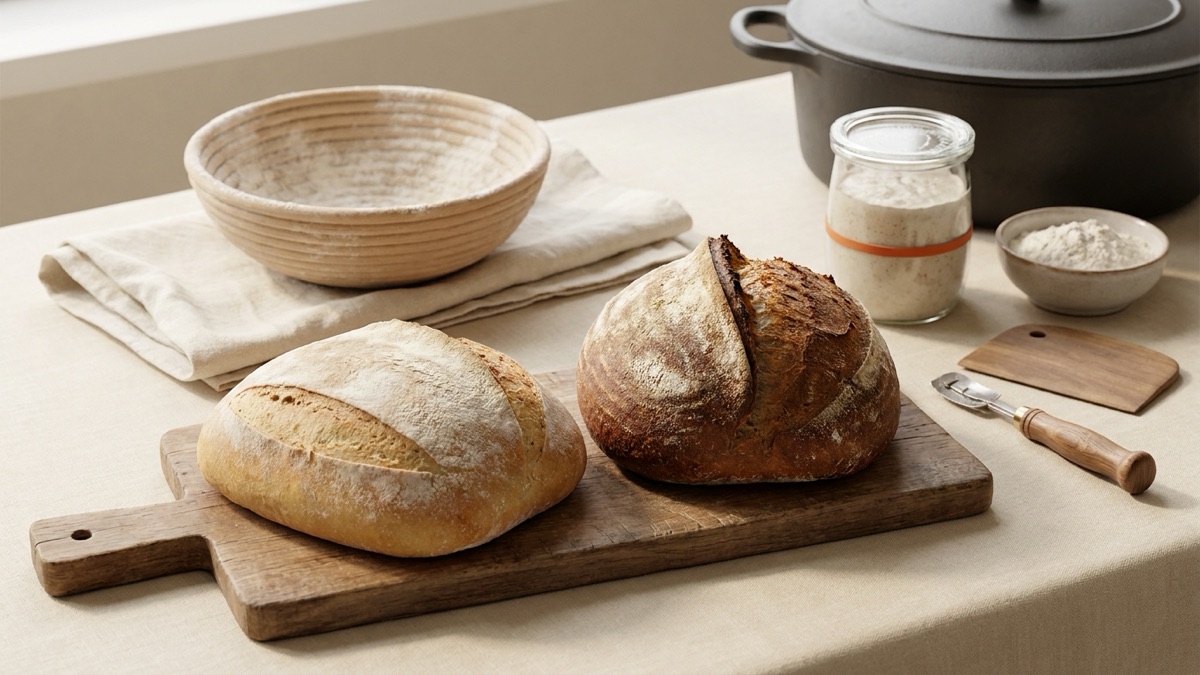
Sourdough flat after a cold proof
A cold proof slows the dough down, but it does not stop it. Risen well above the banneton rim, slack and bubbly on top, and spreading as soon as it is turned out: it went too far, and it bakes flatter and paler, often with a sharp sour flavor.
Two things set how far the dough gets in the fridge: how far bulk went first, and how long it stayed. Most doughs are happy for 8 to 16 hours, but a dough already near its peak has little room left, so for a long cold proof, end bulk at about 50 percent rise. A fridge that runs warm keeps fermentation going faster than you would think. The cold proof guide covers timing in full.
Good to know
Bake straight from the fridge. Cold dough is firm, holds its shape when you turn it out, and scores cleanly. There is no need to let it warm up first, and a warm, soft dough spreads more.
Sourdough flattens out of the banneton
A little slump is normal for a soft dough. One that keeps spreading across the parchment is telling you about strength or timing.
If it slumps and feels sticky, slack and bubbly, it is most likely overproofed: shorten the proof. If it sticks to the basket and tears as it comes out, the usual causes are a dough that is under-strengthened, over-hydrated or not shaped tightly enough. Dust the basket well with white flour, or use a cloth liner, and look at the strength of the dough before you change the clock.
Work quickly once it is out: score it, lower it into the preheated pot and get the lid on. The longer a soft dough sits, the further it spreads.
Sourdough spreading after shaping
A dough that spreads on the bench right after shaping usually needed more strength or a tighter shape.
Build strength in bulk
Stretch and folds during bulk build the gluten that holds a loaf up. Three sets about 30 minutes apart is a common starting point. If the dough is weak and slack, do a firmer set or one or two more; if it is already strong and elastic, a gentle set is plenty. Sourdough hydration explains why wetter doughs need more of this.
Build tension when you shape
Pull the dough toward you on an unfloured patch of counter so the skin tightens over the top, and fold the edges in to the middle, sealing them as you go. Let the shaped dough sit seam side down for a minute so the seam seals before it goes into the basket. Use only the lightest dusting of flour; too much keeps the folds from joining.
Lower the water if the dough fights you
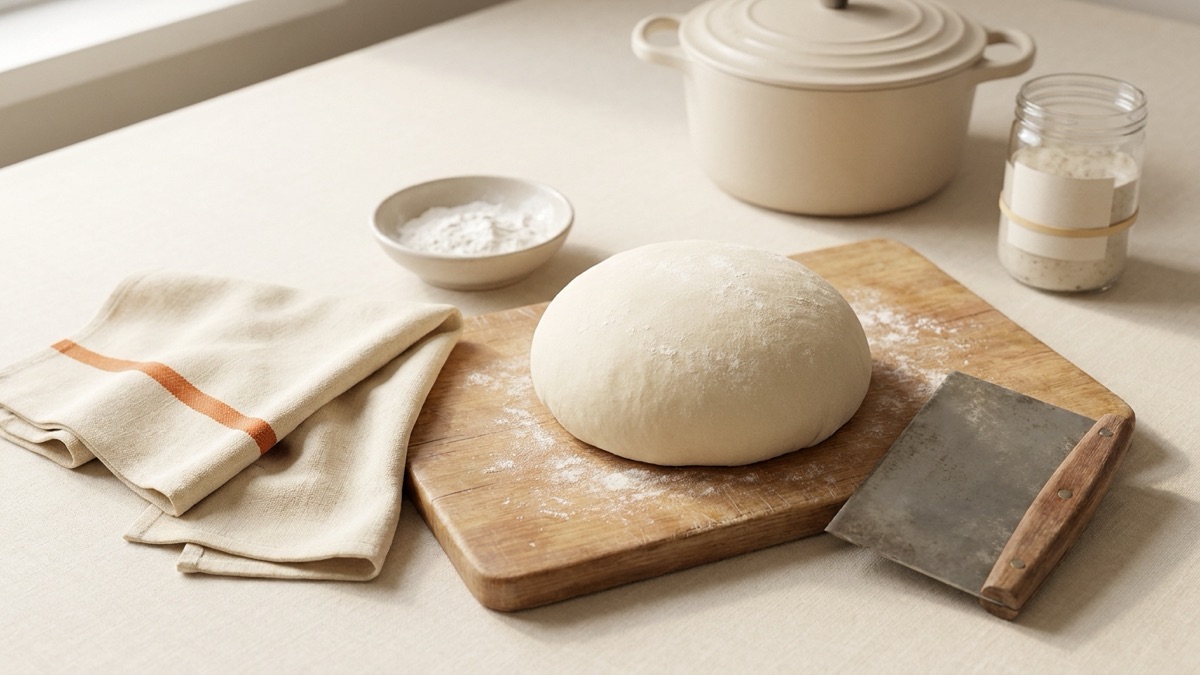
Higher hydration is not automatically better. If the dough is slack and sticky from the first mix and never firms up, it is wetter than your flour can handle. Lower the water by 2 to 3 percent next bake, or hold back 25 to 50 g at the mix and work it in slowly; when the dough turns loose and hard to handle, that is the flour's limit.
Sourdough dense and flat
A loaf that is flat and tight together is not overproofed. It is low because it never had enough gas to rise. Look for a dense band along the base, a heavy, moist crumb, and perhaps a few big tunnels in tight crumb above it.
That is underfermentation: a short bulk, a cool kitchen or a starter past or short of its peak. Extend bulk by 1 to 2 hours, until the dough has grown about 50 percent, looks domed and jiggles. A dough that finishes bulk in about 4 to 5 hours at 78F (26C) can take 8 hours or more at 68F (20C). Dense and gummy sourdough covers this edge in full.
Heads up
A preheated pot is far hotter than it looks. Lower a soft dough in on a parchment sling, wear oven mitts, and lift the lid away from your face so the steam does not reach you.
Every other whole-loaf fault, from a pale crust to a burnt base, is in the loaf troubleshooting guides.
What to do this bake
- Take the dough's temperature after mixing and write it down.
- Bulk in a straight-sided container with the start level marked.
- Before shaping, check the dough: domed, bubbly and jiggly, grown 50 to 75 percent, not doubled.
- Shape with tension and let the seam sit down on the counter for a minute.
- On a counter proof, flour a fingertip and press about 1/2 inch (1 cm) in: it should fill back slowly and leave a small dimple.
- Cut only when cool, take one straight-on photo of the crumb in daylight, and change one thing.
What to change next bake
- Flat, pale, lacy crumb, slack out of the basket: proof. Shorten the final proof by 30 to 60 minutes, or end bulk at 50 to 75 percent rise.
- Flat after a long cold proof: bulk. End it at about 50 percent before the fridge.
- Held its shape, then spread in the oven: shaping. More tension, a sealed seam.
- Slack and sticky from the start: hydration. 2 to 3 percent less water.
- Flat and dense, tight at the base: bulk, 1 to 2 hours longer, until about 50 percent risen, domed and jiggly.
- Good height, a clean bloom and an even crumb: Bake it again, and write down the bulk time and dough temperature so you can repeat it.
A flat loaf still tastes like bread, and it told you which side of the peak you landed on. Pick the one lever and leave the rest alone for one bake.
The pictures in this guide are AI-generated illustrations, not photos of real bakes; real loaves and starters vary, so trust the signs described in the text over any picture. Loaf Scout guides are general baking guidance, written from the sources named below, and every kitchen, flour and oven is a little different. Loaf Scout gives an AI read of one photo; your own eyes, nose and the poke test still count. A starter with fuzzy mold of any color, pink or orange streaks, or a rotten smell is thrown out and started again, whatever any page says.
Questions people ask
Why does my sourdough spread out instead of rising up?
Most often the dough was overproofed, so the gluten was too worn out to hold its shape. Loose shaping and a dough that is too wet for the flour do the same. Shorten the final proof by 30 to 60 minutes first, and change shaping or water only if that does not help.
Why is my sourdough flat after a cold proof?
Usually bulk ran too far before the dough went into the fridge, or the cold proof ran too long. For a long cold proof, end bulk at about 50 percent rise, and bake straight from the fridge while the dough is firm.
Why does my sourdough flatten when I take it out of the banneton?
A dough that slumps as soon as it is turned out is usually overproofed, loosely shaped or too wet. Dough that sticks to the basket points to weak strength, too much water or loose shaping, so dust the basket well and build more tension.
Why is my sourdough both dense and flat?
A loaf that is low and tight together usually never built enough gas to rise, often from a short bulk or a sluggish starter. Extend bulk by 1 to 2 hours, until the dough has grown about 50 percent, looks domed and jiggles.
Can I save a sourdough that is spreading before it goes in the oven?
Bake it anyway, straight away, in a fully preheated covered pot. More time will only make it spread further. It may bake lower and paler, but it is still bread, and the loaf tells you what to change next time.
Sources
- The Perfect Loaf: The ultimate guide to proofing bread dough: www.theperfectloaf.com/guides/proofing-bread-dough/
- The Perfect Loaf: How to shape a boule: www.theperfectloaf.com/guides/shaping-a-boule/
- The Perfect Loaf: How to stretch and fold sourdough bread dough: www.theperfectloaf.com/how-to-stretch-and-fold-sourdough-bread-dough/
- The Perfect Loaf: How to bake sourdough bread in summer: www.theperfectloaf.com/how-to-bake-sourdough-bread-in-summer/
- The Perfect Loaf: The ultimate guide to bread dough bulk fermentation: www.theperfectloaf.com/guides/the-ultimate-guide-to-bread-dough-bulk-fermentatio
Read next
Loaf troubleshooting
Why Is My Sourdough Dense and Gummy?
Starter problems
Starter Smells Like Nail Polish or Acetone? Read This
Schedules and seasons
Sourdough in Winter: Keeping a Cold Kitchen Moving
Starter problems
Sourdough Starter Mold: What It Looks Like, What to Do
Reading the crumb
The Sourdough Crumb: Read It Like a Baker
Starter problems
Hooch on Sourdough Starter: What the Liquid Means