
Sourdough in Winter: Keeping a Cold Kitchen Moving
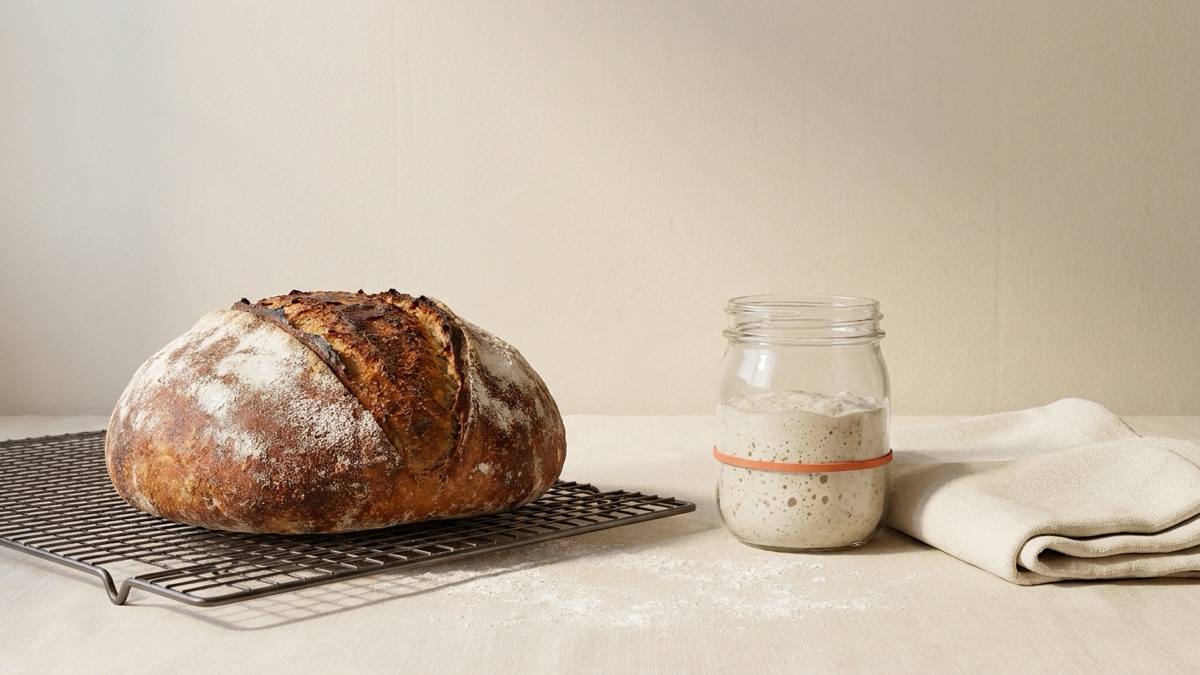
The kitchen is cold, the dough has barely moved in six hours, and the recipe said it would be done by now. Nothing is wrong with your starter or your hands. Winter just slows sourdough down, and a few small changes bring the pace back.
Quick answer
Sourdough in winter is slow because cold slows fermentation. Warm the dough instead of waiting longer: use warm water so the mixed dough sits around 75 to 78F (24 to 26C), keep it in a warm spot, feed the starter with lukewarm water, and judge bulk by rise, dome and jiggle, not the recipe's clock.
The read
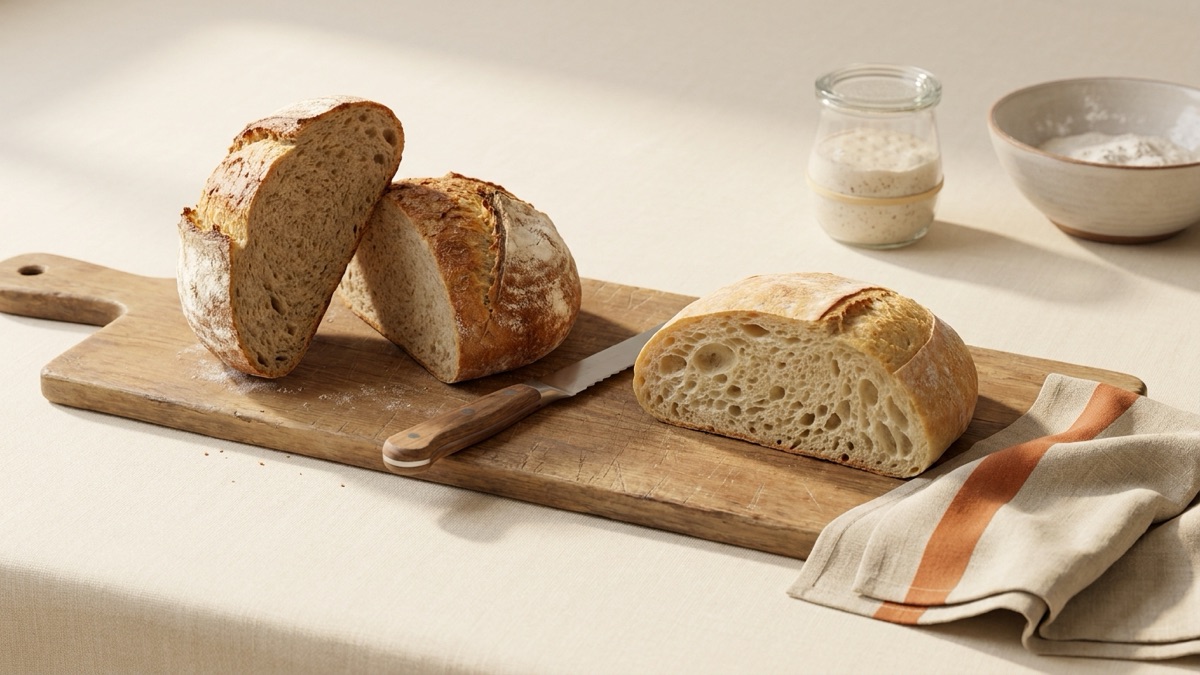
A winter loaf with a dense band at the base and a few big tunnels above it is underproofed: the cold slowed bulk more than the clock showed. Warm the dough to about 75 to 78F (24 to 26C) and let bulk run until it has grown about 50 percent, looks domed and jiggles, and leave everything else the same. If the next loaf spreads and bakes pale, you went past it.
Key takeaways
- Temperature sets the pace. A bulk that takes about 4 to 5 hours at 78F (26C) can take 8 hours or more at 68F (20C).
- Warm the dough, not just the room: warm water at the mix is the easiest lever you have.
- Keep the starter warm too, with lukewarm water and a warm spot, or feed at a smaller ratio so it peaks on time.
- Read the dough, not the clock: about 50 to 75 percent rise, domed edges, bubbles on top and sides, and a jiggle.
- The fridge is your friend in winter. A cold proof overnight gives you a wide, steady window.
Why sourdough is so slow in winter
The wild yeast and bacteria in sourdough work faster when warm and slower when cold, and a few degrees make a real difference. A recipe written in a 76F (24C) kitchen and followed in a 64F (18C) one will run hours behind, and if you shape on the recipe's schedule, the dough goes into the oven underfermented.
That is the most common winter fault: a dense band at the base, big tunnels in tight crumb, or a gap under the top crust. It is not bad flour; the dough needed more time or more warmth. Underproofed vs overproofed shows the signs side by side if you are not sure which way your loaf went.
| Kitchen | How bulk tends to run | What to do |
|---|---|---|
| About 78F (26C) | About 4 to 5 hours | Check early; this is a warm day |
| About 74 to 76F (23 to 24C) | Often 2 to 5 hours with a larger share of starter | The comfortable middle; read the dough |
| About 68F (20C) | 8 hours or more | Warm water at the mix, a warm spot |
| Below about 68F (20C) | Much slower still | Warm the dough and find a warm spot, or plan a cold proof |
These are rules of thumb, not promises for your kitchen. Flour, hydration and how much starter the recipe uses all shift the timing too.
Sourdough starter in winter
Below about 70F (21C), a starter slows down a lot and may not double before you want to mix. A slow winter starter is almost always a cold one, not a weak one. Three ways to bring it back on schedule:
- Lukewarm water at each feed. It gives the starter a warm start, even in a cool room.
- A warm spot. Around 75 to 80F (24 to 27C) is where most starters are happiest. The oven with only the light on, checked so it does not get too hot, or the top of the fridge both work.
- A smaller ratio. Less fresh flour per gram of starter means a faster peak. If a 1:5:5 feed peaks overnight in summer, a 1:2:2 or 1:1:1 feed may fit better in winter. Some bakers simply keep more ripe starter at each feed when the kitchen is cold.
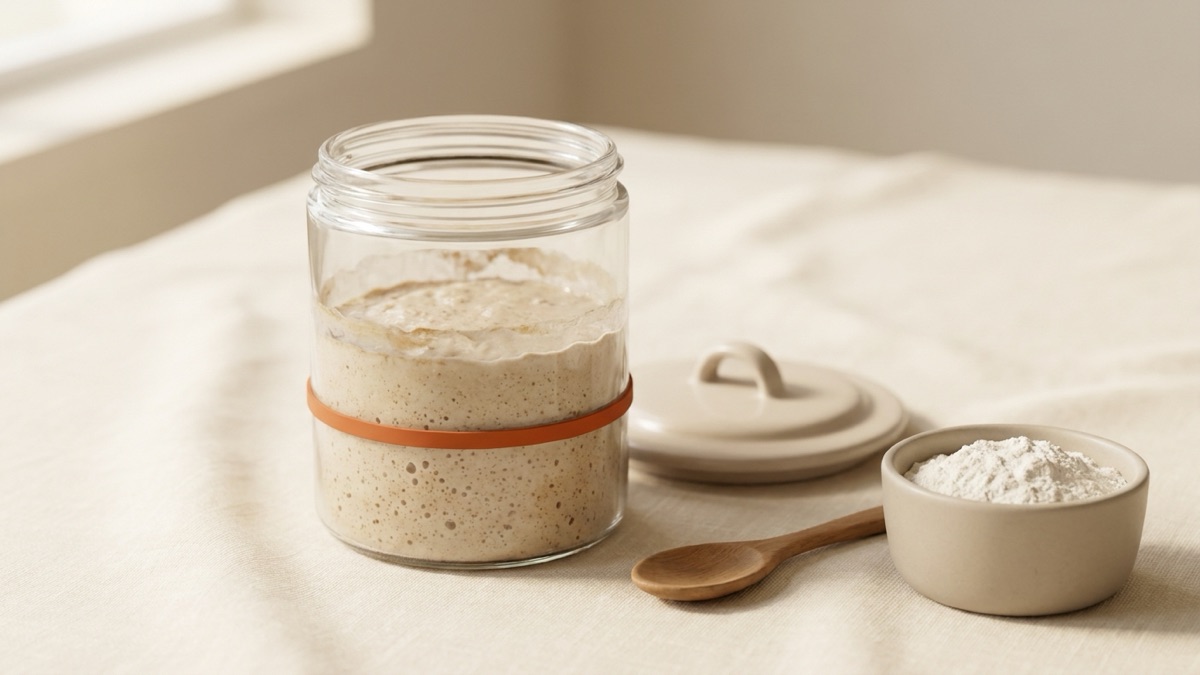
Mark the level with a band right after feeding, so you can see the rise rather than guess at it. Sourdough starter not rising works through every cause in order if warmth alone does not fix it.
Heads up
A slow winter starter is not a spoiled one, but check the jar at every feed. Fuzzy mold of any color, or pink, orange or red streaks, means the whole starter is discarded, never scraped. Wash the jar in hot, soapy water and start again. Gray or dark liquid on top is hooch, a sign of hunger, and only needs a feed.
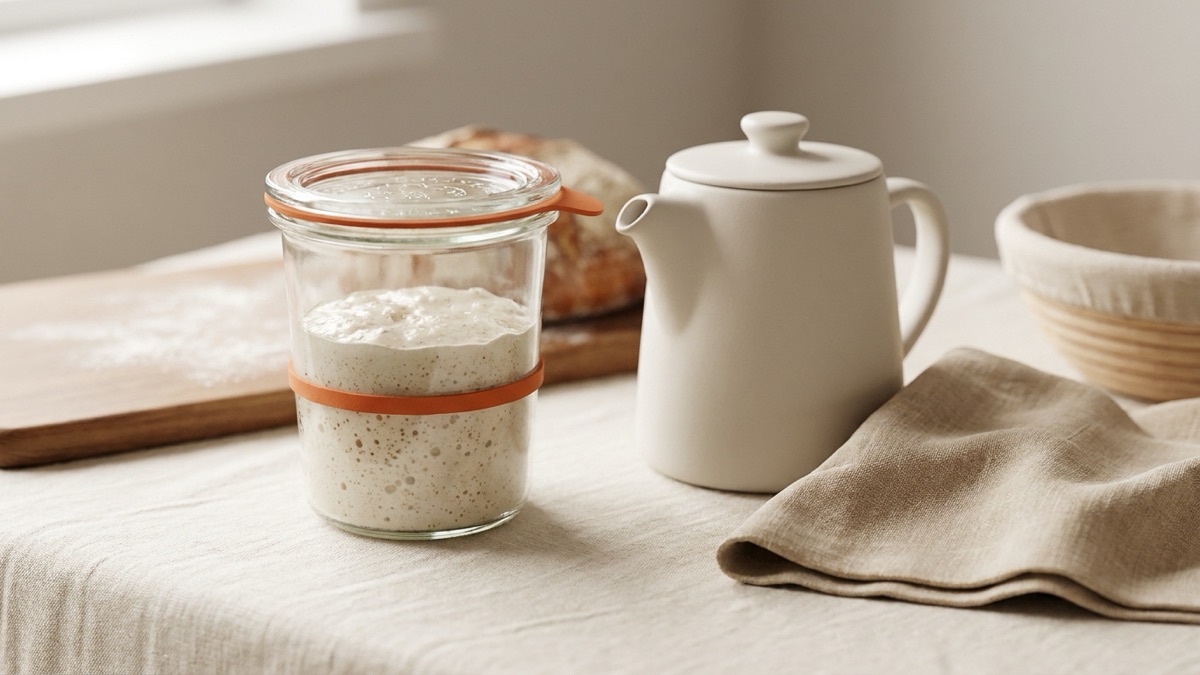
Making sourdough in a cold kitchen: warm the dough
The single most useful winter habit is warming the dough at the mix, so it starts bulk at a good temperature instead of trying to warm up in a cold room. Aim for a dough temperature around 75 to 78F (24 to 26C).
Bakers work out the water temperature with a simple sum called the desired dough temperature:
- Multiply the dough temperature you want by four.
- Subtract the room temperature, the flour temperature and the starter temperature.
- What is left is your water temperature. Mixing by hand adds very little heat, so you can leave it out.
For example, to reach 76F with a 64F room, 64F flour and a 70F starter: 76 times 4 is 304, minus 64, 64 and 70 leaves 106F (41C) water. That sounds hot, but the cold flour pulls it down fast.
Take the dough's temperature with a probe thermometer right after mixing and write it down. If it came in low, use warmer water next time.
Bulk fermentation sourdough cold kitchen
Once the dough is warm, keep it warm. A few spots that work in most kitchens:
- The oven with only the light on. Check it with a thermometer first; some lights make it too warm for dough. Leave a note on the door so nobody preheats with your dough inside.
- The top of the fridge, which is often one of the warmer spots in a kitchen.
- Out of drafts, away from a cold window or an outside door.
Then read the dough, not the clock. Bulk is done when these line up: grown roughly 50 to 75 percent (doubled is usually too far), domed edges where the dough meets the container, bubbles on top and through the sides, a jiggle like set gelatin when you shake the bowl, and an airy feel. Any one sign alone can mislead you. Bulk in a straight-sided container with the start level marked, and the rise is easy to read. How long to bulk ferment goes deeper on each sign.
Tip
If you cannot warm the dough, use more time. Start earlier in the day and let bulk run until the signs line up, even if that is hours past the recipe.
Proofing sourdough in winter
The final proof slows down in the cold too. On the counter, shaped dough usually takes about 1 to 4 hours; in a cold kitchen, expect the long end of that range or more. Use the poke test on the final proof: flour a fingertip and press about 1/2 inch (1 cm) in. If it springs right back, give it more time. If it fills back slowly and leaves a small dimple, it is ready.
The easier winter route is the fridge. Shape when bulk is done, cover the banneton, and cold proof at about 38 to 40F (3 to 4C) for about 8 to 16 hours. Bake straight from the fridge and score cold. The cold slows the yeast more than the souring bacteria, so flavor deepens, and the dough holds its shape for scoring. Two things to keep in mind:
- An underfermented dough does not catch up in the fridge. Make sure bulk reached its signs first.
- The poke test is less reliable on cold dough, which always springs back more slowly. Trust the bulk you did.
The cold proof covers timing and the signs it ran too long.
A winter schedule that works
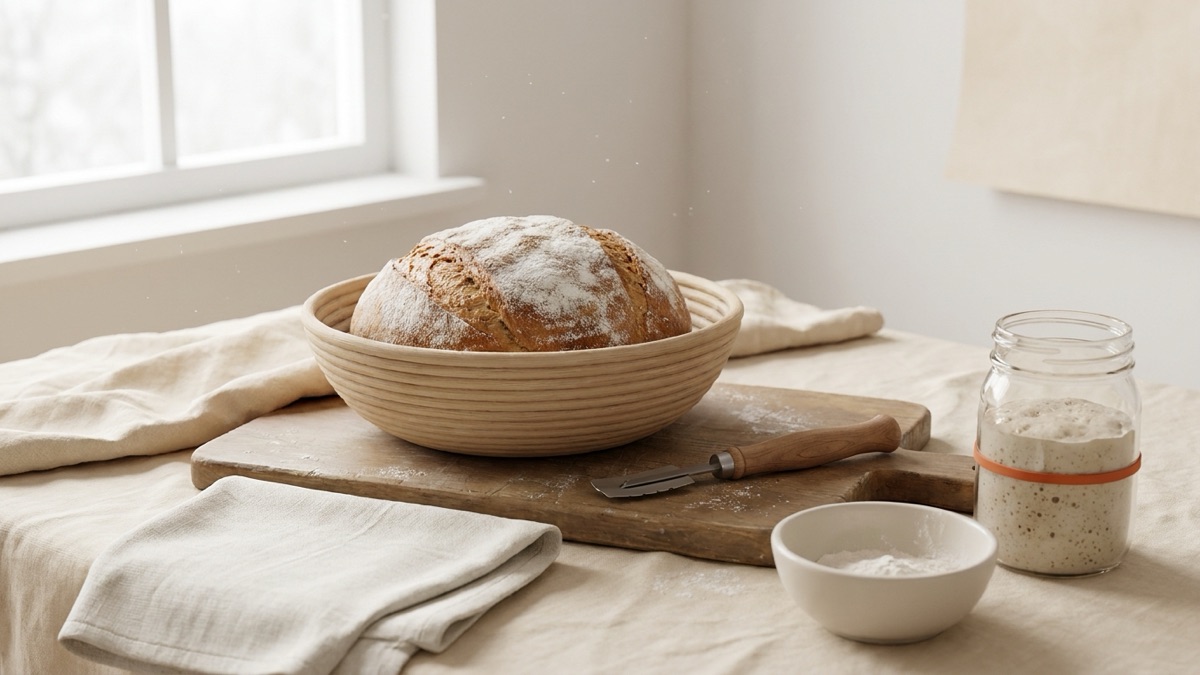
A typical winter day: feed the starter in the morning with lukewarm water and keep it warm, mix with warm water when it peaks, bulk somewhere warm through the afternoon and evening until the signs line up, shape, cold proof overnight, and bake in the morning.
Try it
The bake planner works backward from when you want bread and lays out when to feed, mix, shape and bake. Tell it how warm your kitchen is and whether you proof on the counter or in the fridge, and the steps stretch to fit a cold day.
If your days are full, a sourdough schedule for work fits these steps around a 9 to 5, and the schedules and seasons section has the rest.
What to do this bake
- Check the kitchen temperature where the dough will sit.
- Feed the starter with lukewarm water, mark the level, and keep it somewhere warm.
- Work out your water temperature and mix. Take the dough's temperature and write it down.
- Keep the dough in a warm spot and write down when bulk started and how much it grew.
- End bulk on the signs, not the clock, then shape and cold proof overnight.
- Cut only when the loaf is barely warm or cool, and look at the crumb from top to bottom.
What to change next bake
- Dense bottom and tunnels: bulk, 1 to 2 hours longer, or warmer at 76 to 78F (24 to 26C).
- Open at the top, tighter toward the base: bulk, 30 to 60 minutes more, or a longer final proof until a floured poke fills back slowly.
- Flat and pale with a lacy crumb: bulk, end it 1 to 2 hours sooner. A warm spot can run faster than you expect.
- Starter not peaking in time: starter, feed at a smaller ratio or with lukewarm water.
- Even crumb from top to bottom with good height: Bake it again. Write down the water temperature, the dough temperature and the bulk time, and keep them for every cold day.
Winter sourdough is the same bread on a slower clock. Warm the dough, keep notes, and by midwinter you will know your kitchen's pace better than any recipe does.
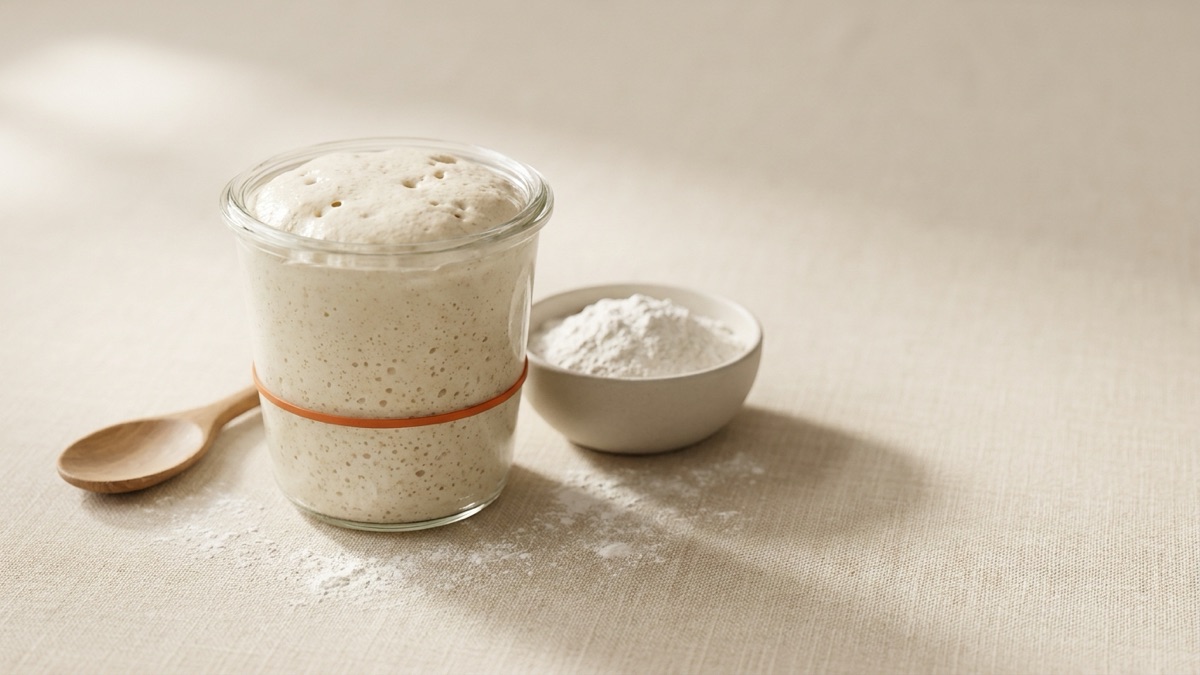
The pictures in this guide are AI-generated illustrations, not photos of real bakes; real loaves and starters vary, so trust the signs described in the text over any picture. Loaf Scout guides are general baking guidance, written from the sources named below, and every kitchen, flour and oven is a little different. Loaf Scout gives an AI read of one photo; your own eyes, nose and the poke test still count. A starter with fuzzy mold of any color, pink or orange streaks, or a rotten smell is thrown out and started again, whatever any page says.
Questions people ask
Why is my sourdough not rising in winter?
Cold slows the yeast and bacteria, so the dough needs far longer than a recipe written for a warm room. Warm the dough to about 75 to 78F (24 to 26C) with warm water at the mix, keep it somewhere warm, and judge bulk by rise, dome and jiggle rather than the clock.
How do I keep my sourdough starter warm in winter?
Feed it with lukewarm water and keep it in a warm spot, such as the oven with only the light on (checked so it does not get too hot) or the top of the fridge. If it still peaks too late, feed at a smaller ratio, for example 1:1:1 or 1:2:2, so it has less flour to work through.
How long should bulk fermentation take in a cold kitchen?
Much longer than in summer. A dough that finishes bulk in about 4 to 5 hours at 78F (26C) can take 8 hours or more at 68F (20C), and a colder kitchen slows it further. Watch for about 50 to 75 percent rise, domed edges, bubbles and a jiggle.
Can I proof sourdough overnight on the counter in winter?
Sometimes, but a cold, changing room makes the timing hard to predict. The fridge is steadier: shape after bulk, proof covered in the fridge for about 8 to 16 hours and bake straight from cold.
What water temperature should I use for sourdough in winter?
Warm enough that the mixed dough lands around 75 to 78F (24 to 26C). Multiply the dough temperature you want by four, then subtract the room, flour and starter temperatures; what is left is a starting point for your water.
Sources
- The Perfect Loaf: The ultimate guide to bread dough bulk fermentation: www.theperfectloaf.com/guides/the-ultimate-guide-to-bread-dough-bulk-fermentatio
- The Perfect Loaf: Proofing bread dough: www.theperfectloaf.com/guides/proofing-bread-dough/
- The Perfect Loaf: Frequently asked sourdough starter questions: www.theperfectloaf.com/frequently-asked-sourdough-starter-questions/
- The Perfect Loaf: Water temperature calculator: www.theperfectloaf.com/water-temperature-calculator/
- King Arthur Baking: Desired dough temperature: www.kingarthurbaking.com/blog/2018/05/29/desired-dough-temperature
- Colorado State University Extension: Sourdough starter best practices: extension.colostate.edu/resource/sourdough-starter-best-practices/
Read next
Schedules and seasons
The Cold Proof: An Overnight Sourdough Schedule
Starter care
How to Tell When Your Starter Is Ready to Bake
Bulk and proofing
The Sourdough Poke Test, and When Not to Trust It
Loaf troubleshooting
Why Is My Sourdough Flat? Spreading Loaves, Explained
Starter problems
Starter Smells Like Nail Polish or Acetone? Read This
Bulk and proofing
Underproofed vs Overproofed Sourdough: How to Tell