
Guides Shaping, scoring and baking
Shaping, scoring and baking
The last hour of a sourdough bake decides how the loaf looks and how the crumb sets. Shaping, scoring, steam, heat and the wait before you cut, one guide at a time.
This section covers everything from the moment bulk ends to the first slice. An ear needs four things working together: surface tension from shaping, a proof that is right or a touch under, a shallow angled score of about 30 to 45 degrees, and steam for the first 20 minutes. A covered heavy pot gives you the steam for free. Lean sourdough is baked through when the center reads about 205 to 210F (96 to 99C), and it keeps setting as it cools, so wait at least 1 to 2 hours before you cut.
If the shape or the score disappointed you, check the fermentation first: underproofed vs overproofed shows how proofing shows up in the ear, the spread and the crust.
How to bake sourdough in a dutch oven, step by step
A covered heavy pot traps the dough's own steam for the first part of the bake, one of the four things an ear needs. Here is the bake in order.
| Step | What to do | Why |
|---|---|---|
| Preheat | The pot in the oven for 45 to 60 minutes at 450 to 500F (230 to 260C) | A pot not fully preheated adds to a dense base |
| Score | One quick stroke at about 30 to 45 degrees, 1/4 to 1/2 inch (6 to 12 mm) deep, cold from the fridge | Gives the dough a hinge to lift an ear |
| Bake covered | About 20 minutes | Steam for the first part of the bake |
| Bake uncovered | Another 20 to 25 minutes, until deep brown | Deep brown is flavor |
| Check | The center reads about 205 to 210F (96 to 99C) | Baked through |
| Cool | At least 1 to 2 hours on a wire rack, 2 to 3 for a loaf over 1 kg | The crumb is still setting |
If the crust darkens early while the inside lags, drop the oven about 25F (14C) once the lid comes off. If the base burns, move the pot up a rack or slide a baking sheet underneath; a sprinkle of semolina or coarse flour under the dough adds a little insulation.
Why is there no ear on my sourdough?
Check the four things in order: tension, proof, score, steam. A straight-down score opens into a groove; a low, angled one lifts a flap. An overproofed dough has no spring left to lift an ear, however well you score it. How to get an ear on sourdough goes through each one, and when a big ear is not worth chasing.
A tall loaf with a clean bloom, a deep brown crust and an even crumb is Bake it again, ear or not. Read the crumb before you change anything; the sourdough crumb shows how.
Try it
Plan the bake backwards from the time you want bread in the bake planner, including the full 45 to 60 minute preheat and the cooling wait.
Heads up
A preheated pot sits around 450 to 500F (230 to 260C). Lower the dough in on a parchment sling, use dry oven mitts, and lift the lid away from your face so the steam does not reach you.
Related topics
- Bulk and proofing guides: the proof that gives a loaf its spring and its ear.
- Loaf troubleshooting: pale crusts, burnt bases and flat loaves.
- Schedules and seasons: baking straight from an overnight cold proof.
Guides in this section
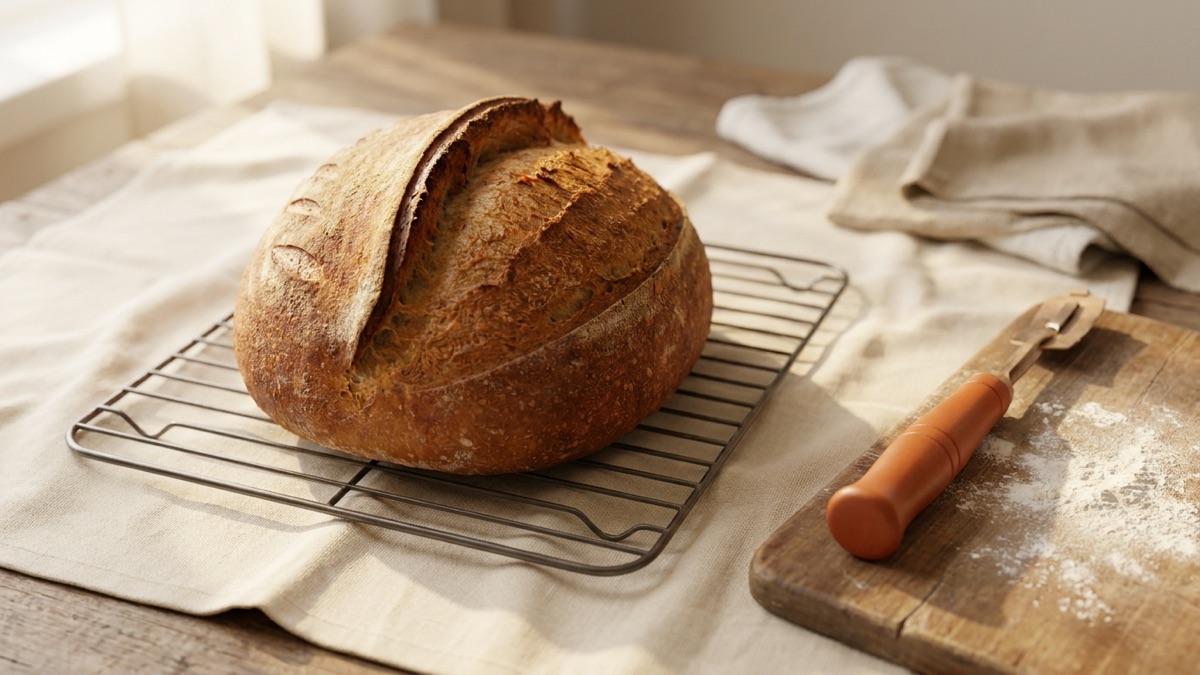
Shaping, scoring and baking
How to Get an Ear on Sourdough
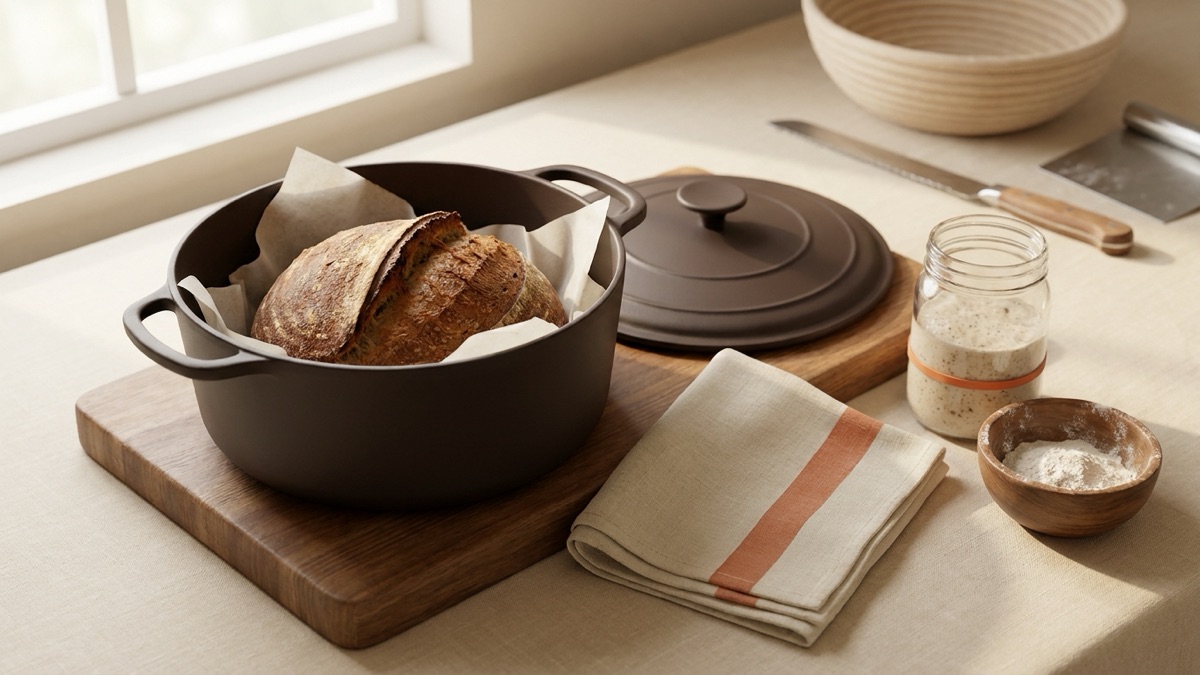
Shaping, scoring and baking
Baking Sourdough in a Dutch Oven: Heat, Lid and Timing