
Guides Shaping, scoring and baking
How to Get an Ear on Sourdough
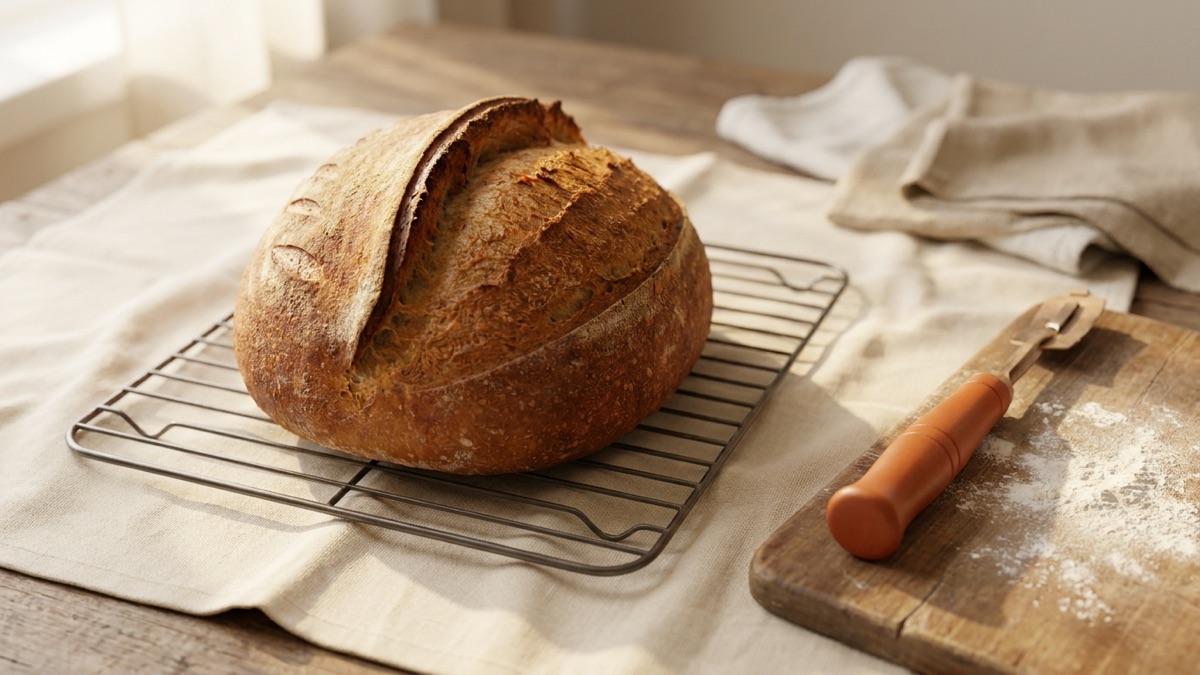
You pulled the lid off and the loaf is tall and brown, but the score opened flat with no lifted ridge. The ear is not luck, and it is not carved in with the blade. It is the dough telling you how the whole bake went.
Quick answer
A sourdough ear is the crisp flap of crust that lifts along an angled score during oven spring. It needs four things together: good surface tension from shaping, a proof that is right or a touch under, a shallow score at about 30 to 45 degrees and 1/4 to 1/2 inch (6 to 12 mm) deep, and steam early in the bake.
The read
If the loaf rose well and the crumb is even but the score opened flat, the fermentation is right and what is left is mostly looks. Lower your blade to a shallow angle, score cold in one quick stroke, and change nothing else. A flat, pale, spread loaf with no ear is a proof problem instead, so fix that first.
Key takeaways
- The ear is the dough lifting itself along a hinge your score gives it, not something you cut in.
- Tension, proof, score and steam all have to line up; check them in that order.
- A straight-down score opens into a groove. A low, angled score lifts a flap.
- An overproofed dough has no spring left to lift an ear, however well you score it.
- A bigger ear is not always better: read the crumb before you chase one.
What is a sourdough ear?
The ear is that raised, crisp ridge along the score. When a well shaped, well proofed loaf meets the heat, it expands fast. The score is a planned weak spot, so the loaf opens there instead of bursting somewhere random. Cut at a low angle, that weak spot becomes a hinge: one side peels back and bakes into a crunchy, darker lip.
That is the sourdough ear meaning: a sign the dough had tension, a well timed proof, a confident angled score and enough steam. It is a win, not a requirement. A modest ear over an even crumb is better bread than a dramatic ear over a dense base.
The four things an ear needs
| What it needs | What goes wrong | What you see | The one change |
|---|---|---|---|
| Surface tension | Loose shaping | Score opens wide and flat | Shape tighter |
| Proof right or a touch under | A little overproofed | Weak or flat ear, paler crust | Shorter proof or bulk |
| A shallow, angled score | Straight down or too shallow | A groove, or a cut that seals back | Lower the blade, cut deeper |
| Steam early | Lid off too soon | Crust sets before the loaf finishes rising | Keep the lid on for the first 20 minutes |
Shaping tension
The skin of the loaf needs to be taut, so the score has something to pull against. A loose, saggy shape just spreads where you cut it, and the cut opens wide and flat instead of lifting. Sourdough shaping covers building that tension step by step.
The right proof
Overproofed dough has used up its strength and its gas, so it has no spring left to lift a flap. A dough that is right on time, or a touch under, still has plenty of push for the oven. If a dough drags under the blade instead of cutting cleanly, that is often a sign it proofed too long. A cold proof helps too: cold dough is firm, holds its shape out of the banneton, and many good ears come from dough baked straight from the fridge.
The sourdough ear score
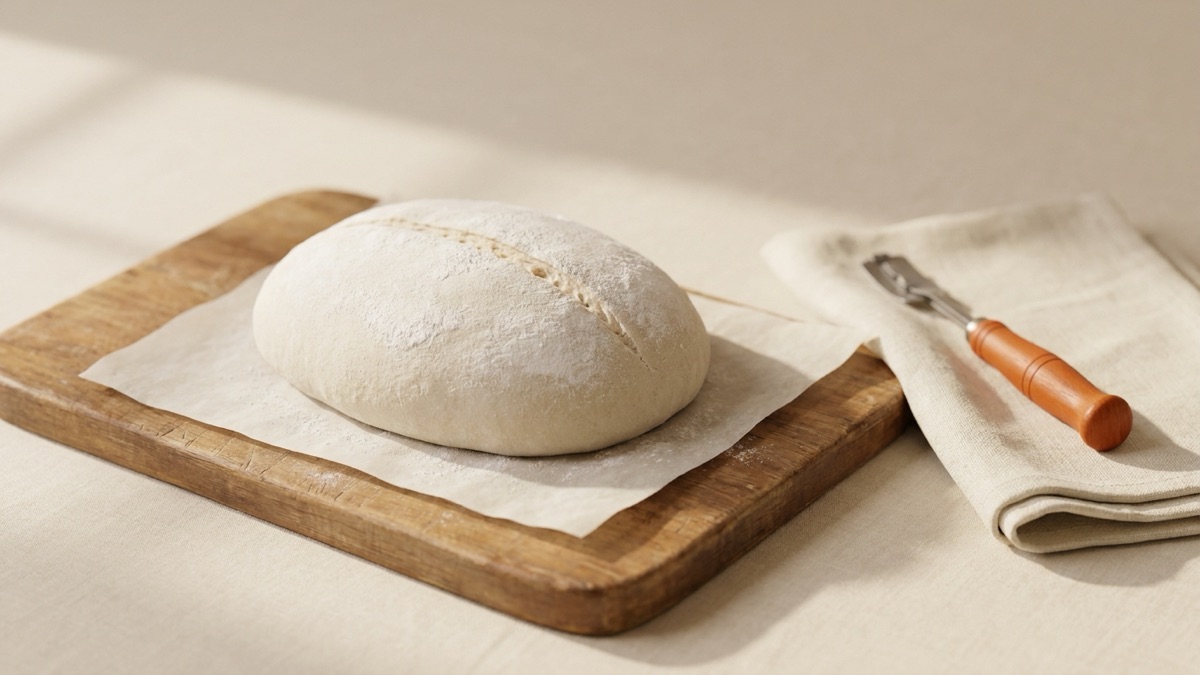
Use a lame or a very sharp razor blade. A curved blade held low encourages a flap to lift and peel back; a straight blade held upright gives a wider, splayed opening instead. For an ear:
- Turn the dough out onto parchment, cold if it proofed in the fridge.
- Hold the blade low, at about 30 to 45 degrees to the surface.
- Cut about 1/4 to 1/2 inch (6 to 12 mm) deep, just under the skin.
- Make one quick, confident stroke along the length of the loaf.
- Do not go back over it. Hesitating or sawing drags the dough.
Steam for the first part of the bake
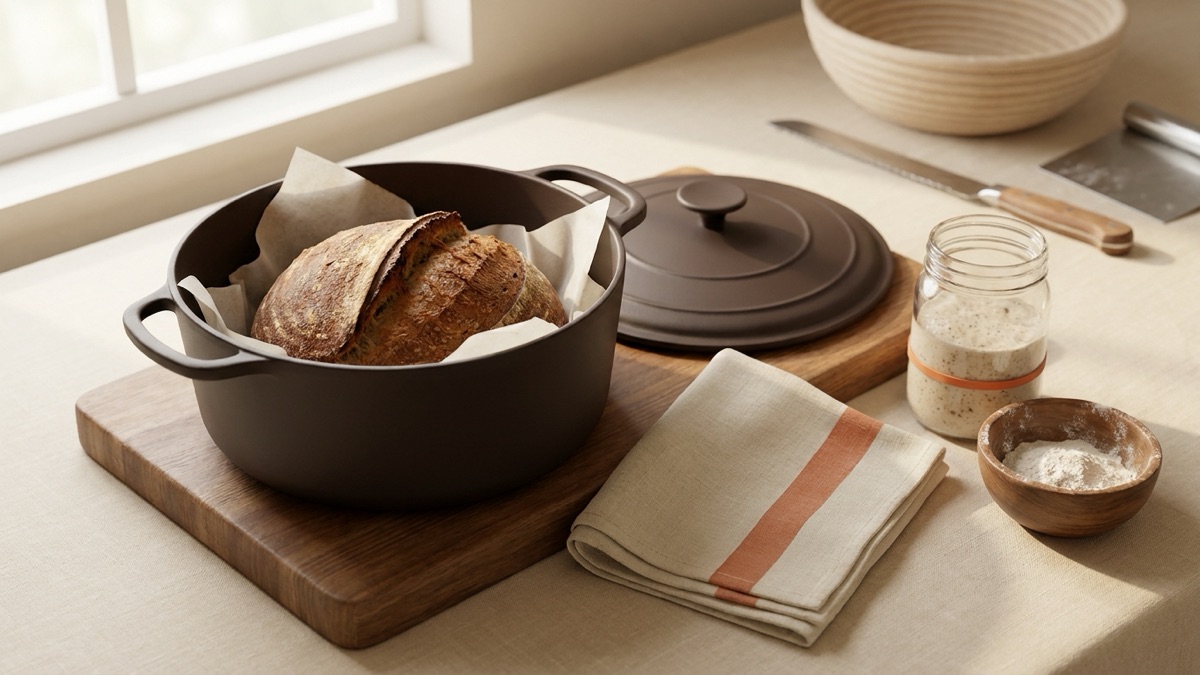
For the first 15 to 20 minutes, steam keeps the crust soft and stretchy so the loaf can rise fully before the outside hardens. A dutch oven or any heavy lidded pot does this for you: the dough gives off moisture and the lid traps it. Preheat the pot 45 to 60 minutes at 450 to 500F (230 to 260C), bake covered about 20 minutes, then uncovered another 20 to 25 minutes until deep brown. Baking sourdough in a dutch oven has the full method, and sourdough without a dutch oven covers the open bake.
Heads up
The pot and the steam inside it are very hot. Lower the dough in on a parchment sling, wear oven mitts, and lift the lid away from your face.
Why is my sourdough ear not opening?
A score that barely opens, or seals itself back up, usually comes down to one of three things:
- The proof ran long. The dough had nothing left to push with. Look for the other signs: a lower, wider loaf, a crust a shade paler, thin walls near the top of the crumb.
- The cut was too shallow. If the blade did not get below the skin, the surface can fuse back together in the oven. Cut a little deeper, still at a low angle.
- The crust set too early. Short steam lets the outside harden before oven spring finishes. Keep the lid on for the full first 20 minutes and make sure the pot preheated fully.
Why is my sourdough ear not lifting?
Sometimes the score opens nicely but the flap stays flat, like a groove rather than a lip. That is very often the angle. A straight-down cut splits open evenly on both sides instead of peeling one side back. Drop the blade much lower, so you are slicing under the skin rather than into it.
Low tension is the other common cause: a slack skin has nothing pulling the cut edge up. Shape tighter next time.
Tip
Score right after turning the dough out, while it is still cold if it proofed in the fridge. Cold dough is firmer and cuts much more cleanly, so the blade slides under the skin instead of dragging it.
Sourdough ear too big: is that a problem?
A big ear looks great in a photo, but it is worth reading what is under it.
A burnt tip. The ear is the thinnest piece of crust on the loaf, so it darkens first. If it burns while the rest is still golden, drop the oven about 25F (14C) once the lid comes off.
A gap under the crust or a tight base. A huge ear sitting over a wide gap under the top crust, with a dense band at the bottom, often means the dough was underproofed. Young dough springs hard and bursts along the score, which can look impressive from outside. Cut the loaf and check: if the crumb is tight and tunneled, the fix is a longer bulk, not a better score.
Caved-in sections. A score cut too deep can leave the top sunken or uneven. Cut no deeper than about 1/2 inch (12 mm).
Plan the bake so the ear has a chance
Timing does a lot of the work. A dough that finishes bulk on time, proofs overnight in the fridge and goes cold into a fully preheated pot gives the score its best chance.
Try it
Enter the time you want bread out of the oven in the bake planner, choose an overnight proof, and it works backward to when to feed, mix, shape and preheat.
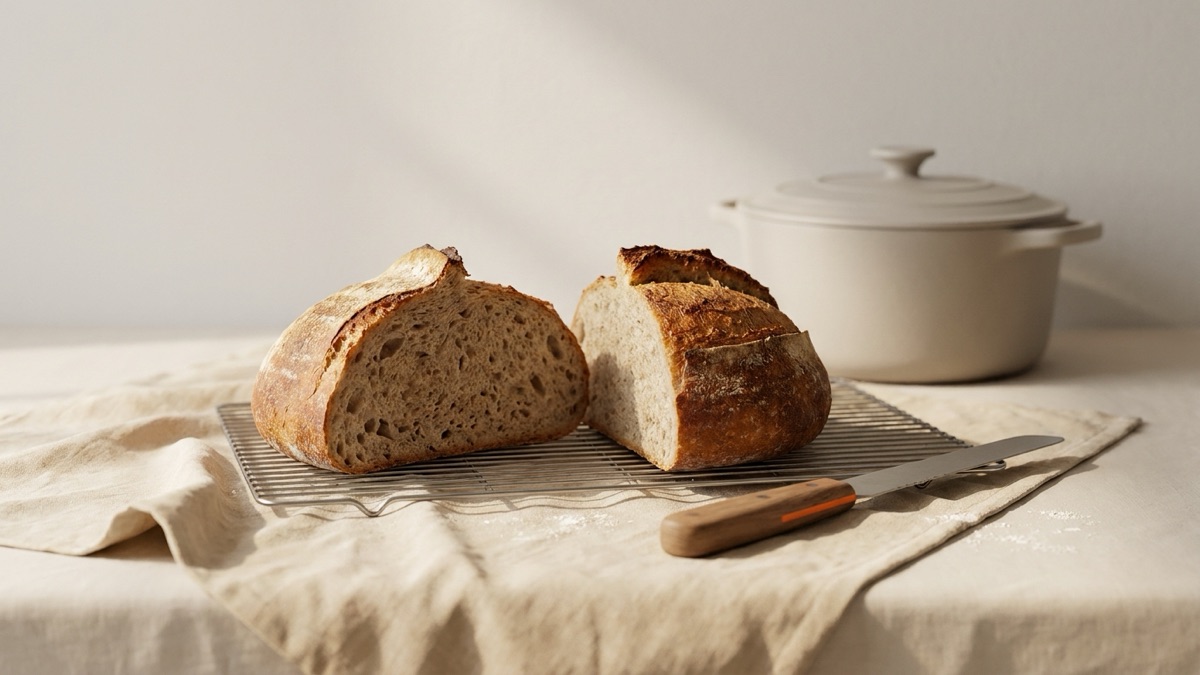
Bake until the crust is deep brown and the center reads about 205 to 210F (96 to 99C); sourdough internal temperature explains the check. Then let it cool at least 1 to 2 hours before cutting, as when to cut sourdough explains, so you can read the crumb as well as the ear. More on scoring, steam and the bake is in the shaping, scoring and baking guides.
What to do this bake
- Shape with good surface tension.
- Cold proof if you can, and bake straight from the fridge.
- Preheat the pot a full 45 to 60 minutes.
- Score cold at about 30 to 45 degrees, 1/4 to 1/2 inch (6 to 12 mm) deep, in one stroke.
- Keep the lid on for the first 20 minutes.
- Cool, cut, and look at the ear and the crumb together. Write down what you changed.
What to change next bake
- Score opened flat, loaf tall, crumb even: shaping and score. Lower the blade and shape tighter, one at a time.
- Score sealed back up: score, a little deeper, still at a low angle.
- Weak ear, loaf low and pale: proof, about 30 minutes shorter, or end bulk 30 to 60 minutes sooner.
- Ear burnt at the tip: bake, drop about 25F (14C) once the lid comes off.
- Huge ear over a gap and a dense base: bulk, 1 to 2 hours longer, until about 50 percent risen, domed and jiggly.
- Raised, crisp ear over an even crumb: Bake it again. Write down the bulk time, dough temperature and proof.
An ear shows that tension, timing, the cut and the steam lined up. Change one at a time, and let the crumb, not just the crust, tell you when you have it.
The pictures in this guide are AI-generated illustrations, not photos of real bakes; real loaves and starters vary, so trust the signs described in the text over any picture. Loaf Scout guides are general baking guidance, written from the sources named below, and every kitchen, flour and oven is a little different. Loaf Scout gives an AI read of one photo; your own eyes, nose and the poke test still count. A starter with fuzzy mold of any color, pink or orange streaks, or a rotten smell is thrown out and started again, whatever any page says.
Questions people ask
What does the ear on sourdough mean?
The ear is the raised, crisp flap of crust along the score. It forms when oven spring lifts one side of an angled cut, so a good ear usually means the dough had tension, a well timed proof, a confident score and enough steam.
What angle do you score sourdough for an ear?
Hold the blade low, at about 30 to 45 degrees to the surface, and cut about 1/4 to 1/2 inch (6 to 12 mm) deep in one quick stroke. A straight-down cut opens into a groove instead of lifting a flap.
Why is my sourdough ear not opening?
Most often the dough was a little overproofed, the score was too shallow or straight down, or the crust set before the loaf finished rising because steam was short. Check tension, proof, score and steam in that order.
Can a sourdough ear be too big?
It can. A very tall ear that burns at the tip, or one sitting over a gap under the crust and a tight base, often points to a dough that was underproofed or scored too deep. Check the crumb before chasing a bigger ear.
Do you need a dutch oven to get an ear?
No, but you need steam for the first part of the bake. A covered heavy pot traps the dough's own steam easily, which is why it is the common home method; an open bake needs another way to add steam.
Sources
- King Arthur Baking: Scoring bread dough: www.kingarthurbaking.com/blog/2017/08/04/scoring-bread-dough
- The Perfect Loaf: The ultimate guide to baking bread dough: www.theperfectloaf.com/guides/the-ultimate-guide-to-baking-bread-dough/
- The Perfect Loaf: Proofing bread dough: www.theperfectloaf.com/guides/proofing-bread-dough/
Read next
Shaping, scoring and baking
Baking Sourdough in a Dutch Oven: Heat, Lid and Timing
Bulk and proofing
The Sourdough Poke Test, and When Not to Trust It
Starter care
How to Tell When Your Starter Is Ready to Bake
Schedules and seasons
The Cold Proof: An Overnight Sourdough Schedule
Bulk and proofing
Underproofed vs Overproofed Sourdough: How to Tell
Starter care
Sourdough Starter: A Plain Guide to Keeping One