
Underproofed vs Overproofed Sourdough: How to Tell
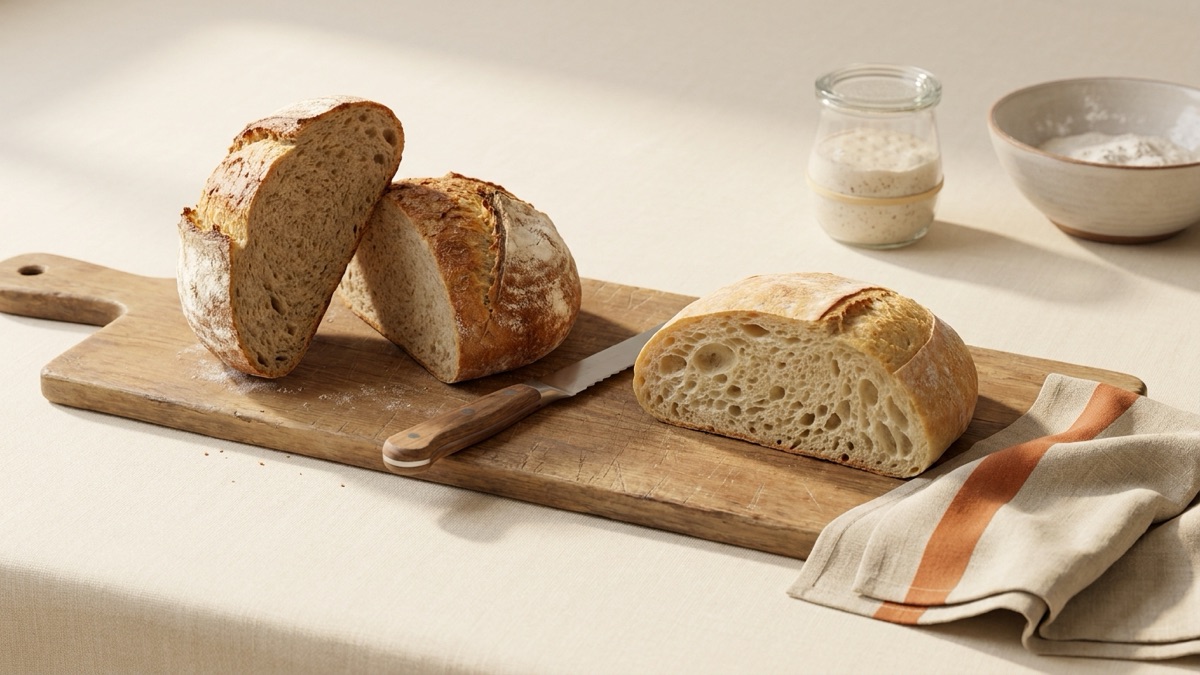
Someone looks at your crumb photo and says underproofed. Someone else says overproofed. Both can be right about one sign and wrong about the loaf, and the way out is to read the whole thing: the shape, the crust, the score and how the crumb changes from top to bottom.
Quick answer
Underproofed sourdough is tall and tight, with a dense band at the base, big tunnels in closed crumb, a gap under the crust or a blowout at the side. Overproofed sourdough is flat and pale, with a lacy, torn crumb and no ear. Home bakers underproof far more often, so lean toward a longer bulk.
The read
If the loaf has a dense base, tunnels or a gap under the crust, extend bulk by 1 to 2 hours, until the dough has grown about 50 percent, looks domed and jiggles, and leave everything else the same. If it came out flat, pale and spread, end bulk 1 to 2 hours sooner instead. Even crumb top to bottom with good height means Bake it again.
Key takeaways
- Read the loaf around the holes. Big holes in a tight crumb mean under; big ragged holes in a weak, sagging crumb mean over.
- Underproofed loaves tend to be tall and burst open. Overproofed loaves tend to be flat, pale and barely open at the score.
- Temperature sets the pace of fermentation. Read the dough, not the clock on the recipe.
- The poke test belongs to the final proof, not bulk, and it is less reliable after a cold proof.
- When you are not sure which way it went, lean toward a longer bulk: home bakers underproof far more often than they overproof.
Underproofed vs overproofed sourdough at a glance
Proofing is used loosely for the whole fermentation: bulk fermentation (the rise in the bowl after mixing) and the final proof (the rise after shaping). Most of what you see in the crumb was decided during bulk.
| Where you look | Underproofed | Well proofed | Overproofed |
|---|---|---|---|
| Shape | Tall, often a blowout at the score or side | Good height, clean bloom | Flat and spread, little height |
| Crust | Usually well browned | Golden to deep brown | Pale, because the sugars were used up |
| Score and ear | Bursts open unevenly | A clean, lifted ear | Barely opens, no ear |
| Crumb | Dense base, tunnels in tight crumb, a gap under the crust | Even top to bottom, holes of many sizes | Collapsed and lacy, thin torn walls |
| Feel when cool | Heavy and moist, sometimes gummy | Light and springy | Weak and fragile |
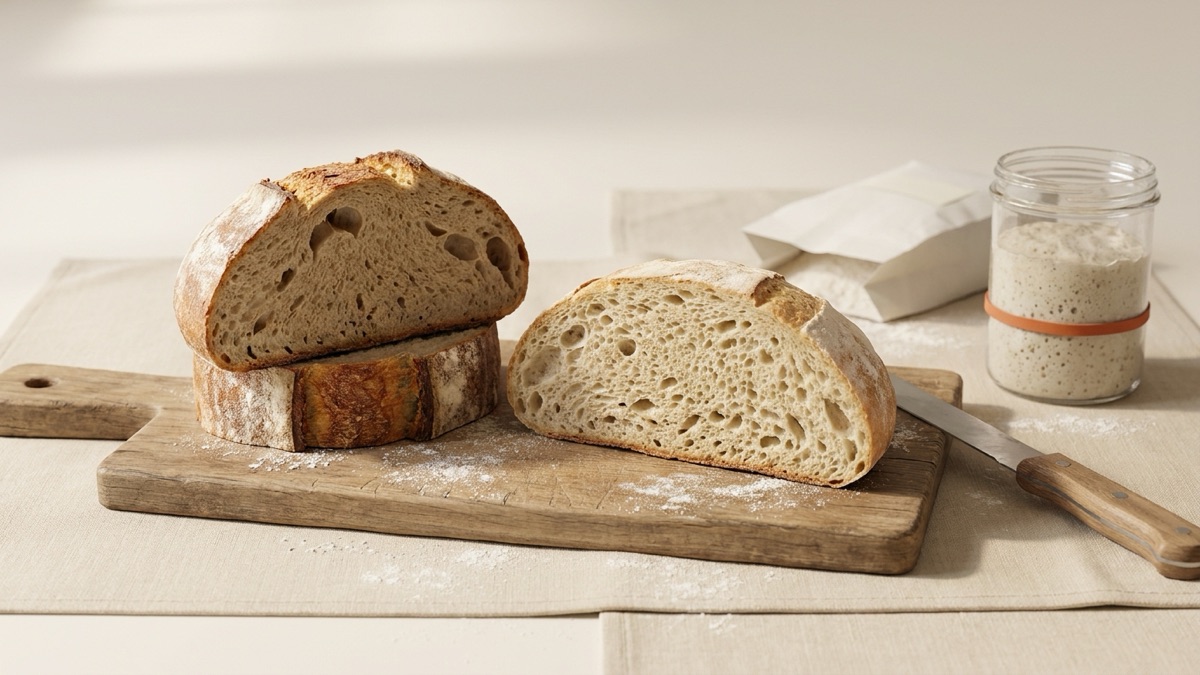
Underproofed sourdough signs
Underproofed dough went into the oven before it had built enough gas and strength. The oven tried to do the rising the dough had not done, so the loaf sprang fast and unevenly. These are the signs, in the order most bakers notice them:
- A dense, sometimes gummy band along the bottom of the slice.
- Large, irregular tunnels sitting next to tight, closed crumb.
- A gap just under the top crust, often called fool's crumb.
- A tall loaf with a dramatic blowout along the score or a side that burst open.
- Crumb that feels heavy and moist even after the loaf has cooled.
Two or three of these together is a confident call. A loaf that is open at the top and tighter toward the base, with a burst on one side, is a little underproofed: close, and 30 to 60 minutes more bulk is usually enough.
Heads up
A loaf cut warm reads gummy whatever the bake did. Wait at least 1 to 2 hours for a regular round loaf, longer for big or whole grain loaves, before you judge the crumb. If it is gummy when fully cool, check that the center reached about 205 to 210F (96 to 99C).
How to tell if sourdough is overproofed
Overproofed dough fermented past the point where its gluten could hold the gas. The structure was tired by the time it met the heat, so it spread instead of springing up. Look for:
- A flat, spread loaf with little height.
- A pale crust, because the yeast used up the sugars that brown it.
- Collapsed, lacy crumb with thin, torn walls.
- A weak or missing ear, with a score that barely opened.
- Before the bake, a sharp, boozy smell and a dough that stuck to the banneton and spread as soon as it was turned out.
The dough often warns you first: overproofed dough is sticky, slack and spreads when you turn it out. It still bakes into bread, and now you know where the far edge of your timing is.
Why both can show big holes
In an underproofed loaf, the gas is not spread evenly through the dough, so the oven blows a few large tunnels along the weakest paths while the crumb around them stays tight. In an overproofed loaf, the walls between bubbles are stretched so thin that they tear and merge, leaving ragged holes in a crumb that looks deflated.
One is big holes in a strong, tight crumb. The other is big holes in a weak, sagging one. Tall, with a wild burst and tight crumb at the base, points to under. Flat, pale and lacy points to over. Tall, even and well browned with a few larger holes is probably just good bread. The sourdough crumb guide walks through every pattern on the cut face.
Is my sourdough overproofed, or only a little over?
Most loaves sit near the middle of the scale, not at the edges, so it helps to know the neighbors. A little overproofed looks like a lower, wider shape than you hoped for, a weak or flat ear, a crust a shade paler than usual and a fairly even crumb with thin walls near the top. It is still good bread, and the fix is small: end bulk 30 to 60 minutes sooner, when the dough has grown 50 to 75 percent rather than doubled, or shorten the final proof by about 30 minutes.
Before you call it overproofed, rule out loose shaping and a very wet dough, which spread too.
Read the dough, not the clock
Fermentation speeds up with warmth and slows with cold, and that changes the timing more than anything else. A dough that finishes bulk in about 4 to 5 hours at 78F (26C) can take 8 hours or more at 68F (20C). Some bakers keep dough around 74 to 76F (23 to 24C) and see most bulks take 2 to 5 hours, with more starter than most home recipes use. That is why the clock on a recipe rarely matches yours.
Aim for a dough temperature around 75 to 78F (24 to 26C). In a cold kitchen, use warm water at the mix and find a warm spot, like the oven with only the light on (check that it does not get too hot) or the top of the fridge. In a hot kitchen, use cool water and check the dough earlier than the recipe says. The full method is in how long to bulk ferment.
How much should the dough rise?
Bulk is done when several signs line up, because any one alone can mislead you:
- Volume: the dough has grown roughly 50 to 75 percent. Doubled is usually too far.
- Surface: domed edges where the dough meets the container, with a few bubbles on top.
- Sides: bubbles of different sizes showing through a clear container.
- Jiggle: the dough wobbles like set gelatin when you shake the bowl.
- Feel: airy, smooth and a little billowy, pulling away cleanly from the sides.
A very wet whole wheat dough rises much less than a white one, so looking alive and airy matters more than the number.
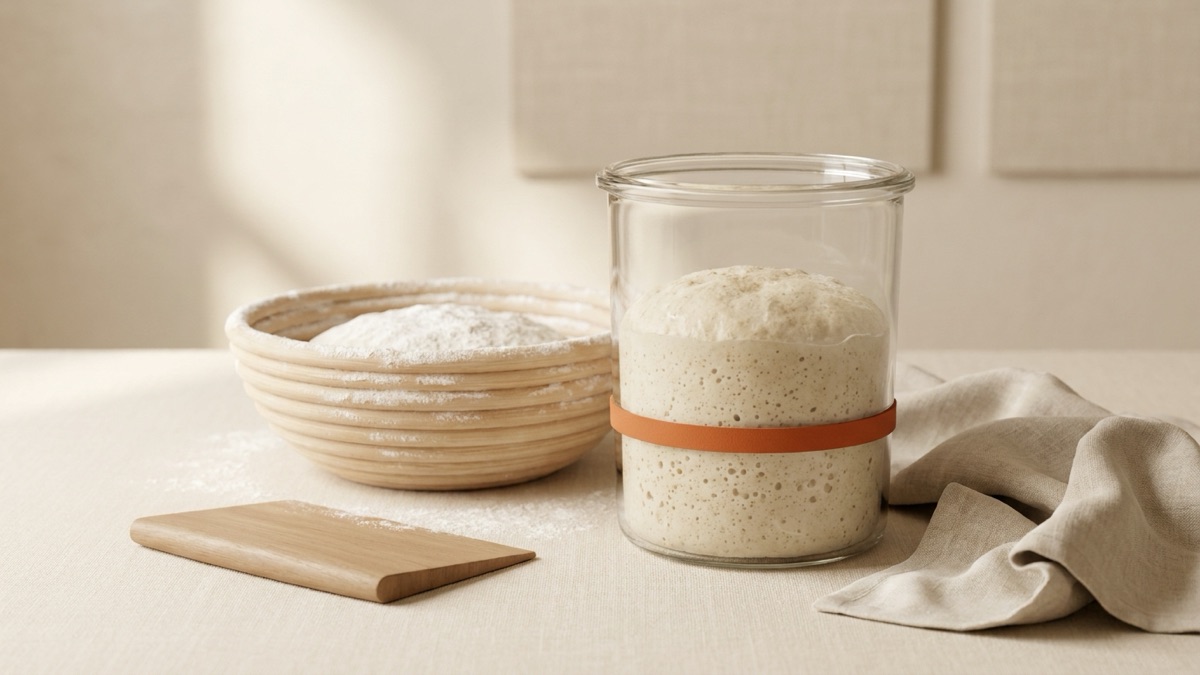
Tip
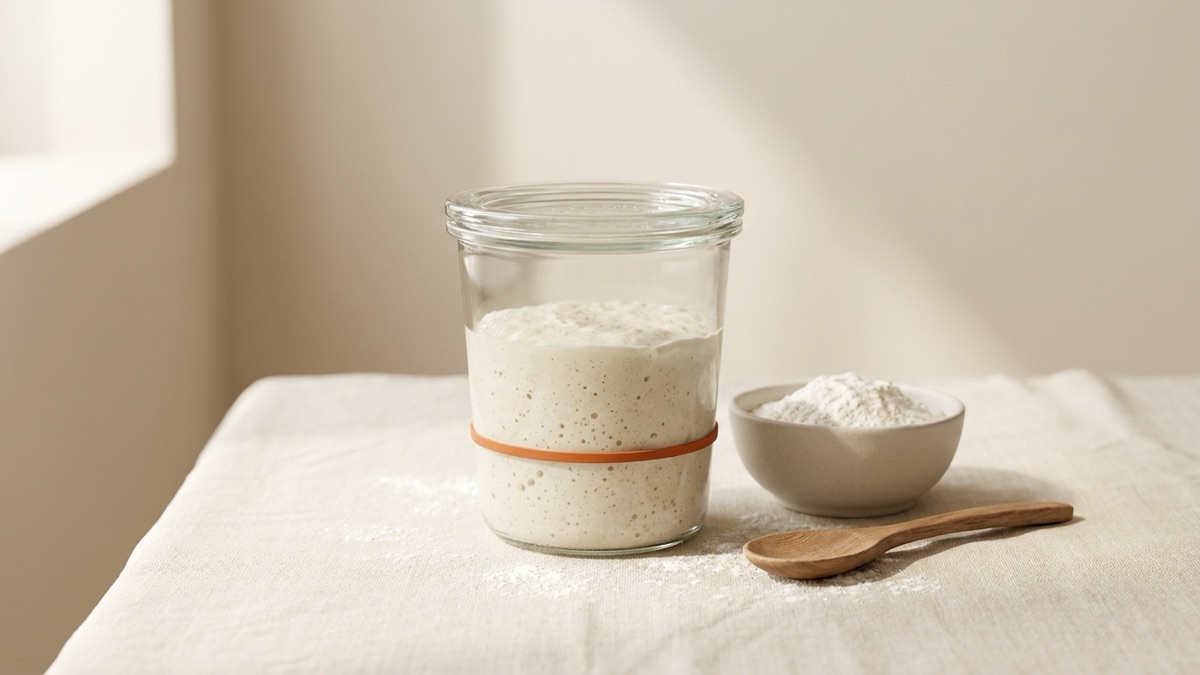
Bulk in a straight-sided container and mark the starting level with a rubber band or tape. Watching the rise tells you far more than the clock does.
Stretch and folds and the windowpane
Stretch and folds build strength during bulk. Each set is four stretches, one from each side of the bowl, and a common baseline is 3 sets about 30 minutes apart, stopping once the dough has defined edges and looks gathered up.
The windowpane test checks that strength. Stretch a small piece of dough gently between your fingers: the more developed the gluten, the thinner it stretches before it tears, until you can see light through it. It is not pass or fail, and whole grain doughs may never make a true windowpane because bran gets in the way. It tells you about gluten, not fermentation. A dough can pull a fine windowpane and still be underfermented. There is more in the windowpane test.
The poke test on the final proof
The poke test belongs to the shaped dough during the final proof, not the bowl during bulk. Flour a fingertip and press about 1/2 inch (1 cm) into the dough:
| The poke | What it means | What to do |
|---|---|---|
| Springs right back | Not ready | Give it more time |
| Fills back slowly, leaves a small dimple | Ready | Bake |
| Does not spring back at all | Likely overproofed | Bake now |
Cold dough straight from the fridge always springs back more slowly, so the test is less reliable after a cold proof. For those loaves, trust the bulk you did beforehand and how the dough looked when it went in. More on reading it in the sourdough poke test, and on counter timing in how long to proof sourdough.
Can you overproof sourdough in the fridge?
Yes, though the cold gives you a wide window. Most shaped doughs are happy for 8 to 16 hours at about 38 to 40F (3 to 4C), and many go to 24 hours or a bit beyond, especially if bulk ended a little early. A fridge that runs warm keeps fermentation moving faster than you would think.
Signs it went too long: the dough has risen well above the rim of the banneton, it feels slack and bubbly on top, it spreads as soon as you turn it out, and the loaf bakes flatter and paler with a sharp sour flavor. The other direction matters just as much. A dough that went into the fridge underfermented will not catch up in the cold, so a dense bottom or a gap under the crust after a cold proof means a longer bulk at room temperature, not more fridge hours. The overproofing in the fridge guide covers the cold proof in detail.
Which way to adjust when you are not sure
Most home bakers, especially early on, underproof far more often than they overproof. Cool kitchens and young starters slow everything down, and many recipes give times written for a warmer room than yours. So if the signs are split, lean toward a longer bulk: 1 to 2 hours more, until the dough has grown about 50 percent, looks domed and jiggles. If the next loaf comes out flat and pale, you have found the other edge, and your sweet spot sits between the two.
Try it
Not sure which way your last loaf went? Answer seven questions about the slice in the crumb troubleshooter and get a proof call from underproofed to overproofed and the one lever to move.
For the rest of this section, start at bulk and proofing.
What to do this bake
- Take the dough's temperature right after mixing and write it down.
- Bulk in a straight-sided container and mark the starting level.
- End bulk when the dough has grown about 50 to 75 percent, looks domed and jiggles, whatever the clock says.
- Poke the shaped dough during a counter proof; after a cold proof, trust the bulk instead.
- Cut only when the loaf is cool, then read the shape, the crust, the score and the crumb together.
- Change one thing next bake.
What to change next bake
- Dense base, tunnels in tight crumb, a gap under the crust or a blowout: bulk, 1 to 2 hours longer, or bulk warmer around 76 to 78F (24 to 26C).
- Open at the top, tighter toward the base: bulk, 30 to 60 minutes longer, or a slightly longer final proof until a floured poke fills back slowly.
- A little lower and paler, with a weak ear: bulk, end it 30 to 60 minutes sooner, or proof about 30 minutes less.
- Flat, pale, lacy and torn: bulk, end it 1 to 2 hours sooner or move it somewhere cooler around 72F (22C). An overnight cold proof gives you a wider window.
- Spread only after a long cold proof: proof, shorten the time in the fridge.
- Even crumb top to bottom, good height and a deep brown crust: Bake it again, and write down the bulk time, dough temperature and proof.
The Loaf Scout app reads one straight-on photo of the cut face and gives you the proof call with an honest range, a Loaf Score and the one change for next bake. It is a second opinion; the way the dough looked and felt still counts.
Under and over are two edges of the same window. Find one, then the other, and your loaf lives in between.
The pictures in this guide are AI-generated illustrations, not photos of real bakes; real loaves and starters vary, so trust the signs described in the text over any picture. Loaf Scout guides are general baking guidance, written from the sources named below, and every kitchen, flour and oven is a little different. Loaf Scout gives an AI read of one photo; your own eyes, nose and the poke test still count. A starter with fuzzy mold of any color, pink or orange streaks, or a rotten smell is thrown out and started again, whatever any page says.
Questions people ask
How do I know if my sourdough is underproofed or overproofed?
Read the whole loaf, not one hole. Tall with a blowout, a dense base and tunnels in tight crumb points to underproofed. Flat, pale and spread, with lacy, torn crumb and no ear, points to overproofed.
Is it better to underproof or overproof sourdough?
Neither is better, but home bakers underproof far more often than they overproof. If you are unsure which way your loaf went, lean toward a longer bulk next bake and change nothing else.
Can you fix overproofed sourdough dough before baking?
If a floured poke does not spring back at all, bake it right away; waiting only makes it spread more. A cold dough straight from the fridge holds its shape better, so bake it cold and fix the timing next bake.
Can sourdough overproof in the fridge?
Yes. A dough that rose well above the banneton rim, feels slack and bubbly and spreads when turned out has gone too long. End bulk a little earlier or shorten the cold proof next time.
Does an underproofed dough catch up in the fridge?
No. A dough that went into the fridge underfermented will not catch up in the cold. A dense bottom or a gap under the crust after a cold proof means a longer bulk at room temperature, not more fridge hours.
Sources
- The Perfect Loaf: The ultimate guide to bread dough bulk fermentation: www.theperfectloaf.com/guides/the-ultimate-guide-to-bread-dough-bulk-fermentatio
- The Perfect Loaf: Proofing bread dough: www.theperfectloaf.com/guides/proofing-bread-dough/
- The Perfect Loaf: How to stretch and fold sourdough bread dough: www.theperfectloaf.com/how-to-stretch-and-fold-sourdough-bread-dough/
- King Arthur Baking: What is the windowpane test for bread dough?: www.kingarthurbaking.com/blog/2022/10/14/what-is-the-windowpane-test-for-bread-d
Read next
Bulk and proofing
How Long to Bulk Ferment Sourdough
Bulk and proofing
The Sourdough Poke Test, and When Not to Trust It
Bulk and proofing
How Long to Proof Sourdough After Shaping
Reading the crumb
The Sourdough Crumb: Read It Like a Baker
Starter problems
Sourdough Starter Mold: What It Looks Like, What to Do
Starter problems
Sourdough Starter Not Rising: Every Cause and Fix