
Sourdough Starter Not Rising: Every Cause and Fix
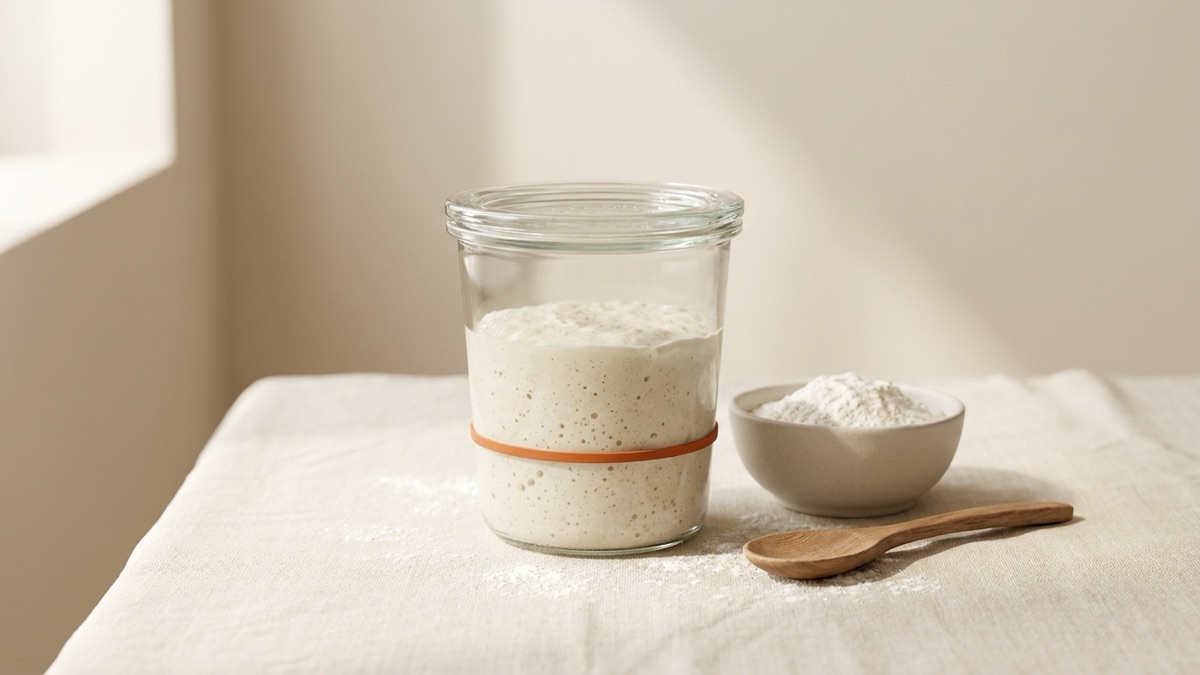
The band on the jar is exactly where you left it last night, and the starter has barely moved. Before you throw it out, know this: a starter that will not rise is almost always too cool, too young or underfed, and every one of those is fixable with flour, water and a warmer spot.
Quick answer
A sourdough starter that is not rising is usually too cool, too young or underfed. Move it somewhere around 75 to 80F (24 to 27C), feed it at the same times each day, discard down to 20 to 50 g first, and mark the level with a band. A mature starter doubles in about 4 to 12 hours.
The read
Most slow starters are alive and on their way, just not ready to raise bread. Give it more time somewhere warm and check again against the band. It moves up to Ready to bake once it doubles on schedule two or three days in a row; any fuzzy mold or pink or orange streaks means Start fresh, and the whole jar goes.
Key takeaways
- Check in this order: how old the starter is, how warm the room is, whether it rose and fell while you were not looking, the feeding ratio, then the flour.
- A young starter under two weeks old often goes quiet for a day or two after an early burst of bubbles. That is normal. Keep feeding.
- Warmth is the biggest lever. A starter at 68F (20C) moves far slower than one at 75 to 78F (24 to 26C).
- A mature starter at room temperature usually doubles in about 4 to 12 hours: about 4 to 6 hours at 1:1:1 in an average room, about 8 to 12 at 1:5:5.
- Fuzzy mold of any color, pink or orange streaks, or a rotten smell: discard the whole starter, never scrape it. Hooch is harmless.
Why is my sourdough starter not rising?
A starter is a small colony of wild yeast and bacteria living in flour and water. It rises when the yeast eats the fresh flour and makes gas, and the gas is held in the paste. When it will not rise, one of four things is usually true: the colony is still young, it is too cold to work fast, it is being fed in a way that hides the rise, or it is running out of food before you look.
Work through the causes below in order and change one thing at a time, giving each change two or three feeds before you judge it. Change everything at once and you will never know what helped.
| What you see | Most likely cause | The one change |
|---|---|---|
| Few bubbles, no rise, starter under 2 weeks old | Young starter in its quiet days | Keep feeding on schedule; it is not dead |
| Slow rise, cool kitchen | Too cold | Move it to 75 to 80F (24 to 27C) |
| Flat now, streaks on the glass above | It rose and fell while you were away | Check sooner, or feed at a bigger ratio |
| Bubbly but thin, never domes | Too runny | Feed a little less water, 50 g flour to 40 g |
| Fine at room temperature, slow from the fridge | Cold and hungry | One or two feeds at room temperature |
Did it rise and fall while you were not looking?
Before anything else, look at the glass above the starter. A streaky line or a smear of starter well above the surface means it did rise, peaked and fell back down, often overnight. That is a strong starter, not a dead one. A sunken, wrinkled surface and a sharper sour smell point the same way.
The fix is timing, not rescue. Check it a few hours sooner after the next feed, or slow it down with a bigger feed like 1:5:5 or 1:10:10, cooler water or a cooler spot, so the peak lands when you are awake to see it. A starter just past its peak still raises bread well.
Tip
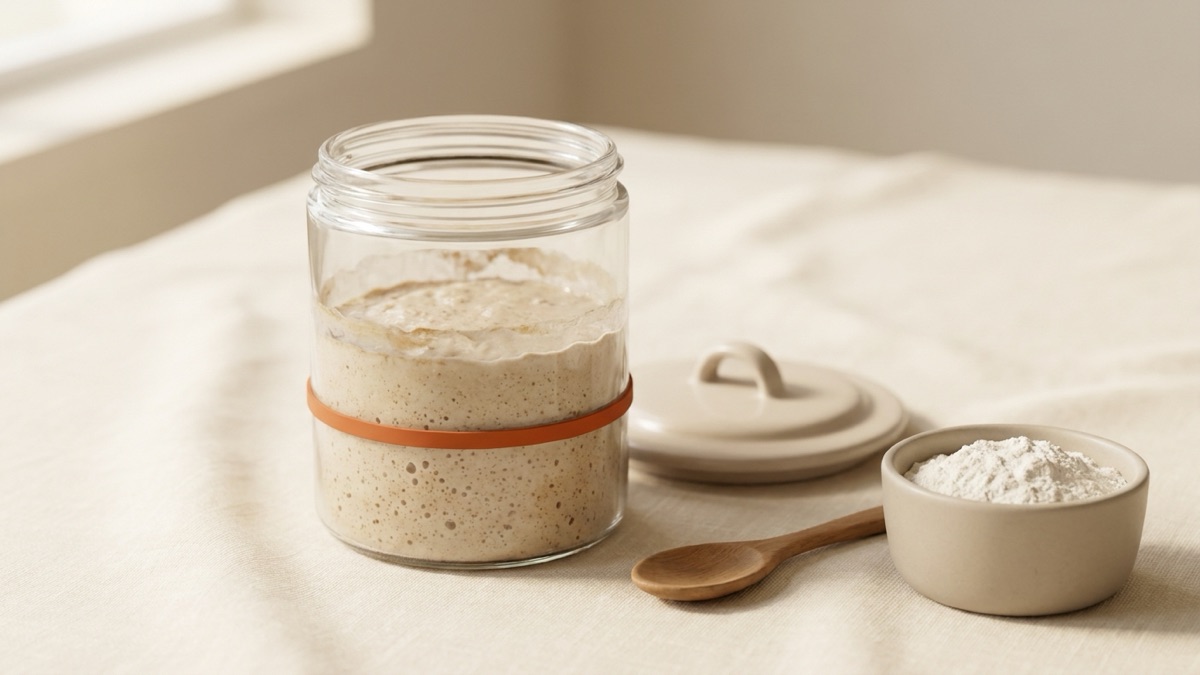
Put a rubber band or a strip of tape at the starter's level right after every feed. Without a mark, a starter that rose and fell looks exactly like one that never moved.
Sourdough starter not rising after feeding
If you fed it and nothing happened, look at the feed itself. Discard first, keeping only 20 to 50 g, so the jar is no more than a third full right after feeding. Old, acidic starter swamps fresh flour when too much is kept, and a crowded jar also hides the rise.
Then look at the ratio. The more fresh flour you add compared with the starter, the longer it takes to peak, so a 1:5:5 feed can look lifeless at hour four when it is simply on its own schedule. Weigh everything in grams; spoons and cups are too rough for a small jar. These are usual peak times at about 75F (24C), rules of thumb rather than promises:
| Ratio (starter : flour : water) | For 20 g kept | Usual peak, about 75F (24C) |
|---|---|---|
| 1:1:1 | 20 g flour, 20 g water | About 4 to 6 hours |
| 1:2:2 | 40 g flour, 40 g water | About 6 to 8 hours |
| 1:5:5 | 100 g flour, 100 g water | About 8 to 12 hours |
| 1:10:10 | 200 g flour, 200 g water | 12 hours or more |
A warm kitchen speeds every one of these up and a cool one slows them down. Your own notes on your own jar beat any table. Feeding ratios explained goes deeper on choosing one for your day.
Try it
The starter feeding calculator takes the grams you keep, the ratio and how warm your room is, and gives you the flour and water to add and the window when the jar should peak.

Sourdough starter not doubling
Some starters rise, just not all the way. A starter that climbs 50 percent and stops is alive, lively and working. Usually it needs one of three things.
- More warmth. A cool room slows the yeast far more than most people expect. Find a spot around 75 to 80F (24 to 27C): the oven with only the light on (check it does not get too hot), or the top of the fridge. Lukewarm water at the feed helps too.
- Less water. A very runny starter lets gas escape instead of holding it, so it bubbles without doming. If yours looks thin and pools liquid, feed a little less water, for example 50 g flour to 40 g water, and see whether it climbs higher.
- More time. Doubling in about 4 to 12 hours is a wide range for a reason. If you checked at hour five on a 1:5:5 feed, it may not be done.
Sourdough starter not bubbling
A starter with no bubbles at all is usually cold or very new. In the first week, a starter often bubbles wildly on day 2 or 3, then goes still. Those early bubbles often come from bacteria that fade as the starter turns more acidic, and the yeast takes over after. Days 3 to 7 can look completely dead. They are not. The quiet days walks through what each of those days tends to look like.
If an older starter has stopped bubbling, swap in a little whole wheat or rye at each feed. They bring more food and more wild yeast than white flour, and they help a sluggish starter more than anything except warmth. If your tap water is heavily treated, try filtered water. And keep the feeds regular, once or twice a day at the same times, so the colony is never starving for long.
Sourdough starter not rising after being in the fridge
A starter from the fridge at about 38 to 40F (3 to 4C) is cold and hungry, and the first feed often does not double. That is normal, not a sign it died. Give it one or two feeds at room temperature until it rises and peaks on schedule again. If it is still slow after two feeds, keep feeding at room temperature once or twice a day for a day or two before you bake with it.
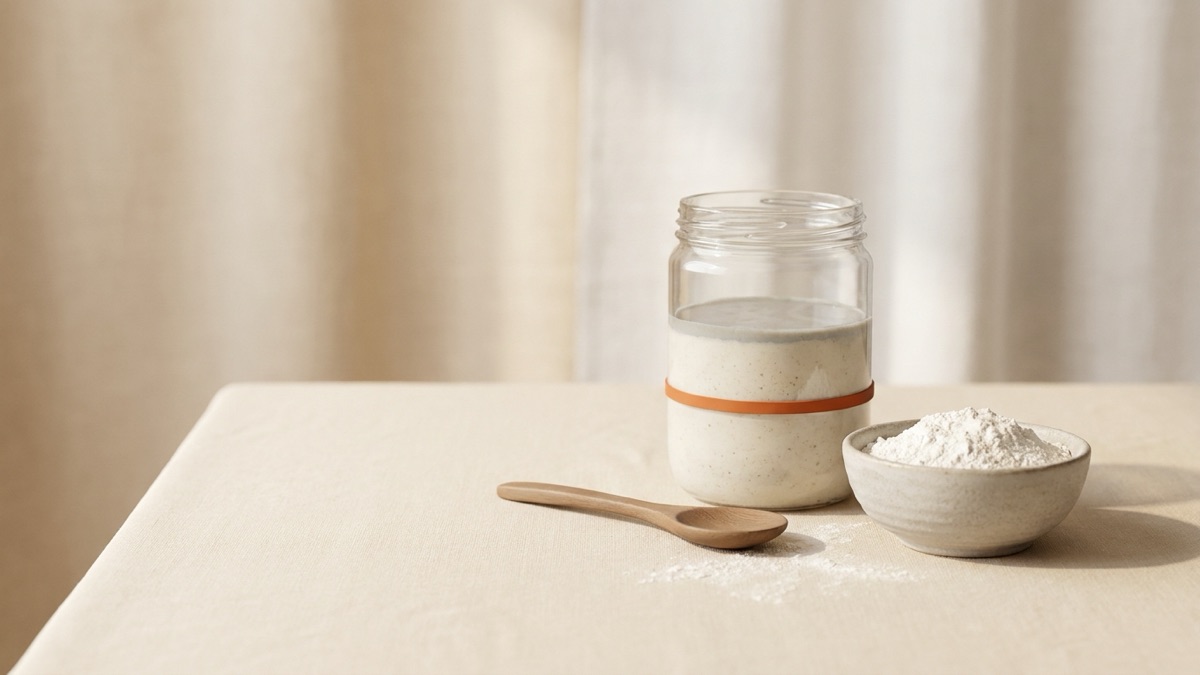
Dark liquid on top after a week in the fridge is hooch, a mix of alcohol and water from a hungry starter. It darkens the longer it sits, and it is harmless. Pour it off for a milder flavor or stir it in for more tang, then feed. Hooch on sourdough starter covers the colors and what they mean. For a starter that lives in the cold most of the week, keeping a starter in the fridge has a routine that wakes it in time for the bake.
How warm should a starter be?
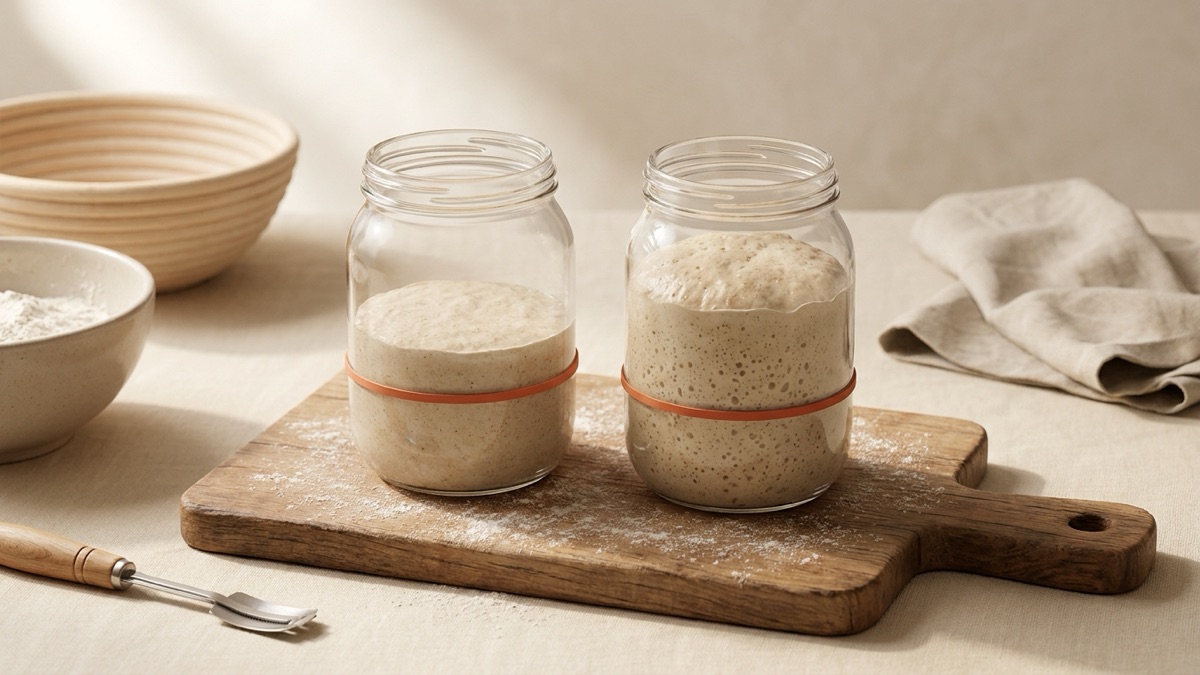
Fermentation speeds up with warmth and slows with cold, and a few degrees make a real difference. A starter kept at 68F (20C) moves far slower than one at 75 to 78F (24 to 26C), and below about 70F (21C) everything drags.
Too hot is its own problem: in a kitchen hotter than is comfortable for you, a starter can race through its food and fall before you see it, or stall. The fix there is cooler water and a bigger feed.
How to tell it is ready again
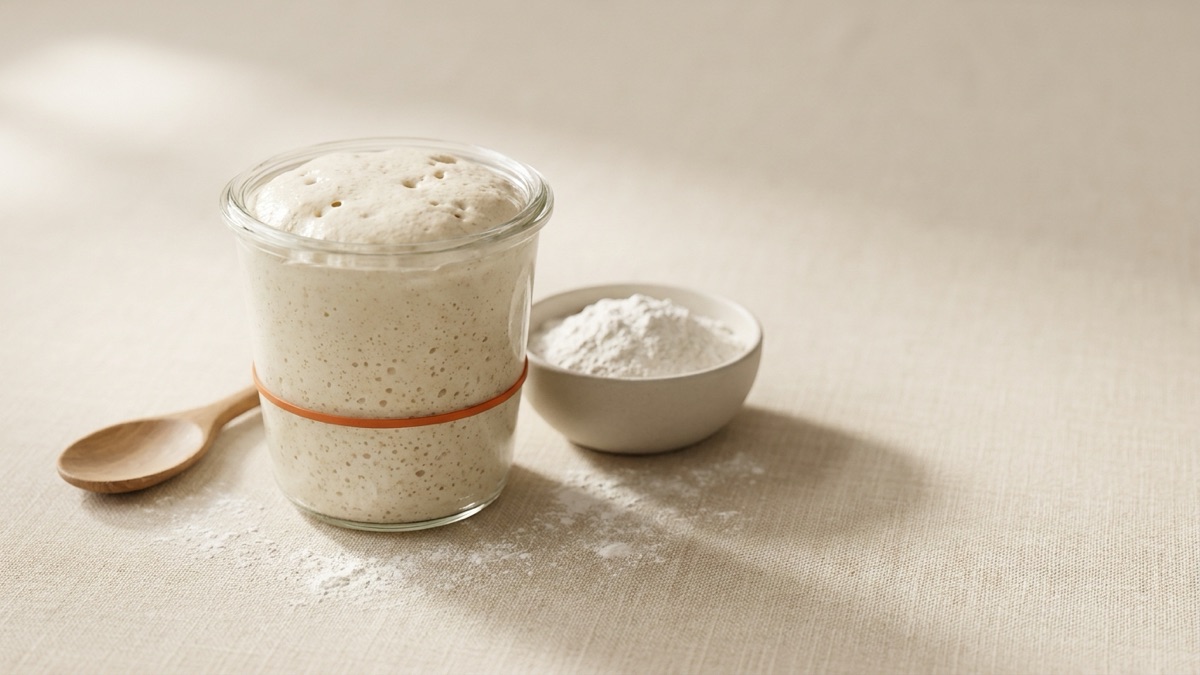
Mature means it rises predictably after each feed, at least doubling in about 4 to 12 hours, two or three days in a row. At its peak it looks like this: at least double the height of the band, a domed top or one just starting to flatten, bubbles of many sizes all through the side of the jar, a light, webby texture when you dip in a spoon, and a pleasant smell, yeasty and mildly sour.
The float test is a weaker guide. A spoonful that floats is full of gas, but a stiff or whole grain starter can sink even at its peak, and scooping knocks gas out. A float is a yes, and a sink is only a maybe. The band on the jar tells you more.
Heads up
A slow starter is not a spoiled one, but check the surface every time you feed. Fuzzy mold of any color, or pink, orange or red streaks anywhere in the jar, means the whole starter goes. Do not scrape it off and keep the rest. Wash the jar in hot, soapy water and start fresh.
What to do today
- Look at the glass above the starter for a streaky line. If it is there, your starter rose and fell; check sooner after the next feed.
- Discard down to 20 to 50 g, then feed by weight at one ratio you can stick with, 1:1:1 or 1:2:2 to start.
- Put a rubber band at the level right after feeding.
- Move the jar somewhere around 75 to 80F (24 to 27C), and use lukewarm water.
- Feed at the same times each day, and write down how high it rose and when.
- If it is still slow after three days of that, swap a little whole wheat or rye into the feed and change nothing else.
The Loaf Scout app reads one photo of the jar from the side and gives you the rise against the band, the activity from quiet to falling, and whether it is ready.
When to start again
Most starters that will not rise only need warmth, regular feeds and a few days. A few signs mean the starter is spoiled, and then there is only one answer. Discard the whole starter, never scrape it, if you see:
- Fuzzy mold of any color: white, green, blue, gray or black fuzz on the starter or on the jar where it touches the starter.
- Pink, orange or red streaks, patches or tinted liquid anywhere in the jar.
- A rotten, putrid or truly foul smell, very different from sour, yeasty, boozy or nail polish.
- A slimy, stringy texture or a slick film that does not stir back in.
Wash the jar in hot, soapy water, rinse it well and begin again with fresh flour and water. When in doubt, throw it out: a new starter costs a little flour and a week or two. Sourdough starter mold shows how to tell fuzz from a harmless dry skin.
These look alarming but are normal, and only need a feed:
- Hooch: gray, brown or dark liquid on top. Pour it off or stir it in, then feed.
- A dry skin on top from a jar that was not covered. Remove it and feed from the soft starter underneath, as long as nothing is fuzzy.
- An acetone or nail polish smell. The starter is hungry, so feed it, and feed a little more often.
- A quiet day for a young starter. Days 3 to 7 often go still before it wakes up for good.
- Dark liquid after a week in the fridge. Pour it off or stir it in, then give it one or two feeds at room temperature.
For every other worry in the jar, the starter problems section takes one symptom at a time. A quiet starter is usually just waiting for a warmer spot and a steady routine. Give it both, watch the band, and it will tell you when it is ready.
The pictures in this guide are AI-generated illustrations, not photos of real bakes; real loaves and starters vary, so trust the signs described in the text over any picture. Loaf Scout guides are general baking guidance, written from the sources named below, and every kitchen, flour and oven is a little different. Loaf Scout gives an AI read of one photo; your own eyes, nose and the poke test still count. A starter with fuzzy mold of any color, pink or orange streaks, or a rotten smell is thrown out and started again, whatever any page says.
Questions people ask
Why is my sourdough starter bubbling but not rising?
Small bubbles with no rise usually mean the starter is young, cool or a little runny. Keep feeding at the same times each day, move it somewhere around 75 to 80F (24 to 27C), and if it looks thin, use a little less water at each feed.
How long should it take a sourdough starter to double?
A mature starter usually doubles in about 4 to 12 hours at room temperature, depending on the ratio and the room. A 1:1:1 feed often peaks in about 4 to 6 hours in an average room, a 1:5:5 feed in about 8 to 12.
Is my sourdough starter dead if it is not rising?
Almost never. A quiet starter is usually too cool, too young or underfed, and a few regular feeds somewhere warm bring most of them back. The exceptions are fuzzy mold of any color, pink or orange streaks, or a rotten smell, which mean the whole starter is discarded.
Should I add whole wheat or rye flour to a starter that will not rise?
It often helps. Whole wheat and rye bring more food and more wild yeast than white flour, so swapping in a little at each feed can wake up a sluggish starter. Change only that one thing for a few days so you can see what it did.
Why is my starter not rising after being in the fridge?
A starter straight from the fridge is cold and sluggish, and the first feed often does not double. Give it one or two feeds at room temperature, and a day or two of regular feeds if it is still slow, before you judge it.
Sources
- The Perfect Loaf: Frequently asked sourdough starter questions: www.theperfectloaf.com/frequently-asked-sourdough-starter-questions/
- The Perfect Loaf: The ultimate sourdough starter guide: www.theperfectloaf.com/guides/sourdough-starter/
- Colorado State University Extension: Sourdough starter best practices: extension.colostate.edu/resource/sourdough-starter-best-practices/
- King Arthur Baking: Sourdough starter troubleshooting: www.kingarthurbaking.com/blog/2018/03/09/sourdough-starter-troubleshooting-2
- King Arthur Baking: Black liquid on top of sourdough starter is totally fine: www.kingarthurbaking.com/blog/2023/08/28/liquid-on-top-of-sourdough-starter
Read next
Starter problems
Hooch on Sourdough Starter: What the Liquid Means
Starter problems
Sourdough Starter Mold: What It Looks Like, What to Do
Starter problems
Starter Smells Like Nail Polish or Acetone? Read This
Bulk and proofing
Underproofed vs Overproofed Sourdough: How to Tell
Starter care
How to Tell When Your Starter Is Ready to Bake
Loaf troubleshooting
Why Is My Sourdough Flat? Spreading Loaves, Explained