
How Long to Proof Sourdough After Shaping
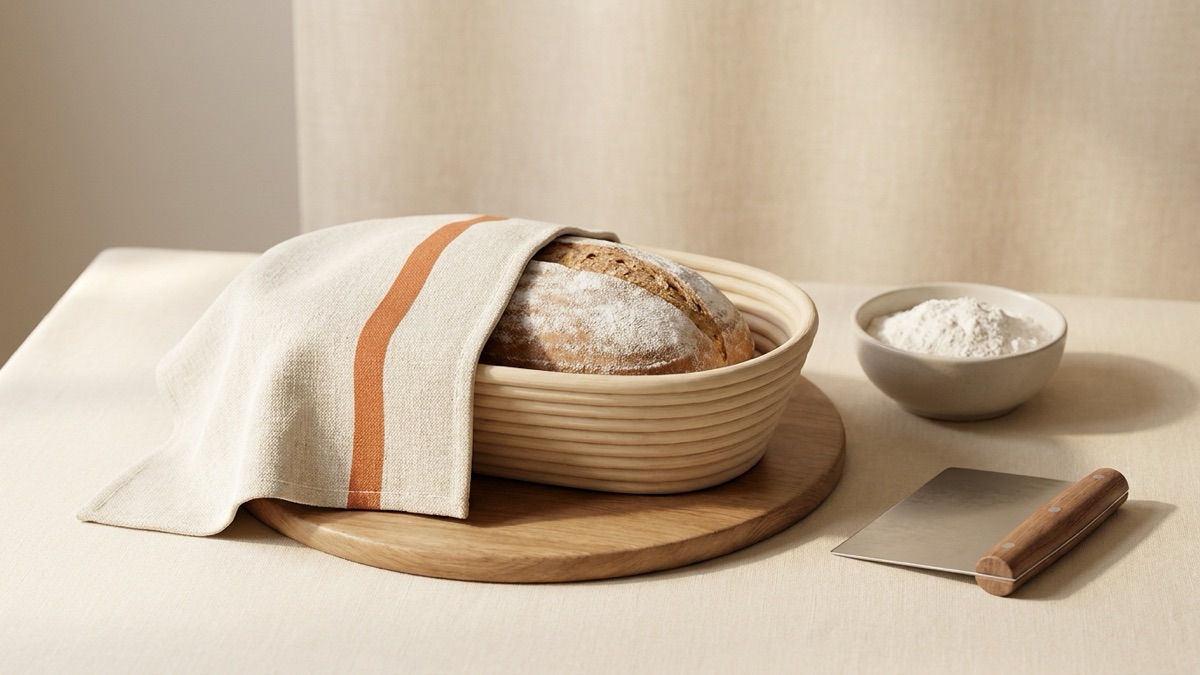
The dough is shaped, tucked into its banneton and covered. Now the recipe says "proof until ready", and you are left looking at a basket and a clock. Here is how long that last rise takes, and how to tell when it is over.
Quick answer
After shaping, sourdough proofs for about 1 to 4 hours covered on the counter, or about 8 to 16 hours in the fridge. Warm kitchens sit at the short end and cool ones at the long end. On the counter, bake when a floured poke fills back slowly and leaves a small dimple.
The read
If you proofed by the clock and the loaf came out tight toward the base with a burst on one side, it was a little underproofed. Let the final proof run a little longer, until a floured poke fills back slowly, and leave the rest alone. A flat, pale loaf that spread means the opposite: shorten the proof by about 30 minutes.
Key takeaways
- The final proof is the rise after shaping. On the counter it often takes 1 to 4 hours; in the fridge, 8 to 16 hours and often up to 24.
- Temperature sets the pace. The same dough can be ready in an hour or two in a very warm kitchen and need much longer in a cool one.
- On the counter, the poke test tells you more than the clock: a slow fill with a small dimple left behind means bake.
- After a cold proof, skip the poke. Cold dough always springs back slowly, so go by your bulk and how the dough looks.
- A long proof cannot rescue a short bulk. If loaves keep coming out dense at the base, add time to bulk, not to the fridge.
How long to proof sourdough after shaping
The final proof is the last rise, after the dough has been shaped and set in its banneton (the cane or lined basket that holds its shape). It follows bulk fermentation, the first long rise between mixing and shaping, where most of the work is done.
There are two ways to run the final proof, and they have very different clocks:
- A counter proof. Covered, at room temperature, for about 1 to 4 hours. You bake the same day.
- A cold proof. Covered, in the fridge at about 38 to 40F (3 to 4C), for about 8 to 16 hours. You bake the next morning, straight from the fridge.
Both make good bread. The counter is faster and asks you to watch the dough. The fridge is slower, more forgiving on timing, and fits around work and sleep. Our cold proof guide walks through the overnight route step by step.
Sourdough proofing time chart
Use this chart as a starting point, not a promise. Your starter, your flour and how far bulk went all move the numbers.
| Where the shaped dough sits | Temperature | Typical proof time | How to check |
|---|---|---|---|
| Very warm kitchen or a proofing box | About 80F (27C) | 1 to 2 hours | Poke test, start early |
| Warm kitchen counter | 74 to 76F (23 to 24C) | 2 to 4 hours | Poke test |
| Cool kitchen counter | Around 68F (20C) or below | Longer than the recipe says | Poke test, expect a wait |
| Fridge (cold proof) | About 38 to 40F (3 to 4C) | 8 to 16 hours, often up to 24 | Look, do not poke |
There is no honest single number for the cool kitchen row. Fermentation slows a lot as the room cools, and a recipe written for a warm kitchen can be far too short for yours. That is the row where bakers most often bake too soon.
How long to proof sourdough at room temp
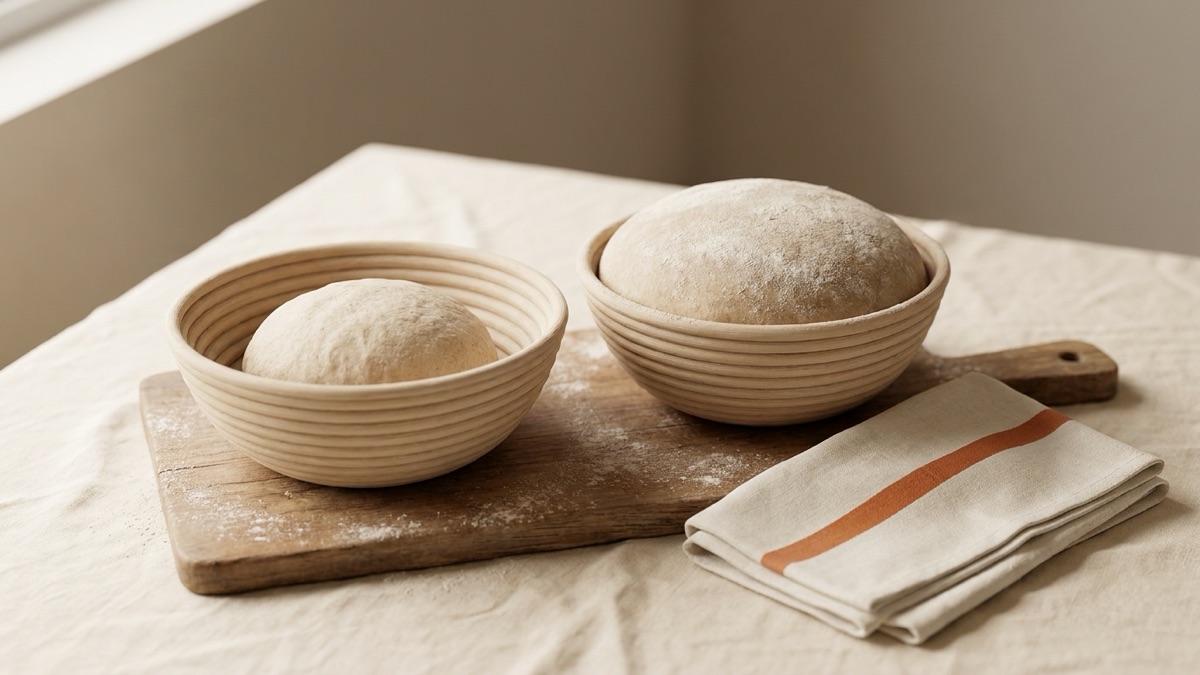
On the counter, most shaped loaves land somewhere between 1 and 4 hours. In a warm kitchen at 74 to 76F (23 to 24C), plan on 2 to 4 hours. At about 80F (27C), it can be done in 1 to 2 hours, so start checking early.
Cover the banneton the whole time, with a cloth, a bowl or a reusable bag, so the surface does not dry into a skin. A dried surface bakes into a thicker, tougher crust and makes the poke test harder to read.
If your kitchen is cool, you can move the dough somewhere warmer, but go gently. Very warm dough ferments fast and gets harder to catch at the right moment.
Heads up
The oven with only the light on is a popular warm spot, but some ovens reach about 100F (37C) that way, which is too hot for a proofing dough. Check it with a thermometer first, and take the dough out before you preheat.
How long to proof sourdough in the fridge
Most doughs are happy in the fridge for 8 to 16 hours, and many go to 24 hours or a bit beyond with no trouble, especially if bulk ended a little early. A typical home fridge sits around 39F (4C). One that runs warm, or a door that opens a lot, keeps fermentation moving faster than you would think.
Bake cold dough straight from the fridge. There is no need to let it warm up first: score it cold and get it into the hot pot.
Longer is possible, but it costs you. Very long cold proofs tend to give a more sour loaf with less rise. The signs a cold proof ran too long are easy to see: the dough has risen well above the rim, feels slack and bubbly on top, and spreads as soon as you turn it out. Can you overproof sourdough in the fridge? covers that edge in detail.
Good to know
A dough that went into the fridge underfermented does not catch up in the cold. If your cold proofed loaves have a dense bottom or a gap under the crust, the fix is a longer bulk at room temperature, not more hours in the fridge. How long to bulk ferment shows what a finished bulk looks like.
How to know when sourdough is done proofing
For a counter proof, use the poke test. Flour a fingertip and press about 1/2 inch (1 cm) into the dough.
- Springs right back: give it more time.
- Fills back slowly and leaves a small dimple: ready. Bake.
- Does not spring back at all: likely overproofed. Bake now.
A ready dough also feels soft, airy and a little bouncy, not dense or stiff. Dough that has gone too far feels fragile, as if it might deflate under your finger. Start testing early in the window and poke a fresh spot each time. The sourdough poke test has the full method and the cases where it misleads.
For a cold proof, the poke test is less reliable, because cold dough always springs back slowly. Trust the bulk you did before the dough went in, and look at it: it should look a little fuller than when it went in, not slack and bubbly on top, and it should hold its shape when turned out.
Why the clock is a poor guide
Three things move the proof time more than any recipe can predict:
- Temperature. Warmer is faster, cooler is slower, and a few degrees matter.
- How far bulk went. A dough that ended bulk well risen, domed and jiggling needs a shorter final proof than one that was shaped early.
- The flour. Doughs with more whole grain ferment faster, so they may need to bake sooner.
Home bakers underproof far more often than they overproof, especially with cool kitchens and young starters. So if you are unsure on a counter proof, lean toward a little more time and poke again.
Try it
After the loaf is cool and cut, describe the crumb in the crumb troubleshooter to see whether the proof was short, long or right, and which one lever to move. To plan the day itself, the bake planner works backward from when you want bread.
What to do this bake
- Read bulk by rise, dome, bubbles and jiggle, and write down how long it took.
- Shape, set the dough in a floured banneton and cover it.
- Pick one route: the counter or the fridge.
- On the counter, start poking after about an hour (sooner in a very warm kitchen) with a floured fingertip. Bake when the dent fills back slowly.
- In the fridge, give it 8 to 16 hours, then score and bake it cold.
- Write down the proof time and the room or fridge temperature.
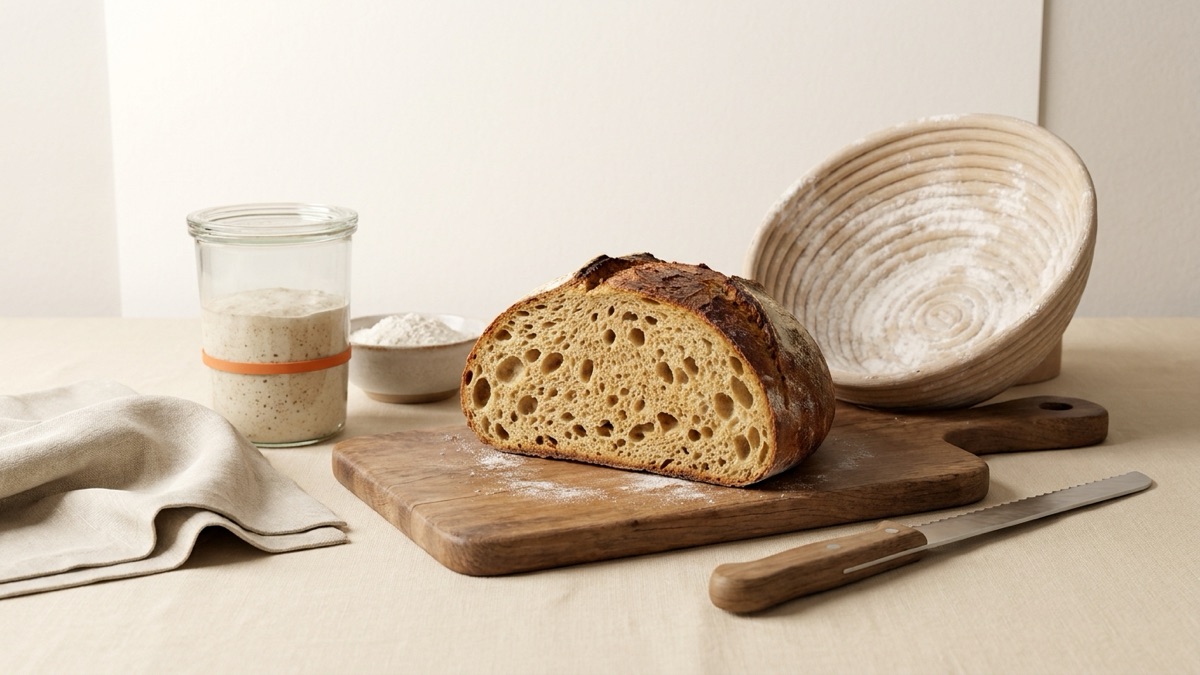
- Cool the loaf fully, cut it, and compare the crumb to your notes.
What to change next bake
- Tighter toward the base, a burst on one side (a little underproofed): proof, a little longer on the counter, until a floured poke fills back slowly.
- Dense, gummy band at the base or a gap under the crust (underproofed): bulk, 1 to 2 hours longer, until the dough has grown about 50 percent, looks domed and jiggles. More fridge time will not fix it.
- Lower and wider than you hoped, weak ear (a little overproofed): proof, about 30 minutes shorter.
- Flat, pale, spread on the board (overproofed): bulk, ended 1 to 2 hours sooner, or a cooler spot. Not both at once.
- Even crumb top to bottom, good height, deep brown crust (well proofed): Bake it again, with the same times and temperatures.
For side by side pictures of each case, see underproofed vs overproofed, and the bulk and proofing guides collect the rest of this stage.
The Loaf Scout app reads one straight-on photo of the cut face and gives you the proof call, a Loaf Score and the one change for next bake. However you check it, the answer to "how long" is a range and a set of signs: 1 to 4 hours on the counter, 8 to 16 in the fridge, and a dough that tells you when it is ready.
The pictures in this guide are AI-generated illustrations, not photos of real bakes; real loaves and starters vary, so trust the signs described in the text over any picture. Loaf Scout guides are general baking guidance, written from the sources named below, and every kitchen, flour and oven is a little different. Loaf Scout gives an AI read of one photo; your own eyes, nose and the poke test still count. A starter with fuzzy mold of any color, pink or orange streaks, or a rotten smell is thrown out and started again, whatever any page says.
Questions people ask
How long should sourdough proof after shaping?
About 1 to 4 hours covered on the counter, or about 8 to 16 hours in the fridge, and often up to 24. The range is wide because temperature sets the pace, so check the dough instead of trusting the clock.
How long to proof sourdough on the counter?
Often 2 to 4 hours in a warm kitchen at 74 to 76F (23 to 24C), and closer to 1 to 2 hours at about 80F (27C). A cool kitchen takes longer. Start the poke test early and bake when a floured dent fills back slowly.
Can I proof sourdough on the counter overnight?
Usually not. A counter proof often takes about 1 to 4 hours, so a full night at room temperature runs well past that in most kitchens. For an overnight proof, put the shaped dough in the fridge.
How do I know when sourdough is done proofing?
On the counter, flour a fingertip and press about 1/2 inch (1 cm) in. A dent that fills back slowly and leaves a small dimple means bake. After a cold proof the poke test is less reliable, so go by the bulk you did and how the dough looks.
Do I need to let cold dough warm up before baking?
No. Dough from a cold proof can be scored and baked straight from the fridge. Cold dough holds its shape and scores more cleanly than warm, soft dough.
Sources
- The Perfect Loaf: Proofing bread dough: www.theperfectloaf.com/guides/proofing-bread-dough/
- The Perfect Loaf: The ultimate guide to bread dough bulk fermentation: www.theperfectloaf.com/guides/the-ultimate-guide-to-bread-dough-bulk-fermentatio
- King Arthur Baking: How to tell if bread dough has risen enough: www.kingarthurbaking.com/blog/2022/08/22/how-to-tell-if-bread-dough-has-risen-en
Read next
Bulk and proofing
Underproofed vs Overproofed Sourdough: How to Tell
Bulk and proofing
How Long to Bulk Ferment Sourdough
Bulk and proofing
The Sourdough Poke Test, and When Not to Trust It
Starter problems
Sourdough Starter Mold: What It Looks Like, What to Do
Reading the crumb
Big Holes in Sourdough: Good Sign or Fault?
Starter problems
Sourdough Starter Not Rising: Every Cause and Fix