
The Cold Proof: An Overnight Sourdough Schedule
You shaped the dough, it is getting late, and you would rather bake in the morning than stay up. Good news: putting the dough in the fridge overnight is not a compromise. It is one of the most useful moves in home sourdough.
Quick answer
A sourdough cold proof means the shaped dough spends about 8 to 16 hours in a covered banneton in the fridge at 38 to 40F (3 to 4C). It slows fermentation, deepens flavor, firms the dough for clean scoring and makes the schedule forgiving. Bake it straight from the fridge, with no warm-up.
The read
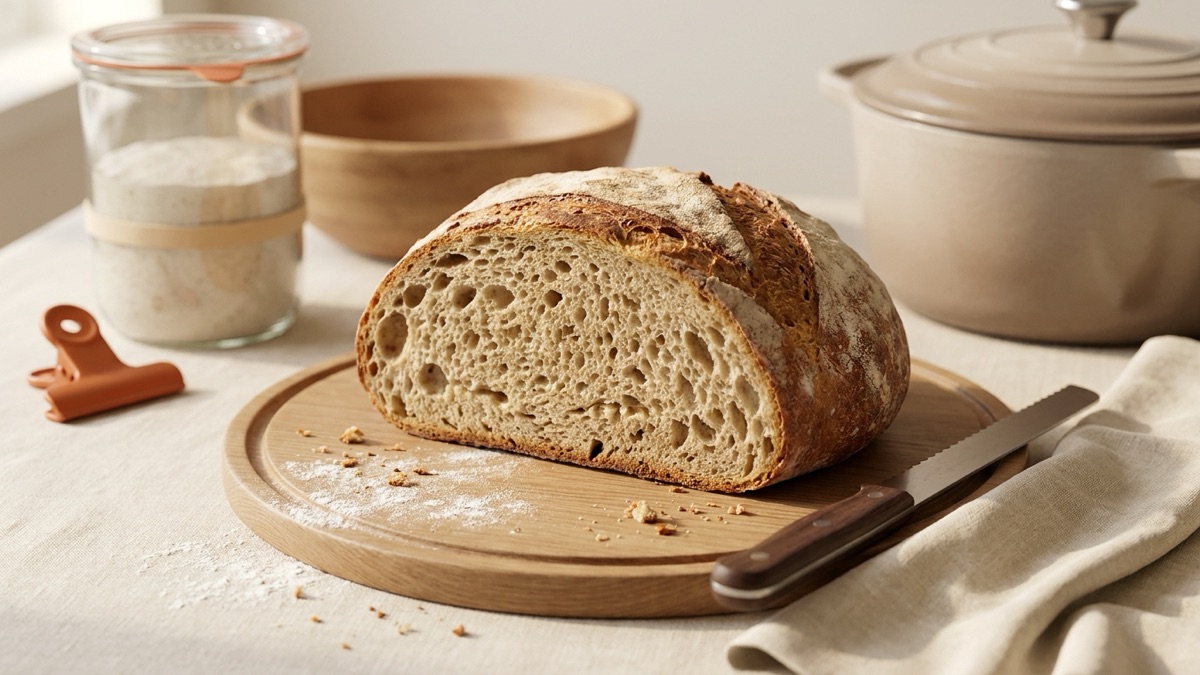
If a cold proofed loaf came out with a dense bottom or a gap under the crust, the dough went into the fridge underfermented: extend bulk by 1 to 2 hours and keep the same fridge time. If it came out flat, pale and sharply sour, end bulk sooner or shorten the cold proof instead. Tall, even and deep brown means Bake it again.
Key takeaways
- A cold proof is the final proof of shaped dough in the fridge, usually 8 to 16 hours at 38 to 40F (3 to 4C).
- It gives deeper flavor, a firm dough that scores cleanly, and a schedule that fits around work and sleep.
- Bulk still happens at room temperature first. The fridge slows fermentation down; it does not finish bulk for you.
- Bake straight from the fridge. Score cold, no warm-up needed.
- Some doughs handle 24 hours, but at 24 hours and beyond an active dough risks overproofing.
What is a sourdough cold proof?
After bulk fermentation (the first long rise, between mixing and shaping), every loaf gets a final proof: the shaped dough rests and rises a little more before baking. A cold proof simply moves that final proof into the fridge. Bakers also call it a retard, because cold retards, or slows, the dough. We will say cold proof from here on.
The dough is shaped, set seam side up in a floured banneton (a proofing basket), covered so the surface does not dry out, and refrigerated, usually overnight. In the morning it goes from the fridge straight into a hot oven.
One thing does not change: bulk happens first, at room temperature. A cold proof is not a way to skip it.
Why proof sourdough in the fridge overnight?
A sourdough overnight proof solves three problems at once.
Flavor. Cold slows the yeast more than it slows the bacteria that make sour flavors, so the dough keeps building acidity and flavor while the rise creeps along. The bread tastes deeper and more complex, and the crust often browns well and picks up small blisters.
Scoring. Cold dough is firm. It holds its shape when you turn it out of the banneton, it scores cleanly, and it springs up in the oven before the outside sets. That is why so many good ears come from dough baked straight from the fridge.
The schedule. Bulk in the afternoon, shape in the evening, bake in the morning. The fridge turns a one-day project into something that fits around a life, and the window to bake is hours wide instead of a narrow stretch on the counter.
How long to proof sourdough in the fridge
Most doughs are happy for 8 to 16 hours at about 38 to 40F (3 to 4C). One well known baker who proofs this way usually goes 10 to 16 hours and sees little difference across that window. The longer the dough sits, the more sour the flavor and the less rise it has left.
How far you can push it depends on two things: how far the dough got in bulk before it went in, and how cold your fridge really is. A fridge that runs warm, or a door that opens a lot, keeps fermentation going faster than you would think.
| Time in the fridge | What to expect | Watch for |
|---|---|---|
| Under about 8 hours | Less extra flavor; dough may still be soft | Fine if bulk ran full; bake when you need to |
| 8 to 16 hours | The usual window: firm, mild tang, clean score | Little change across it for most doughs |
| 16 to 24 hours | More sour, a little less rise left | Works best when bulk ended a little early |
| 24 hours and beyond | Risks overproofing for an active dough | Risen well above the rim, slack, bubbly top |
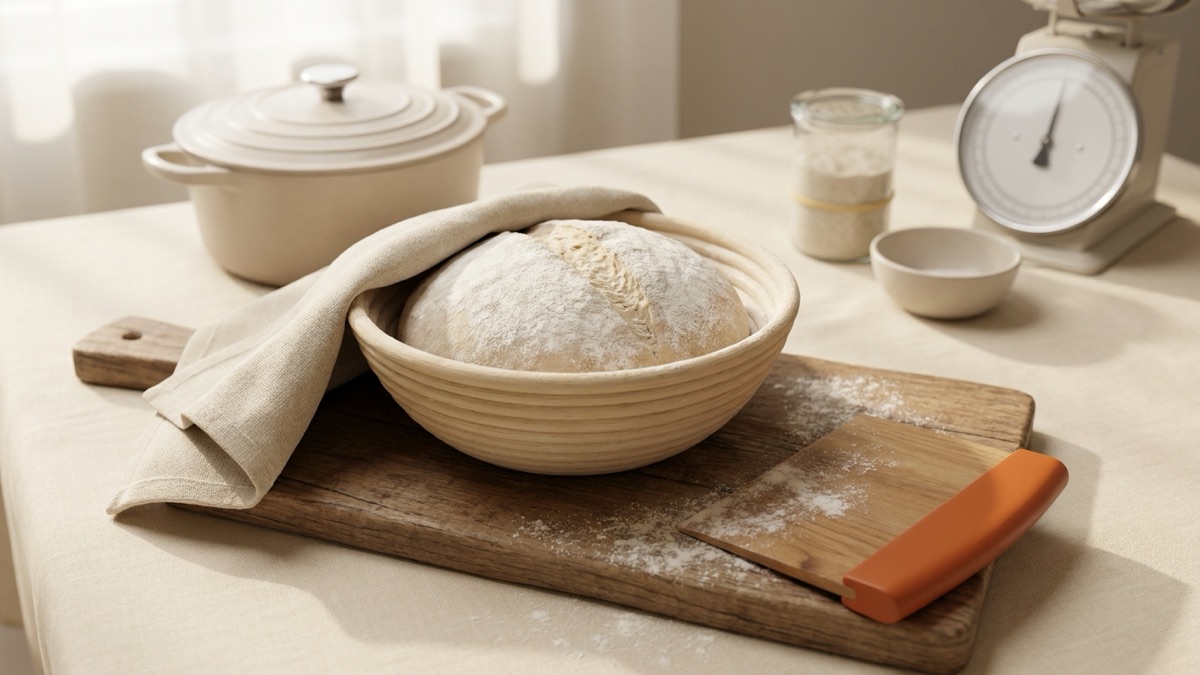
If you plan a long cold proof, end bulk a little earlier, when the dough has grown about 50 percent, since it keeps fermenting slowly overnight. For a shorter one, let bulk run to the usual signs: grown roughly 50 to 75 percent, domed edges, bubbles on top and through the sides, and a jiggle like set gelatin when you shake the bowl. How long to bulk ferment covers those signs in detail.
Getting the fridge part right
The fridge does its job best when the dough sits somewhere cold and steady, under a good cover. A few small habits make the night predictable.
- Cover it well. A cloth inside a bag, a shower cap or a lid keeps the surface soft. A dough that dries out on top can bake into a thick, tough crust.
- Pick a steady shelf, not the door. A door that opens a lot keeps fermentation going faster than you would think.
- Check the temperature once. A thermometer on the shelf for a night tells you whether your fridge really sits near 38 to 40F (3 to 4C). A fridge that runs warm proofs faster, so shorten the night to match.
- Leave headroom. Give the banneton space so the cover never presses on the dough as it rises.
Tip
The fridge is also your pause button. If bulk finishes later than planned, shape as soon as it is done and refrigerate. The dough waits for you, not the other way round.
Sourdough cold proof vs room temp proof
Both work. They suit different days.
| Counter proof | Cold proof | |
|---|---|---|
| Time | About 1 to 4 hours | About 8 to 16 hours |
| How you judge it | The poke test | The bulk you did before it went in |
| Flavor | Milder | Deeper, more tang |
| Scoring | Softer dough, harder to score | Firm dough, clean score |
| Window | Narrow; check from about an hour in | Wide; bake when you are ready |
A counter proof fits a single day, and same day sourdough is built around it. Its timing is tighter, so you check the dough with a floured fingertip: if the dent springs right back, give it longer; if it fills back slowly and leaves a small dimple, bake.
The poke test is less useful after a cold proof. Cold dough always springs back more slowly, so a chilled dough can look more proofed than it is. There is more on that in the sourdough poke test, and when not to trust it. For cold proofed loaves, trust the bulk you did and how the dough looked going in.
An overnight sourdough schedule
Here is how a weekend day can look in a kitchen around 76 to 78F (24 to 26C), with bread in the morning. Bulk times change a lot with temperature, so treat this as the shape of the day, not a timetable.
| Step | When | Why then |
|---|---|---|
| Feed the starter 1:2:2 | About 7 am | Peaks in about 6 to 8 hours |
| Mix | About 1 to 2 pm | Starter at or near its peak |
| Stretch and folds | First 1 to 2 hours of bulk | Strength early on |
| End bulk and shape | About 6 to 7 pm | Grown about 50 percent, domed, jiggly |
| Into the fridge | About 7 pm | Covered banneton, 38 to 40F (3 to 4C) |
| Preheat | From about 6:30 am | A full 45 to 60 minutes |
| Bake from cold | About 7:30 am | About 12 hours in the fridge |
| Cut | From about 10 am | After 1 to 2 hours on a rack |
In a cooler kitchen, bulk can take 8 hours or more at 68F (20C), so start earlier or move the dough somewhere warmer. For a weekday version that works around office hours, see a sourdough schedule for a 9 to 5 workday.
Try it
Enter the time you want bread out of the oven in the bake planner, choose an overnight proof, and it works backwards to when to feed the starter, mix, fold and shape.
Step by step
- Finish bulk at room temperature. Look for the signs, not the clock. For a long cold proof, stop at about 50 percent rise.
- Shape with good tension and set the dough seam side up in a floured banneton.
- Cover it with a cloth and a bag, or a lid, so the surface stays soft.
- Refrigerate at about 38 to 40F (3 to 4C) for 8 to 16 hours.
- Preheat the oven and a dutch oven at 450 to 500F (230 to 260C) for 45 to 60 minutes.
- Turn out, score and bake from cold. Bake covered about 20 minutes, then uncovered another 20 to 25 minutes until deep brown, about 205 to 210F (96 to 99C) in the center.
- Cool at least 1 to 2 hours on a wire rack before cutting.
Do you bake sourdough straight from the fridge?
Yes. There is no need to let the dough warm up. Turn it out onto parchment, score it cold at a shallow 30 to 45 degree angle about 1/4 to 1/2 inch (6 to 12 mm) deep in one quick stroke, and get it into the hot pot quickly. Cold dough holds its shape and its score far better than a warm, soft one.
Heads up
The pot is around 450 to 500F (230 to 260C). Lower the dough in on a parchment sling, wear oven mitts, and lift the lid away from your face so the steam does not reach you.
Can you overproof sourdough in the fridge?
Yes, slowly. The cold widens the window, it does not remove it. Signs a cold proof ran too long:
- The dough has risen well above the rim of the banneton.
- It feels slack and bubbly on top.
- It spreads as soon as you turn it out.
- The loaf bakes up flatter and paler, with a sharp sour flavor.
That loaf reads a little overproofed or overproofed. The fix is to end bulk earlier next time or shorten the cold proof, not both at once. Can you overproof sourdough in the fridge? goes deeper.
The opposite mistake is more common. A dough that went into the fridge underfermented will not catch up in the cold. A dense band at the base or a gap under the top crust after a cold proof means bulk was short. The fix is a longer bulk at room temperature, not more hours in the fridge. If you are unsure which way you went, lean toward a longer bulk.
For more ways to fit sourdough around real life, from winter kitchens to workdays, see the schedules and seasons guides.
What to do this bake
- Take the dough's temperature at the mix and write it down.
- Mark the bulk container at the start level, and note the time.
- End bulk on the signs: about 50 percent risen, domed, jiggly. Write down the hours.
- Shape, cover and refrigerate. Note the time it went in.
- Preheat a full 45 to 60 minutes, then bake straight from the fridge.
- Cool at least 1 to 2 hours, cut, and take one straight-on photo of the crumb in daylight.
- Change one thing next time, and only one.
What to change next bake
- Dense bottom or a gap under the crust: bulk, 1 to 2 hours longer, until about 50 percent risen, domed and jiggly. Keep the fridge time the same.
- Big tunnels in tight crumb: bulk, 1 to 2 hours longer, or bulk warmer at 76 to 78F (24 to 26C).
- Flat, pale and sharply sour: proof, a shorter cold proof, or end bulk 30 to 60 minutes sooner. Not both.
- Spread when turned out, but good flavor: shaping, more tension, and a check that the fridge is really 38 to 40F (3 to 4C).
- Gummy only while warm: cooling, wait longer before cutting.
- Tall, even crumb and a deep brown crust: Bake it again. Write down the bulk time, dough temperature and fridge hours, and repeat them.
The Loaf Scout app reads one straight-on photo of the cut face and gives you the proof call, a Loaf Score and the one change for next bake. Whatever you use, the method holds: finish bulk on the counter, let the fridge hold the dough overnight, and bake it cold in the morning.
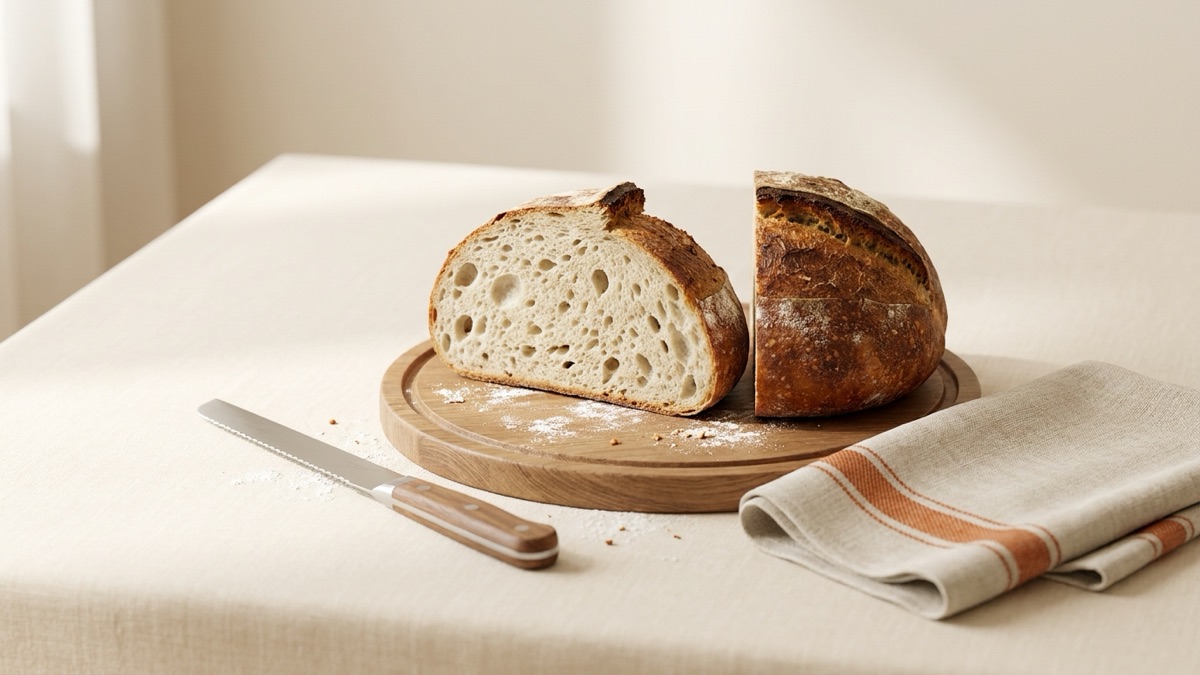
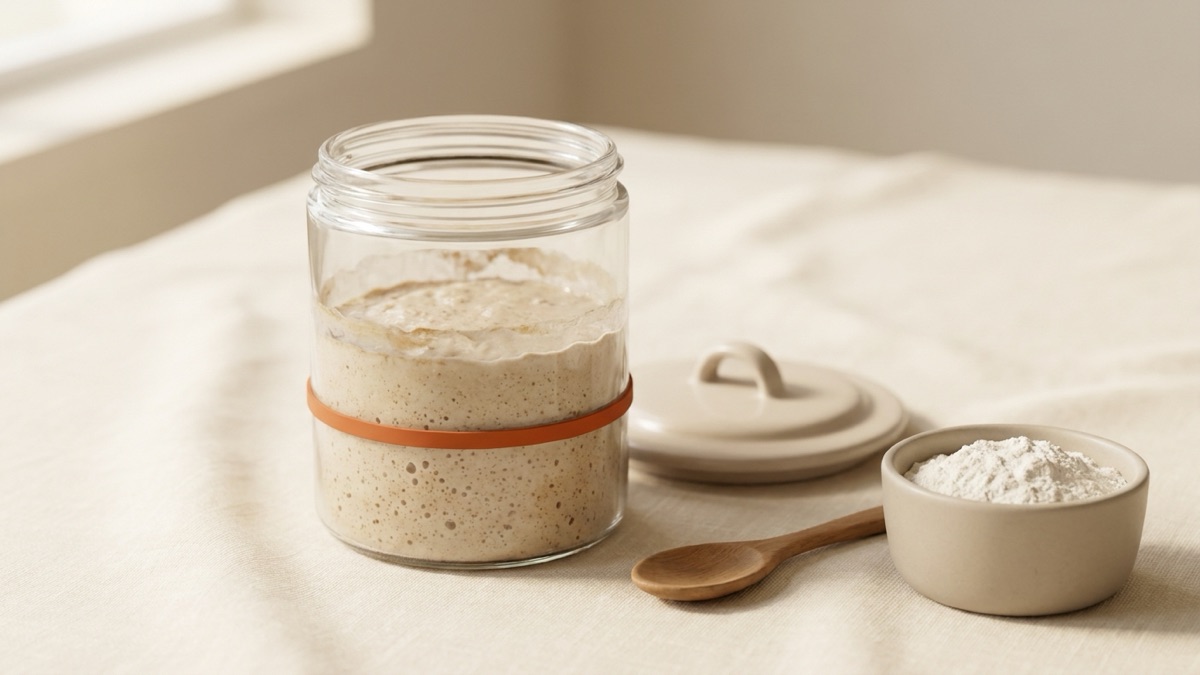
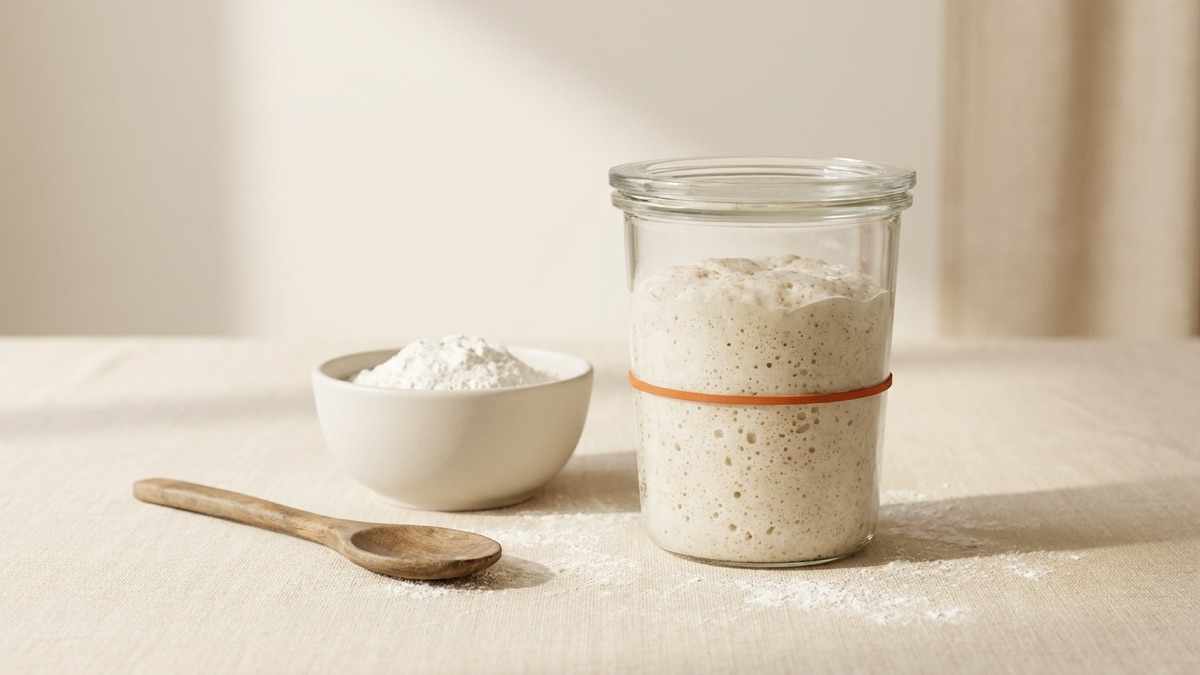
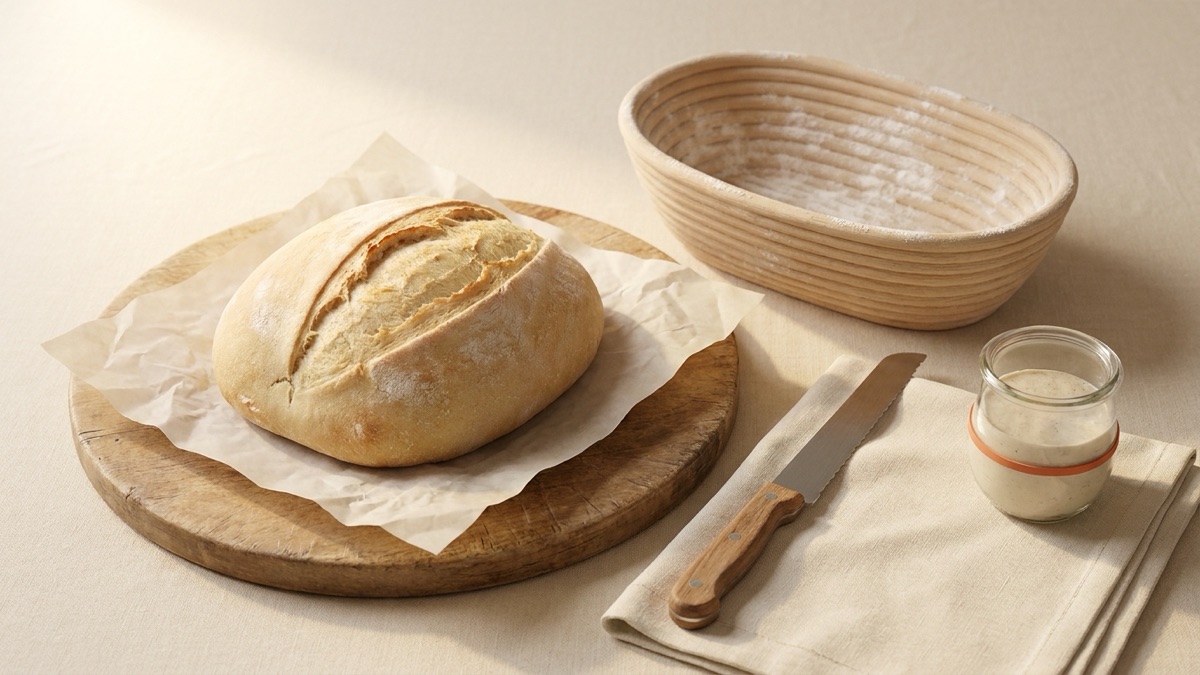
The pictures in this guide are AI-generated illustrations, not photos of real bakes; real loaves and starters vary, so trust the signs described in the text over any picture. Loaf Scout guides are general baking guidance, written from the sources named below, and every kitchen, flour and oven is a little different. Loaf Scout gives an AI read of one photo; your own eyes, nose and the poke test still count. A starter with fuzzy mold of any color, pink or orange streaks, or a rotten smell is thrown out and started again, whatever any page says.
Questions people ask
How long should sourdough proof in the fridge?
About 8 to 16 hours at 38 to 40F (3 to 4C) suits most doughs, and many bakers see little difference across that window. Some doughs go to 24 hours, especially if bulk ended early, but 24 hours and beyond risks overproofing an active dough.
Do you bake sourdough straight from the fridge?
Yes. Turn the dough out of the banneton, score it cold and bake it right away in a fully preheated pot. There is no need to let it warm up, and cold dough holds its shape and its score better.
Can you overproof sourdough in the fridge?
Yes. A dough that has risen well above the banneton rim, feels slack and bubbly on top and spreads when turned out has gone too far. End bulk sooner or shorten the cold proof next time.
Is a cold proof better than a room temperature proof?
Neither is better for every loaf. A counter proof is faster and fits one day but has a narrower window; a cold proof deepens flavor, firms the dough for scoring and gives you a much wider window to bake.
Does a cold proof fix an underproofed dough?
No. A dough that went into the fridge underfermented does not catch up in the cold. If cold proofed loaves have a dense bottom or a gap under the crust, extend bulk at room temperature instead.
Sources
- The Perfect Loaf: Proofing bread dough: www.theperfectloaf.com/guides/proofing-bread-dough/
- The Perfect Loaf: The ultimate guide to bread dough bulk fermentation: www.theperfectloaf.com/guides/the-ultimate-guide-to-bread-dough-bulk-fermentatio
- The Perfect Loaf: The ultimate guide to baking bread dough: www.theperfectloaf.com/guides/the-ultimate-guide-to-baking-bread-dough/
Read next
Schedules and seasons
Sourdough in Winter: Keeping a Cold Kitchen Moving
Reading the crumb
The Sourdough Crumb: Read It Like a Baker
Starter problems
Starter Smells Like Nail Polish or Acetone? Read This
Starter care
Sourdough Starter: A Plain Guide to Keeping One
Loaf troubleshooting
Why Is My Sourdough Flat? Spreading Loaves, Explained
Loaf troubleshooting
Why Is My Sourdough Dense and Gummy?