
High Hydration Sourdough: When It Helps and When It Hurts
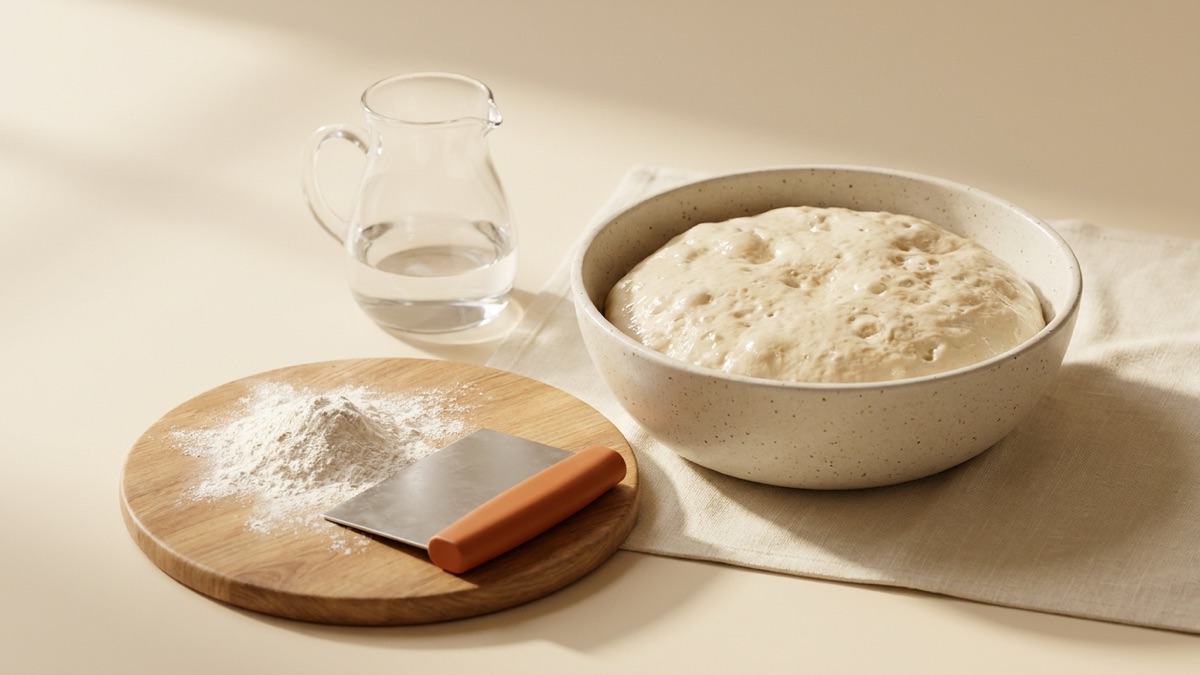
The dough is stuck to your fingers, the counter and the scraper, and it is slowly turning into a puddle. The recipe promised a wild, open crumb at 80 percent hydration. What it did not say is that water only helps a dough that can hold it.
Quick answer
High hydration sourdough, about 75 percent water and up, can give a more tender, open crumb and a thinner crust, but only when the flour, the fermentation and the shaping can carry the water. Too much and the loaf spreads flat. Raise hydration 2 to 3 points at a time, not all at once.
The read
If your high hydration loaf spread flat and the dough stuck to everything, the water is ahead of the flour or your hands. Drop back to around 70 to 72 percent, leave everything else the same, and climb 2 to 3 points at a time once two loaves in a row come out the same. A wet loaf that stood tall with an even crumb is Bake it again.
Key takeaways
- High hydration starts at about 75 percent. From 80 percent up, the dough is slack, sticky and hard to shape.
- More water makes an open crumb easier to reach. It does not make one by itself: fermentation and shaping do most of the work.
- The recipe number often leaves out the starter. Count it and an "80 percent" dough is usually nearer 82.
- A flat high hydration loaf has three usual causes: too much water for the flour, too little strength, or overproofing.
- Whole wheat and other whole grain flours need more water just to feel normal, so their numbers run higher.
What counts as high hydration sourdough?
Hydration is the water in a dough as a percentage of the flour weight, with flour always 100 percent. With 500 g flour and 375 g water, the dough is 75 percent hydration.
Most bread doughs sit somewhere between 60 and 80 percent. Bakers start calling a dough high hydration at about 75 percent, and 80 percent and over is where it turns slack, sticky and loose, almost like thick batter at first.
The number only means something next to the flour. Bread flour, with more protein, can generally take more water than all purpose. Whole wheat takes more again, because bran soaks water up. The sourdough hydration guide has the full chart of what each level feels like.
High hydration sourdough vs low: what changes
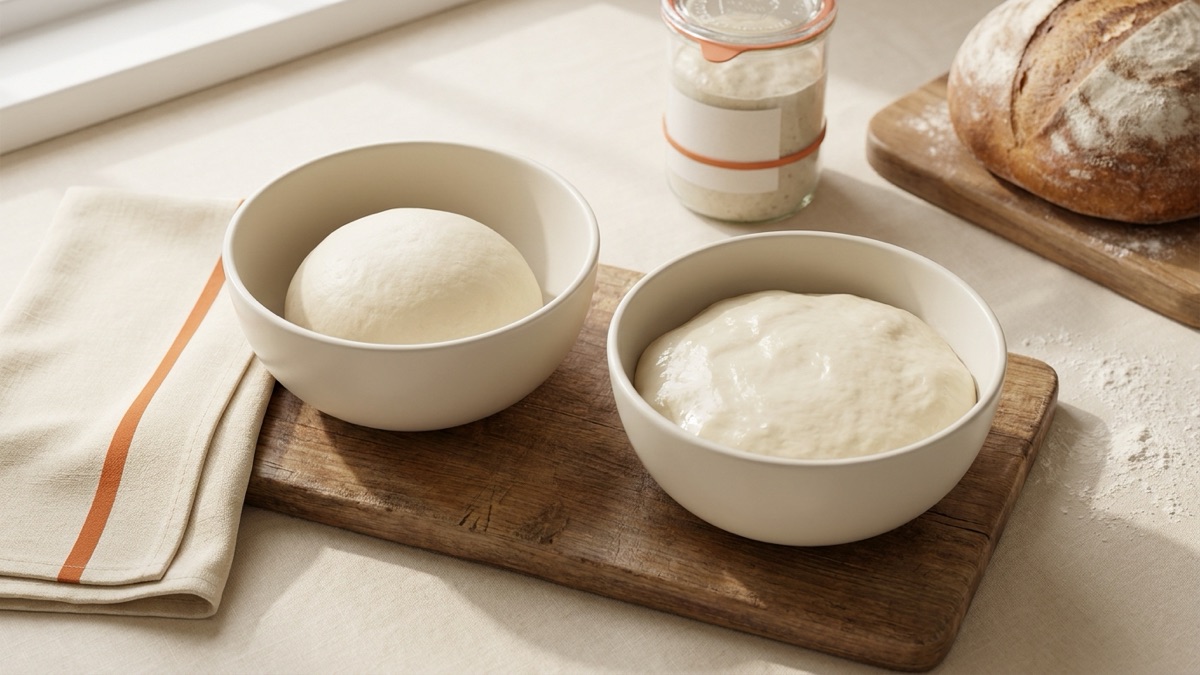
Neither end is better. They are different doughs that make different bread.
| Lower, about 65 to 70% | Higher, about 78 to 85% | |
|---|---|---|
| Feel | Firm, smooth, easy | Slack, sticky, stretches far |
| Handling | Shapes cleanly, holds its shape | Needs folds, quick hands and tight shaping |
| Crumb | Tighter and even | More tender and varied, can be very open |
| Crust | A little thicker, sturdy | Thinner, more brittle |
| Loaf shape | Usually taller, more spring | Can sit a little lower and wider |
A well fermented 70 percent loaf beats a poorly handled 85 percent one. Open crumbs turn up at 68 percent and tight ones at 80, because the water is a helper, not the cause.
When high hydration helps
More water earns its place in a few cases:
- You want a more tender, open crumb, and your loaves are already consistent. Extra water lets the dough stretch further, so bigger, glossier holes become easier to reach.
- You are baking with whole grain. A whole wheat dough at 80 percent can feel about as firm as a white dough at 70 percent. When you swap in whole grain, add water too, often 5 to 10 percent more. Whole wheat sourdough covers the adjustments.
- You are using a strong bread flour that still feels stiff at your usual number.
- Your crumb is tight and the fermentation is already right. For a mostly white loaf, raising the water by 3 to 5 percent is the fix that fits.
The order matters. Get the fermentation steady first, then add water.
Sourdough high hydration flat: when it hurts
As hydration goes up, the dough gets less stable. It spreads more while it proofs and forgives less. A loaf that came out low and wide after you raised the water usually has one of three causes:
- More water than the flour can hold. The dough was loose and soupy from the mix and never tightened up. Lever: hydration.
- Not enough strength. The dough had the right amount of water but too few folds, so it could not hold its own weight. Lever: shaping and folds.
- Overproofed. The dough held its shape early, then turned sticky and slack and stuck to the banneton. Lever: proof.
A wet dough makes these hard to tell apart, which is the real cost of going high too soon. That is why the first move is to drop the water a few points and leave everything else alone. If the loaf stands up, it was the water. If it is still flat, flat sourdough works through the proof and the shaping.
Good to know
Sticky does not always mean too wet. A dough that feels sticky can also be under-strengthened or overproofed. Sticky sourdough dough sorts out which one you have.
Sourdough 80 hydration: what the number hides
An 80 percent recipe is rarely 80 percent. Most recipes work out hydration from the flour and water lines and leave out the starter, which is half flour and half water.
Take 500 g flour, 400 g water and 100 g starter. The recipe line says 80 percent. Count the starter and it is 550 g flour and 450 g water, so the true hydration is about 82 percent. For a true 80 percent with the same flour and starter, you would use 390 g water.
Two points sounds small. At this end of the scale, it is the difference between a dough you can shape and one you pour.
Try it
Put your flour, water and starter into the hydration calculator. It counts the starter for you and shows the true hydration, or works backward from the hydration you want to the grams of water to weigh out.
How to handle a wet dough
Hold back some of the water
Mix with most of the water first and keep 25 to 50 g in reserve. Once the dough has come together and started to gain strength, work the rest in slowly. If the dough already feels wet, slack and hard to handle, stop there and leave the reserve out. You have found your flour's limit for today.
Build more strength in bulk
A wet dough needs more help than a firm one. Plan on more sets of stretch and folds during bulk fermentation (the rise between mixing and shaping): up to about six, spaced around 30 minutes apart, firmer early on and gentler toward the end so you keep the gas you have built.
Use water, not flour, on your hands
When the dough sticks, wet your hands or reach for a bench scraper. Extra flour quietly changes the hydration you just measured.
High hydration sourdough shaping
Shaping is where a wet dough is won or lost. A few things make it easier:
- Work quickly and gently. The longer your hands stay on the dough, the more it sticks. Too firm a hand pushes out the gas.
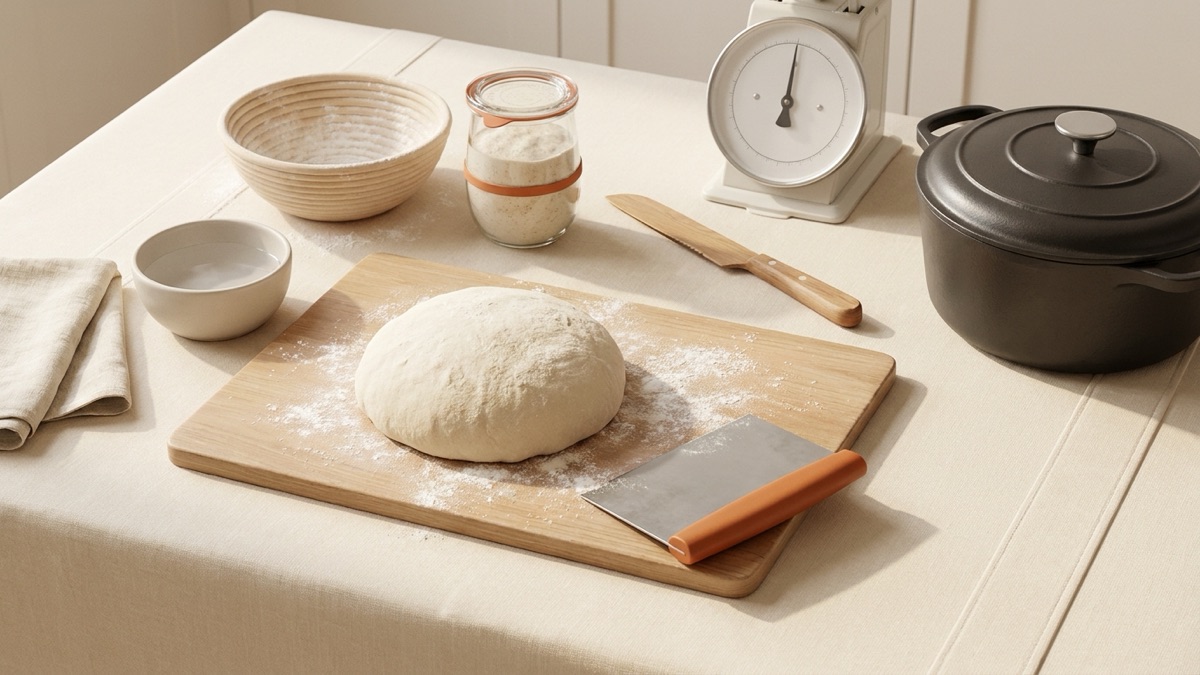
- Let the bench scraper do the work. Push and drag the dough against the counter with the blade to tighten the skin, instead of gripping it.
- Wet for the preshape, flour for the final shape. Use damp hands and a damp scraper to round the dough up. For the final shape, flour your hands lightly and often, but keep the flour on the dough itself to a light dusting so the folds still seal.
- Shape tighter than you think. A slack dough relaxes outward fast, so it needs extra folds and tucks to hold its form until the bake.
- Proof it cold. An overnight cold proof in the fridge firms the dough, so it turns out of the banneton in one piece and scores cleanly. Bake it straight from the fridge. The cold proof guide has the timing.
Tip
Change the water or change the flour, never both in one bake. Flour varies between bags of the same type, so a number that worked last month is a starting point, not a promise.
What to do this bake
- Work out the true hydration of your recipe, starter included.
- Hold back 25 to 50 g of the water and add it only if the dough can take it.
- Give the dough an extra set or two of stretch and folds early in bulk.
- Shape with a bench scraper, quickly, with only a light dusting of flour.
- Proof overnight in the fridge and bake straight from cold.
- Write down the hydration, how the dough felt and how the loaf stood, then cut only when cool.
What to change next bake
- Flat and spread, dough was soupy from the mix: hydration, back to around 70 to 72 percent, then up 2 to 3 points at a time.
- Flat, but the dough felt fine until shaping: shaping, more tension, plus an extra set of folds in bulk.
- Flat, pale and sticky out of the banneton: proof, 30 to 60 minutes shorter, or end bulk at 50 to 75 percent rise.
- Tight, even crumb in a mostly white loaf with good fermentation: hydration, 3 to 5 percent more water.
- Tight crumb in a whole wheat, rye or spelt loaf: nothing. That is the flour, not a fault.
- Stood tall, crumb even from top to bottom: Bake it again, and write down the numbers.
The Loaf Scout app is built to read one straight-on photo of the cut face and give a proof call, a Loaf Score and the one change for next bake, hydration included. For rye, spelt and the rest of the flour questions, the hydration and flour guides take them one at a time.
High hydration is a tool, not a badge. Add water when the bread asks for it, in small steps, and keep the loaf you can already make as your way back.
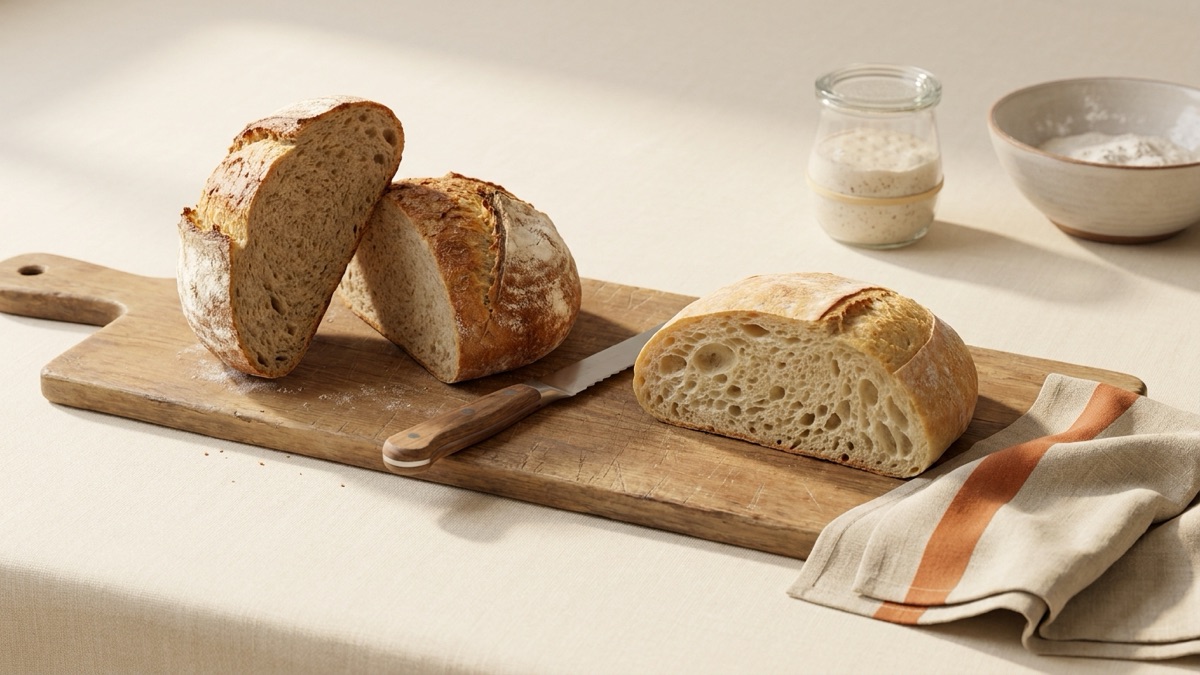
The pictures in this guide are AI-generated illustrations, not photos of real bakes; real loaves and starters vary, so trust the signs described in the text over any picture. Loaf Scout guides are general baking guidance, written from the sources named below, and every kitchen, flour and oven is a little different. Loaf Scout gives an AI read of one photo; your own eyes, nose and the poke test still count. A starter with fuzzy mold of any color, pink or orange streaks, or a rotten smell is thrown out and started again, whatever any page says.
Questions people ask
What is considered high hydration sourdough?
Most bakers call a dough high hydration from about 75 percent water to flour and up, and 80 percent and over is where handling gets hard. Count the flour and water in the starter too, or the real number is a few points higher than the recipe line.
Why is my high hydration sourdough flat?
A wet dough spreads when it has more water than the flour can hold, when it did not get enough folds to build strength, or when it overproofed. Drop the water a few points first, keep everything else the same, and see whether the loaf stands up.
Does higher hydration give a more open crumb?
Not on its own. More water makes an open crumb easier to reach, but fermentation and shaping do most of the work. A well fermented 70 percent loaf beats a poorly handled 85 percent one.
How do you shape high hydration sourdough?
Work quickly and gently with a bench scraper, use wet hands for the preshape and a light dusting of flour for the final shape, and shape tighter than you would a firm dough. A cold proof firms the dough so it scores and holds its shape.
Is 80 percent hydration good for beginners?
It is a lot for a first loaf made with white flour. Start around 68 to 72 percent, and raise the water 2 to 3 points at a time once two loaves in a row come out the same.
Sources
- The Perfect Loaf: What is dough hydration?: www.theperfectloaf.com/dough-hydration/
- The Perfect Loaf: High hydration sourdough bread: www.theperfectloaf.com/high-hydration-sourdough-bread/
- The Perfect Loaf: The ultimate guide to shaping bread dough: www.theperfectloaf.com/guides/shaping-bread-dough/
- King Arthur Baking School reference: Baker's percentage: www.kingarthurbaking.com/pro/reference/bakers-percentage
Read next
Hydration and flour
Sourdough Hydration Explained: What the Numbers Mean
Loaf troubleshooting
Why Is My Sourdough Flat? Spreading Loaves, Explained
Loaf troubleshooting
Why Is My Sourdough Dense and Gummy?
Reading the crumb
Big Holes in Sourdough: Good Sign or Fault?
Bulk and proofing
Underproofed vs Overproofed Sourdough: How to Tell