
How to Make a Sourdough Starter: What Each Day Looks Like
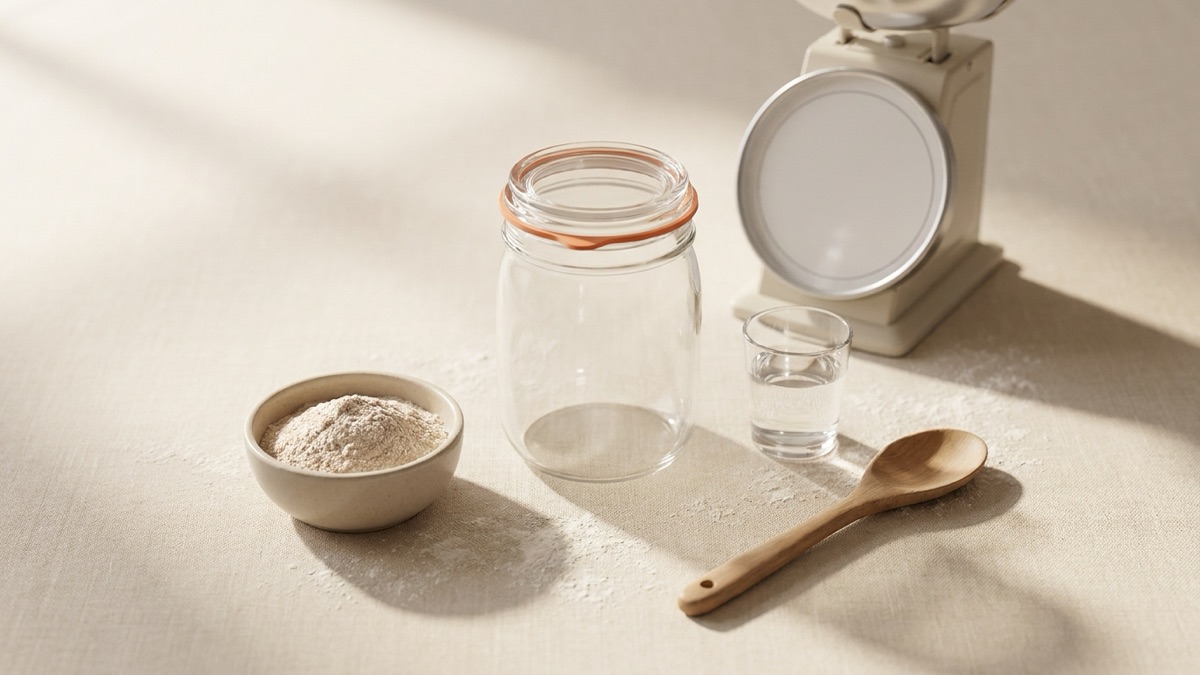
Making a sourdough starter takes flour, water, a jar and about two weeks of short daily visits. Most of the worry comes from days 3 to 7, when a bubbling jar suddenly goes quiet. That is normal, and here is what each day tends to look like.
Quick answer
Mix 50 g whole wheat or rye flour with 50 g water in a clear jar and leave it somewhere warm. Each day after, keep 50 g, discard the rest and feed 50 g flour and 50 g water. Expect a quiet spell around days 3 to 7. Most starters are ready in 7 to 14 days.
The read
A young starter with a few bubbles and little rise is alive and on its way. Keep feeding at the same times somewhere around 75 to 80F (24 to 27C). It moves to Ready to bake when it at least doubles after each feed, two or three days in a row. Any fuzzy mold or pink or orange color is Start fresh: discard the whole jar.
Key takeaways
- You need flour, water, a clear jar, a scale and a rubber band. No packaged yeast: the wild yeast and bacteria are already on the flour.
- Start with whole wheat or rye, then feed all purpose or bread flour. Keep 50 g, discard the rest, and feed equal weights of flour and water.
- An early burst of bubbles followed by a quiet spell around days 3 to 7 is normal. Keep feeding.
- It is mature when it at least doubles in about 4 to 12 hours after each feed, two or three days in a row. Usually 7 to 14 days.
What you need to make a sourdough starter from scratch
- Flour. Whole wheat or rye for day 1, and all purpose or bread flour for the feeds after. Whole grain flours bring more food and more wild yeast, which helps a new starter get going.
- Water. Tap water is usually fine. Chlorine fades if the water sits out uncovered overnight; chloramine does not, so if your water uses it, try filtered or bottled water.
- A clear, straight-sided jar of about half a quart to a quart (roughly 500 ml to 1 liter), with a lid resting loosely on top.
- A kitchen scale and a rubber band to mark the level after each feed.
- A warm spot. Around 75 to 80F (24 to 27C) is ideal. Some bakers keep a new starter as warm as 80 to 85F (26 to 29C) to get it moving.
Tip
In a cool kitchen, try the oven with only the light on, or the top of the fridge. Check it with a thermometer first; an oven light can get too warm.
Sourdough starter day by day
Read this as what tends to happen, not a timetable your jar must keep. Temperature changes everything.
| Day | What you do | What you may see |
|---|---|---|
| 1 | Mix 50 g whole wheat or rye with 50 g water | A thick paste, little or nothing happening |
| 2 | Keep 50 g, discard the rest, feed 50 g flour and 50 g water | Sometimes a big burst of bubbles and a rise, sometimes nothing |
| 3 to 4 | Same feed, once a day; twice a day if it is lively | Often quiet again, a sour smell starting |
| 5 to 7 | Same feed, twice a day about 12 hours apart | Bubbles on the top and sides, a rise and fall you can see |
| 8 to 14 | Keep feeding; start marking the band and timing the rise | Doubling on a schedule you can predict |
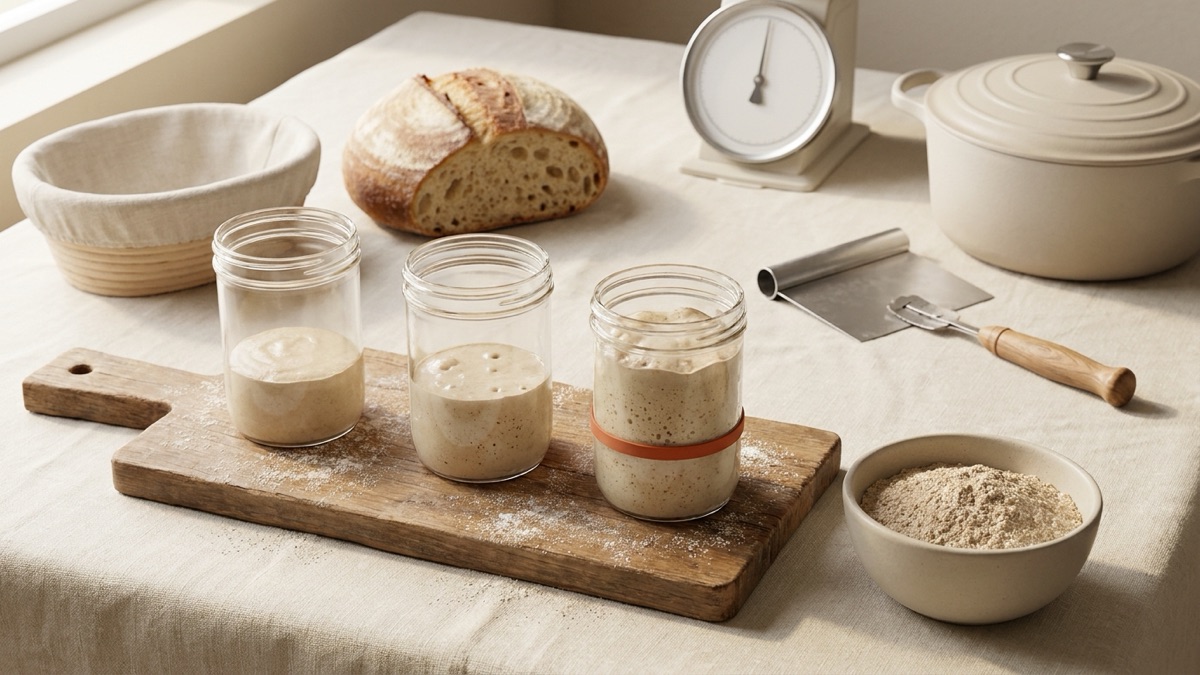
Day 1: mix flour and water
Weigh 50 g of whole wheat or rye flour and 50 g of water (lukewarm in a cool kitchen) into a clean jar. Stir until no dry flour is left, scrape down the sides, rest the lid on loosely and leave it somewhere warm for about 24 hours.
Day 2: the first feed
You may see bubbles and a rise, or nothing at all. Both are normal. Keep 50 g in a clean jar, discard the rest, add 50 g of all purpose or bread flour and 50 g of water, stir, cover loosely and leave it another 24 hours.
Sourdough starter day 3: the quiet spell
This is where many new starters go quiet. The early burst of bubbles often comes from bacteria that fade as the starter turns acidic, and the wild yeast and lactic acid bacteria you want take over after. That handover takes a few days and can look like nothing is happening.
It is not dead. Keep the same feed. If it is showing life, move to two feeds a day, about 12 hours apart. A sour smell starting now is a good sign.
Days 4 to 7, and what day 5 looks like
From here, feed twice a day, about 12 hours apart, keeping 50 g each time, and put a rubber band at the level after each feed.
By day 5, some starters double within about 6 to 8 hours of a feed, with plenty of bubbles and a tangy smell. Many do not, especially in a cool kitchen. A quiet day 5 is a young starter, not a failed one. Look for bubbles on the sides and a streaky line on the glass where it rose and fell.
Good to know
A new starter usually takes 7 to 14 days to become reliable, longer in a cool kitchen. Some recipes expect one in five days; plan for two weeks.
Week 2: getting it strong
Keep going and let the band do the work: note when you fed it and when it peaked. When it at least doubles in about 4 to 12 hours after each feed, two or three days in a row, it is mature. Then you can keep 20 to 50 g and change the ratio to fit your day. Sourdough starter feeding ratios covers how the ratio moves the peak.
Try it
When your starter is doubling on a schedule, put the grams you keep and the ratio into the starter feeding calculator to get the flour and water to add and the usual window to the peak.
Sourdough starter recipe for beginners, in one place
- Day 1: 50 g whole wheat or rye flour, 50 g water, about 24 hours somewhere warm.
- Day 2 onward: keep 50 g, discard the rest, add 50 g all purpose or bread flour and 50 g water; twice a day about 12 hours apart once it is lively.
- Ready: it at least doubles in about 4 to 12 hours after each feed, two or three days in a row.
Why is my new starter not rising?
A slow new starter is almost always too cool, too young or underfed. Move it somewhere warmer, feed at the same times every day, and mix a little whole wheat or rye into each feed. Different flours grow different microbes and aromas, so change only the flour and give it a few days. And keep discarding, so fresh flour is not swamped by old, acidic starter. Sourdough starter not rising goes through every cause in order.
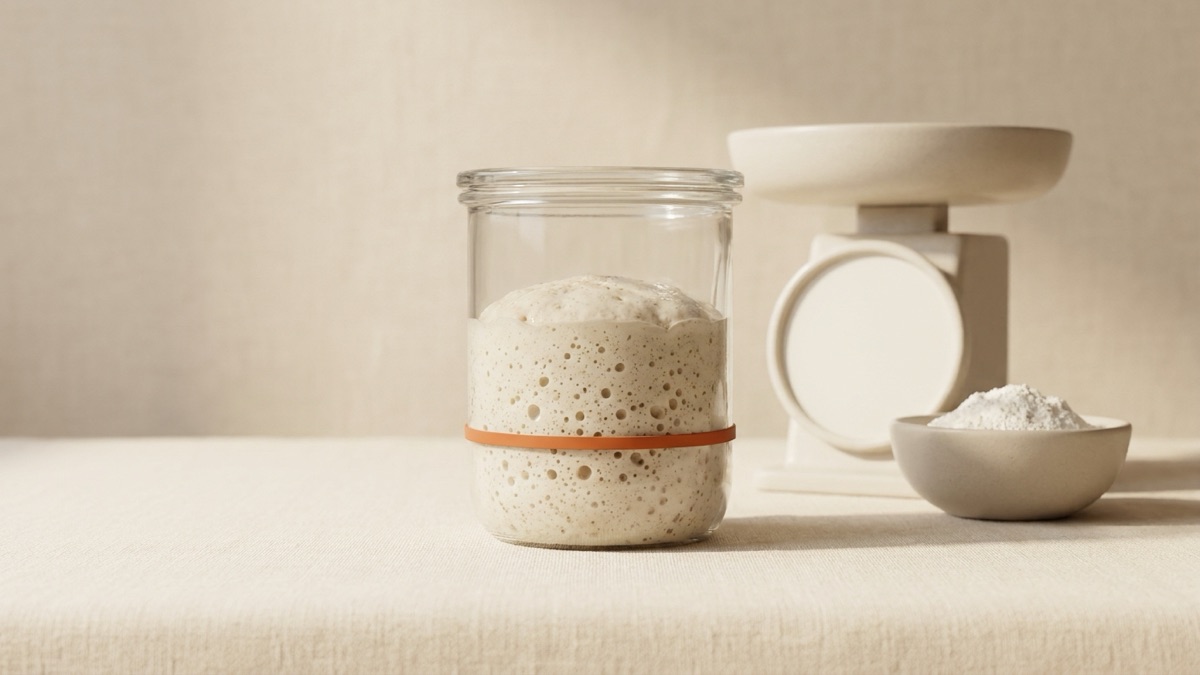
How do you know it is ready?
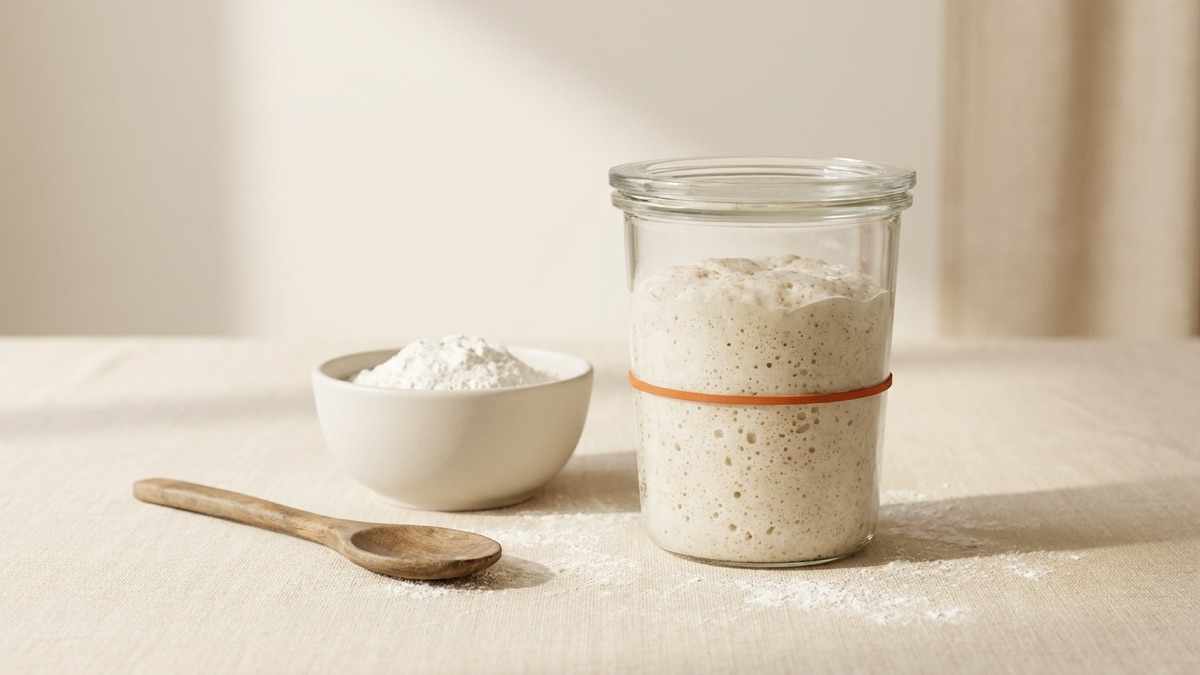
It is mature, as above, and on baking day it is at or near its peak: at least double the band, a domed top just starting to flatten, bubbles of many sizes and a yeasty, mildly sour smell. The float test is only a rough hint; the band is the better guide. How to tell when your starter is ready covers the peak in detail, and the starter care guides gather everything on keeping it going.
What to do today
- Wash a clear jar in hot, soapy water and rinse it well.
- Weigh 50 g whole wheat or rye flour and 50 g water into it and stir until no dry flour is left.
- Rest the lid on loosely and find the warmest steady spot in your kitchen.
- Each day, write down the feed time, the room temperature and what you see. By week 2, that log tells you when it peaks.
When to start again
A slow or quiet new starter only needs more feeds and a warmer spot. A few signs mean the whole starter goes, every time. A young starter has not yet built up the acidity that helps keep unwanted microbes out, so watch it closely. A fuzzy or pink starter is discarded, never scraped, because mold reaches well beyond the spot you can see. Discard the whole starter if you see:
- fuzzy mold of any color: white, green, blue, gray or black fuzz on the starter or on the jar where it touches the starter;
- pink, orange or red streaks, patches or tinted liquid anywhere in the jar;
- a rotten, putrid or truly foul smell, very different from sour, yeasty, boozy or nail polish;
- a slimy, stringy texture or a slick film that does not stir back in.
Heads up
If anything on the surface is raised or fuzzy, or you cannot tell, treat it as mold. That is Start fresh: discard the whole jar, wash it in hot, soapy water, rinse it well and begin again from day 1 with fresh flour and water.
These look alarming but are normal, and only need a feed:
- Hooch: gray, brown or dark liquid on top. Pour it off or stir it in, then feed.
- A dry skin on top from a jar that was not covered, as long as nothing is fuzzy. Remove it and feed from the soft starter underneath.
- An acetone or nail polish smell. The starter is hungry, so feed it, and feed a little more often.
- A quiet day for a young starter. Days 3 to 7 often go still before it wakes up for good.
- Dark liquid after a week in the fridge. Pour it off or stir it in, then give it one or two feeds at room temperature.
When in doubt, throw it out. Making a starter is mostly patience: the same small feed at the same times, somewhere warm. Mark the band, keep notes, and let the doubling tell you when it is ready.
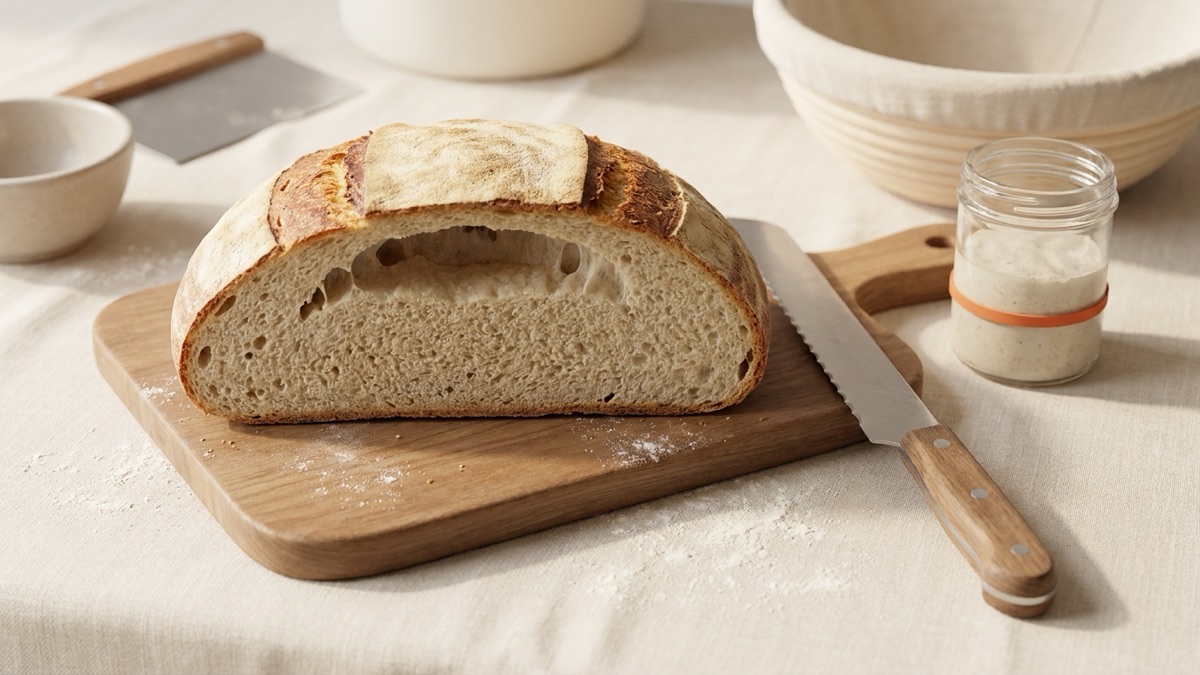
The pictures in this guide are AI-generated illustrations, not photos of real bakes; real loaves and starters vary, so trust the signs described in the text over any picture. Loaf Scout guides are general baking guidance, written from the sources named below, and every kitchen, flour and oven is a little different. Loaf Scout gives an AI read of one photo; your own eyes, nose and the poke test still count. A starter with fuzzy mold of any color, pink or orange streaks, or a rotten smell is thrown out and started again, whatever any page says.
Questions people ask
How long does it take to make a sourdough starter from scratch?
Usually 7 to 14 days, sometimes longer in a cool kitchen. Some recipes expect a doubling by day five, but plenty of healthy starters take two weeks. It is ready when it at least doubles in about 4 to 12 hours after each feed, two or three days in a row.
Why did my sourdough starter stop bubbling on day 3?
That lull is normal. The burst of bubbles on day 1 or 2 often comes from bacteria that fade as the starter turns more acidic, and the yeast takes over after. Keep feeding at the same times each day somewhere warm.
What should my sourdough starter look like on day 5?
Anything from a few small bubbles to a clear rise. Some starters double within about 6 to 8 hours of a feed by the end of day 5, and many are still quiet. Keep feeding; a quiet day 5 is not a failed starter.
What flour is best for starting a sourdough starter?
Whole wheat or rye for the first feed, because they bring more food and more wild yeast than white flour. After that, all purpose or bread flour works, with a little whole grain mixed in if the starter is sluggish.
Do I need to discard when making a sourdough starter?
Yes. Keep a set amount, such as 50 g, and remove the rest before each feed. Without discarding, the jar overflows and the fresh flour is swamped by old, acidic starter.
Sources
- King Arthur Baking: Sourdough starter recipe: www.kingarthurbaking.com/recipes/sourdough-starter-recipe
- The Perfect Loaf: 7 easy steps to making an incredible sourdough starter from scratch: www.theperfectloaf.com/7-easy-steps-making-incredible-sourdough-starter-scratch/
- The Perfect Loaf: The ultimate sourdough starter guide: www.theperfectloaf.com/guides/sourdough-starter/
- Colorado State University Extension: Sourdough starter best practices: extension.colostate.edu/resource/sourdough-starter-best-practices/
- NC State University: Using different flours for sourdough fosters different bacteria: news.ncsu.edu/2023/10/flour-sourdough-bacteria/
- King Arthur Baking: Sourdough starter troubleshooting: www.kingarthurbaking.com/blog/2018/03/09/sourdough-starter-troubleshooting-2
Read next
Starter care
How to Tell When Your Starter Is Ready to Bake
Starter care
Sourdough Starter: A Plain Guide to Keeping One
Starter problems
Sourdough Starter Mold: What It Looks Like, What to Do
Reading the crumb
The Sourdough Crumb: Read It Like a Baker
Reading the crumb
Fool's Crumb: The Gap Under the Crust